
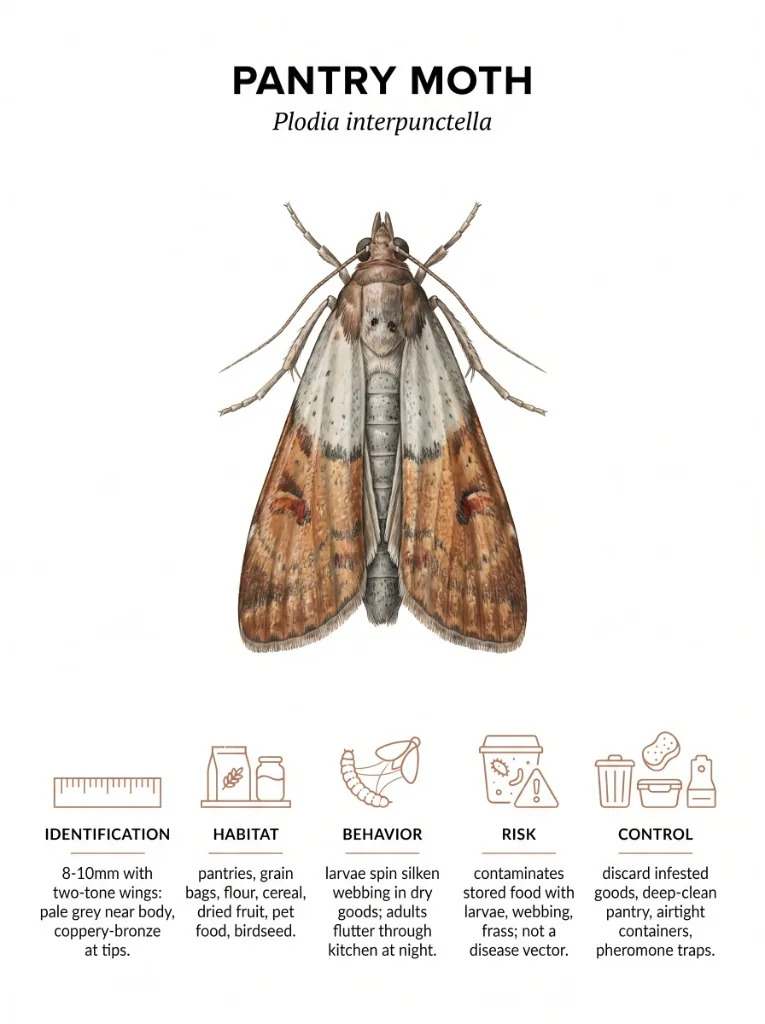
Indian Meal Moth (Pantry Moth) (Plodia interpunctella) identification infographic showing size, habitat, behavior, risk, and control
Moderate concern

Pantry Moth (Indian Meal Moth) — Identification & Control

Plodia interpunctella

Size
8–10 mm
Category
Fabric & Pantry

About the indian meal moth (pantry moth)

Indian meal moths — almost universally called pantry moths by homeowners — are small, distinctly two-toned moths: pale grey near the body, shifting to a coppery bronze toward the wing tips, with a fluttering, low flight pattern most often noticed at night in the kitchen. The adults themselves cause no damage; the destructive work is done entirely by the larvae, which spin fine silken webbing through infested grain products as they feed.

Pantry moths are notorious for arriving already hidden inside a purchased product — a single bag of birdseed, flour, cereal, dried fruit, or pet food is enough to introduce eggs or larvae directly into your pantry. From there, larvae readily spread to nearby packaged goods, contaminating them with webbing, cast skins, and frass. Once established, an infestation typically requires discarding affected products, since the contamination is not something that can be sorted out or washed off.

Quick ID

8–10 mm with two-tone wings: pale grey near the body, coppery-bronze at the wing tips.

In the Triangle

Very common in Triangle pantries; often arrives hidden inside a single contaminated bag of birdseed or flour.

Think you have indian meal moth (pantry moth)s?

Free inspection from a licensed Castle Exterminators technician — Durham, Chapel Hill, Raleigh, Cary & the Triangle. We'll confirm the species and recommend a treatment plan.

Request Free Inspection (919) 606-8686
Signs of an Active Pantry Moth Infestation

  • Fine silken webbing or clumping inside flour, cereal, grains, or dried fruit.
  • Small moths fluttering near pantry shelves at night, especially after the lights go off.
  • Larvae or cocoons found in ceiling corners, cabinet hinges, or wall-ceiling joints near the pantry — larvae often wander away from the food source to pupate.
  • A musty or slightly sour odor from heavily infested stored grains.

Eliminating a Pantry Moth Infestation

Start by inspecting every opened grain, cereal, flour, dried fruit, nut, and pet food container in the pantry — discard anything showing webbing, clumping, or larvae, and when in doubt, throw it out rather than risk re-infestation. Vacuum and wipe down all shelves, corners, and cracks thoroughly, since larvae and pupae can hide in seams away from the original food source. Moving forward, storing dry goods in airtight glass or hard plastic containers prevents new infestations from spreading even if a contaminated item slips through, and pheromone traps help monitor for and catch any surviving adults.

Frequently asked

Indian Meal Moth (Pantry Moth) questions homeowners ask

Can I just remove the webbing and keep the rest of the product?
No — infested products should be discarded entirely. Webbing indicates active larval feeding throughout the container, and eggs or larvae too small to see easily are typically already distributed through the product.
How do pantry moths get into a sealed bag before I even open it?
Eggs are often laid during manufacturing, storage, or transport of bulk grain products, particularly birdseed and pet food, which is why a brand-new, unopened bag can already contain the infestation's source.

Related pests

More in fabric & pantry

Browse all pests