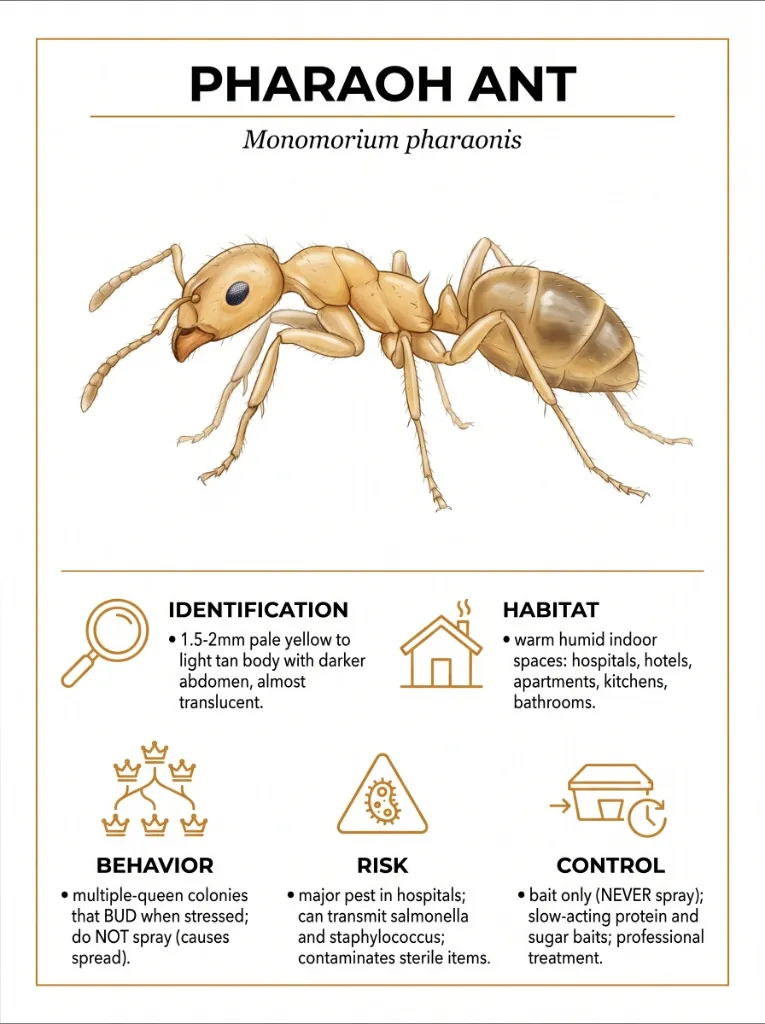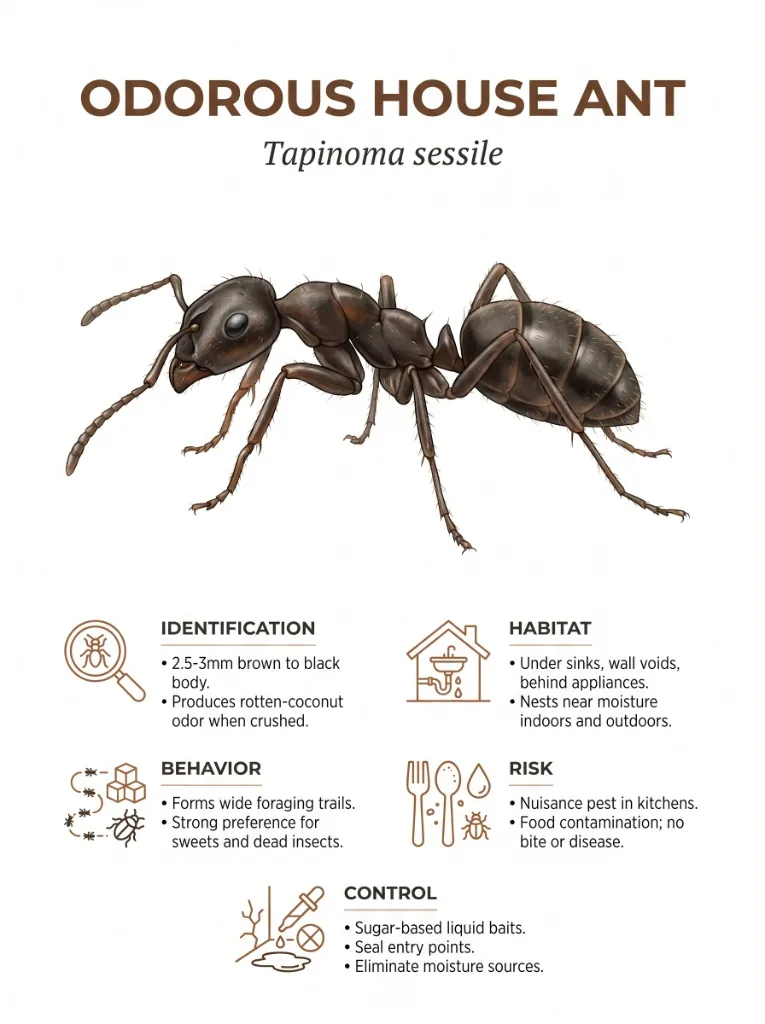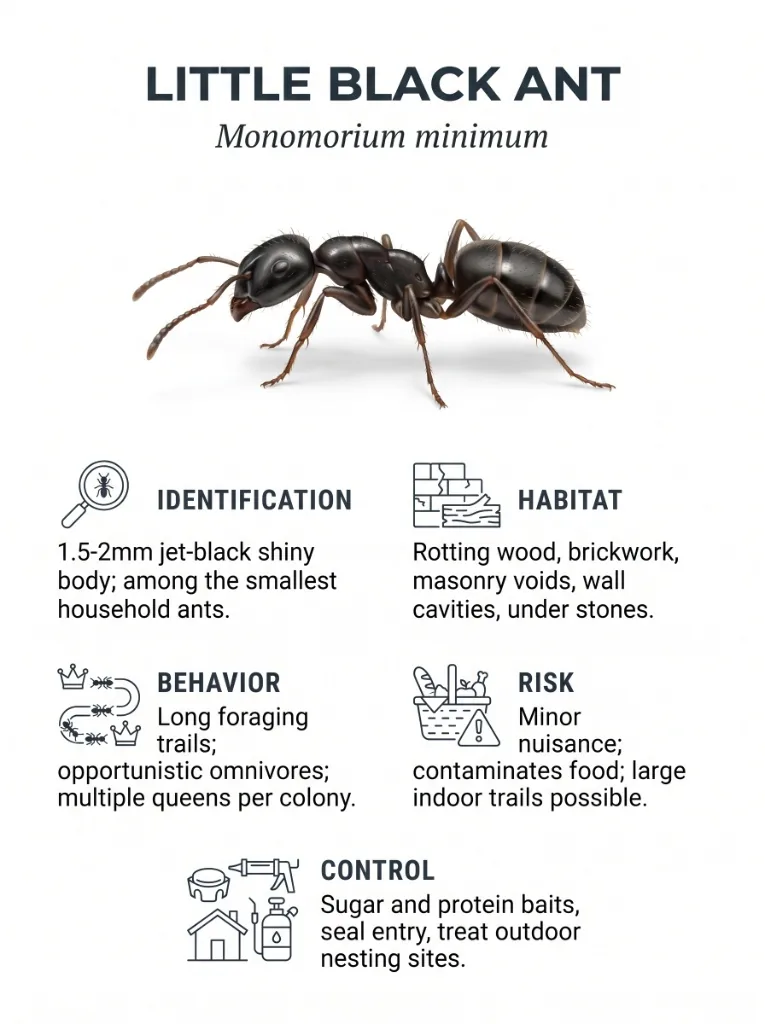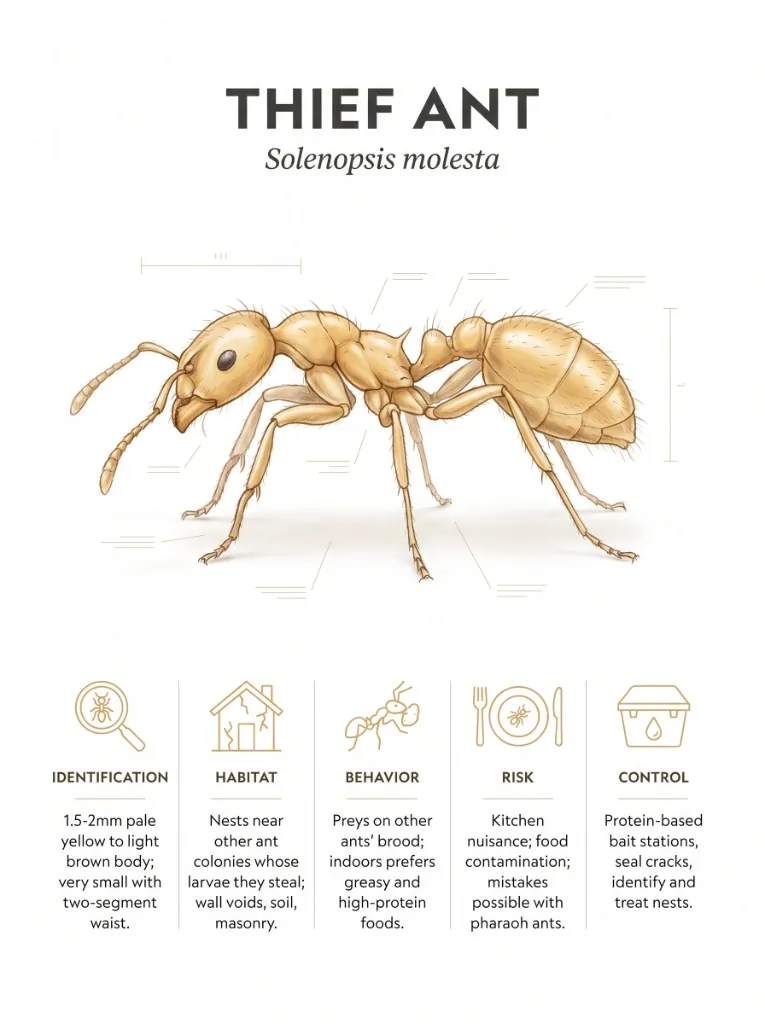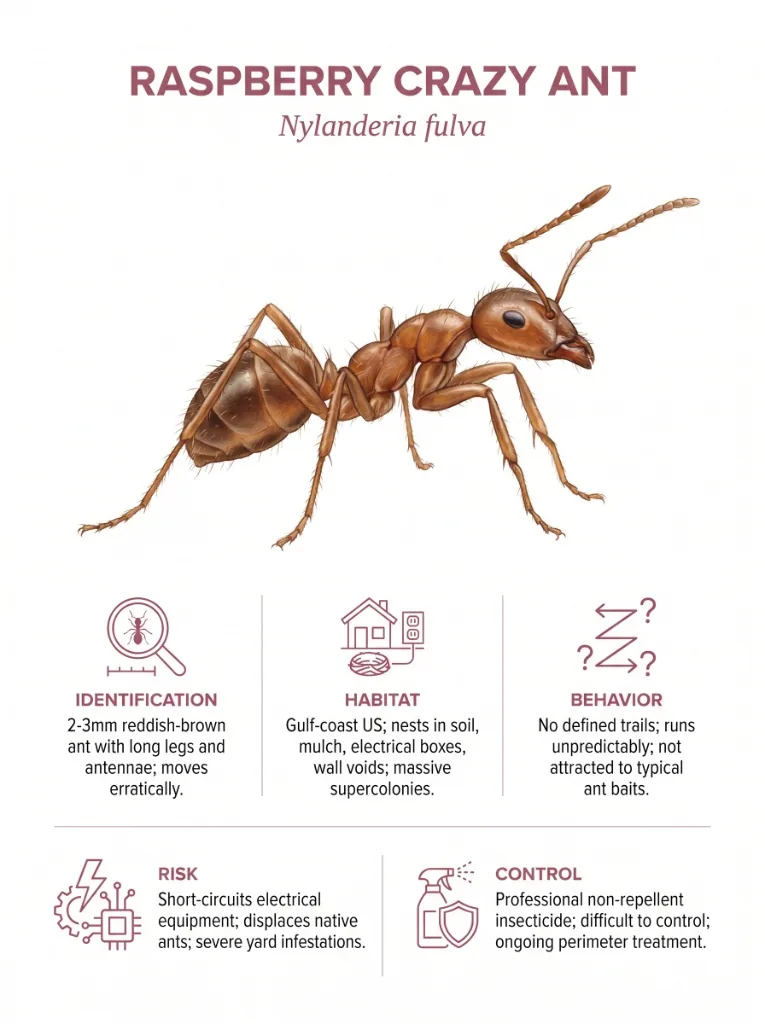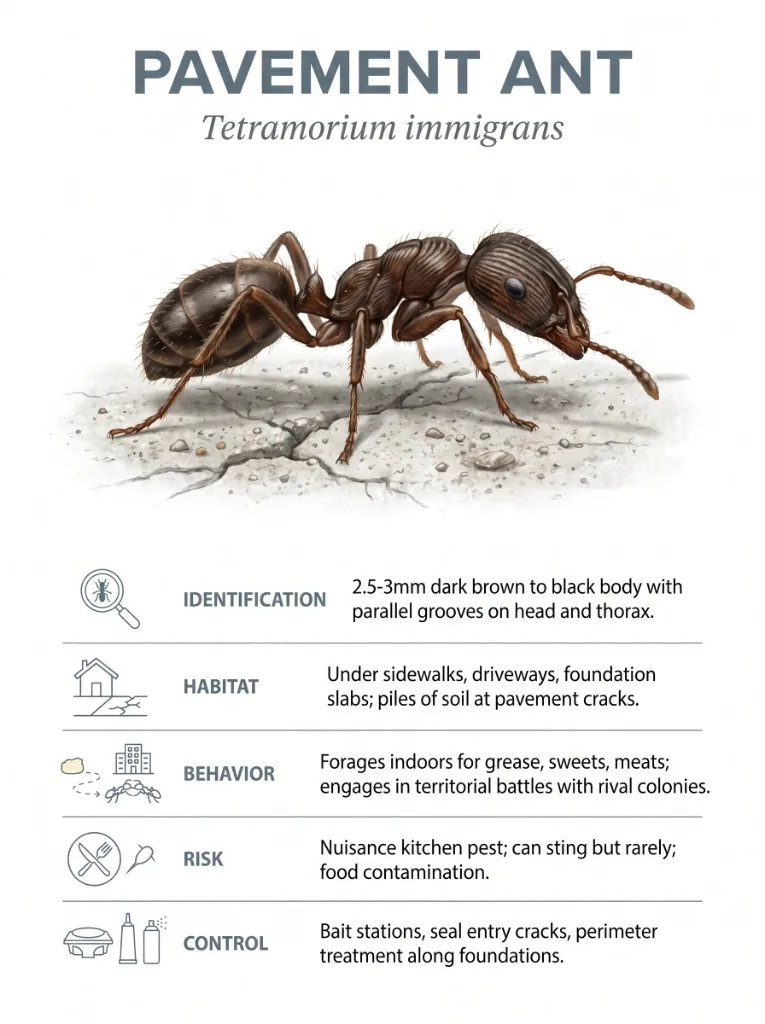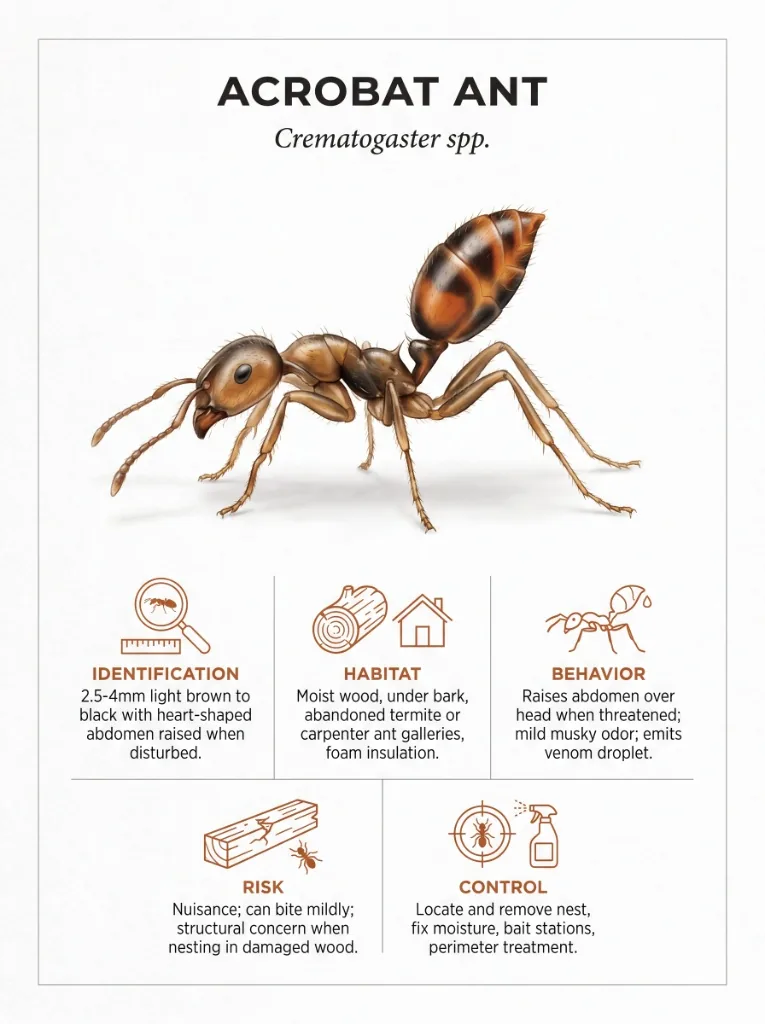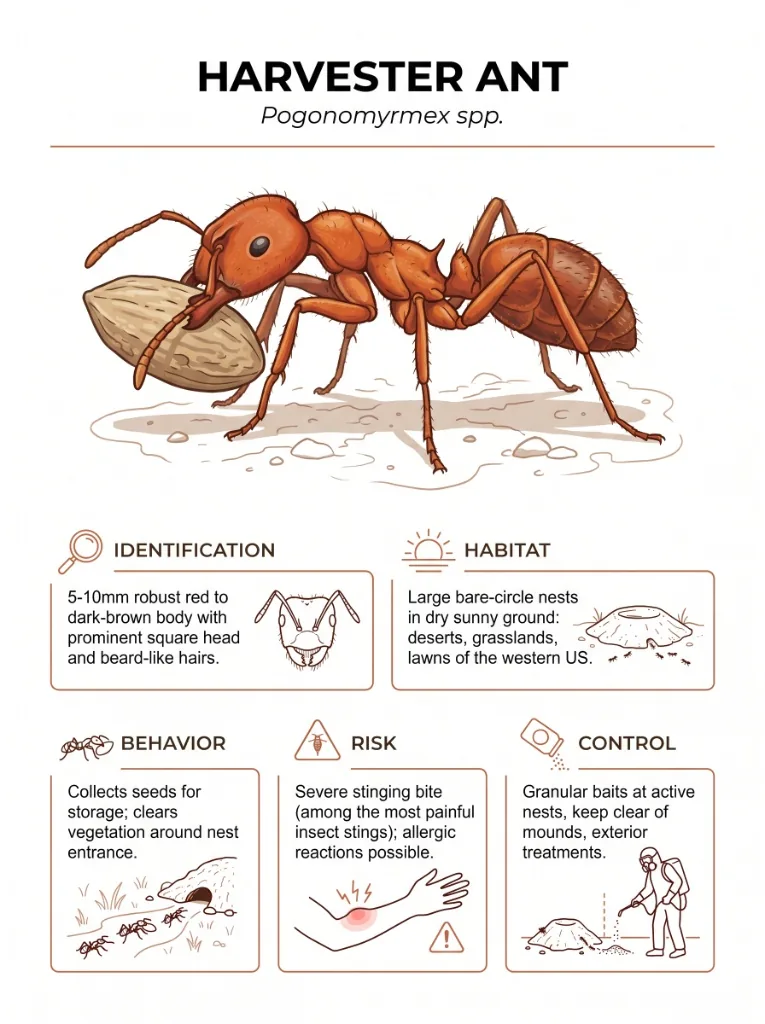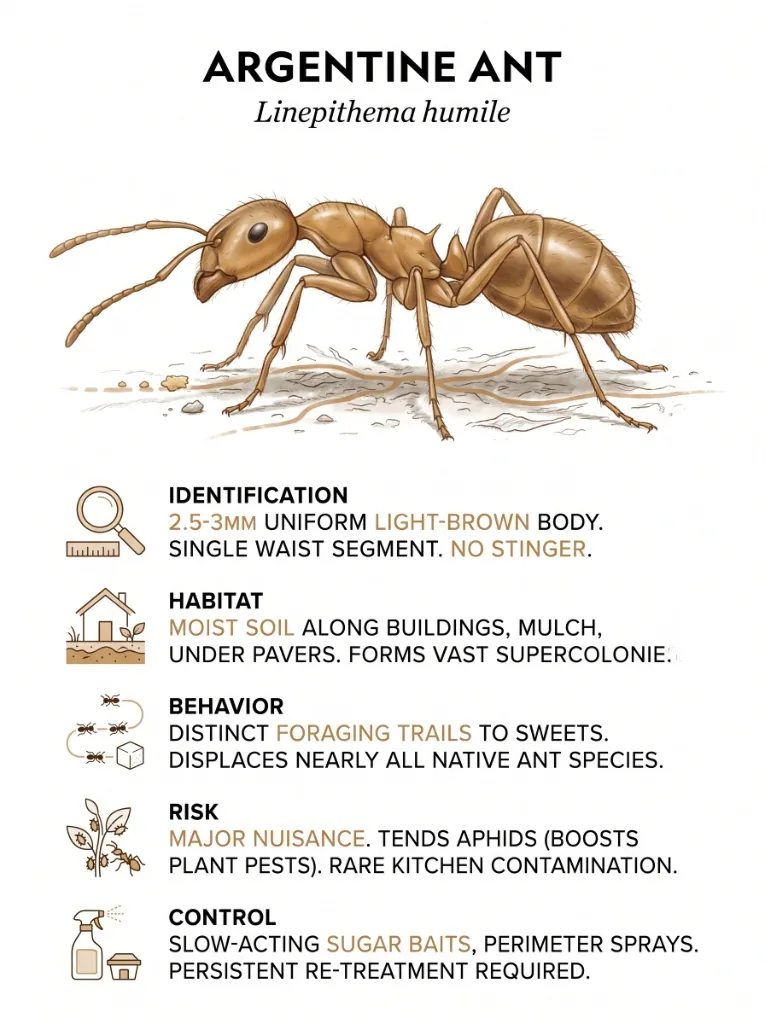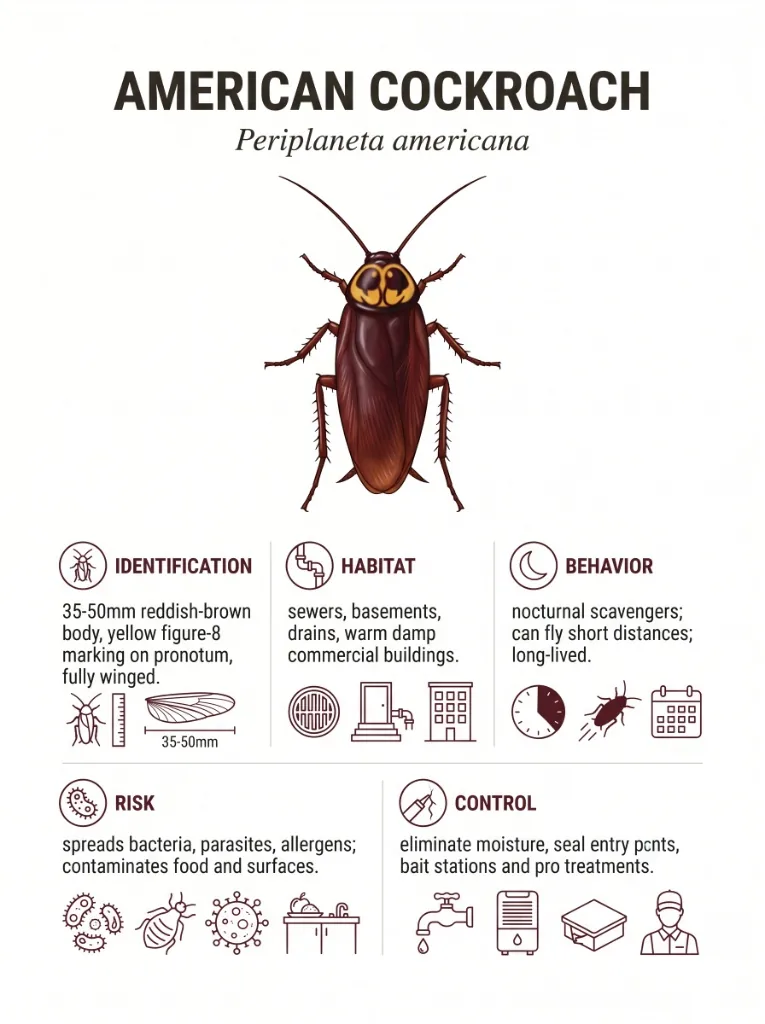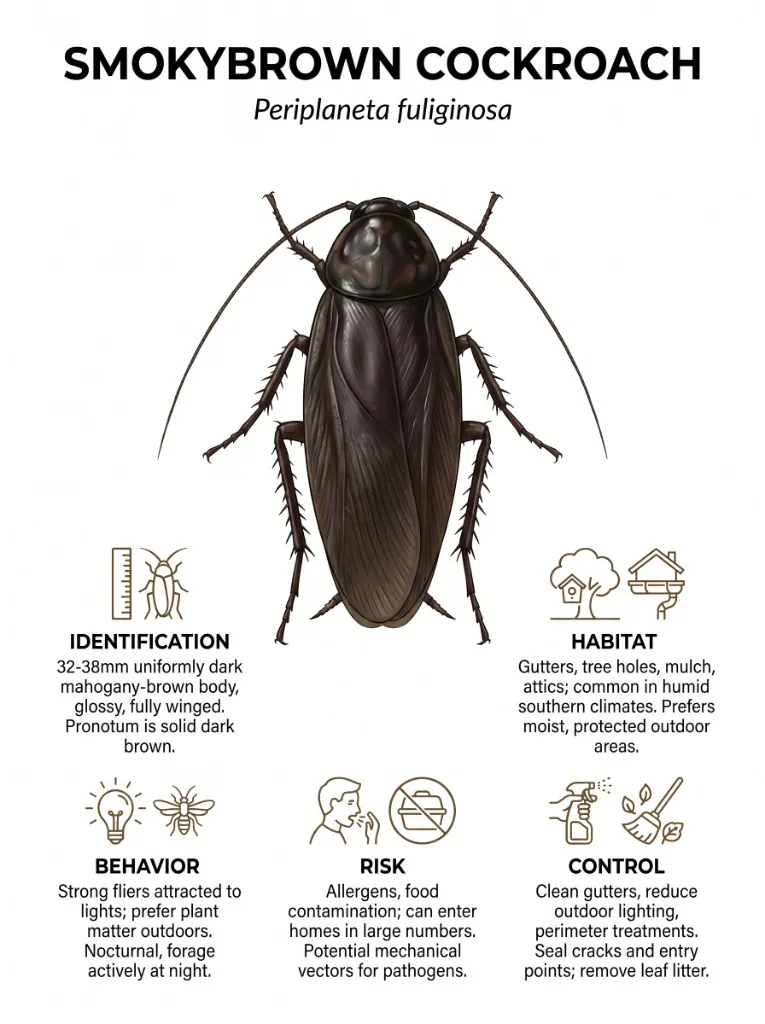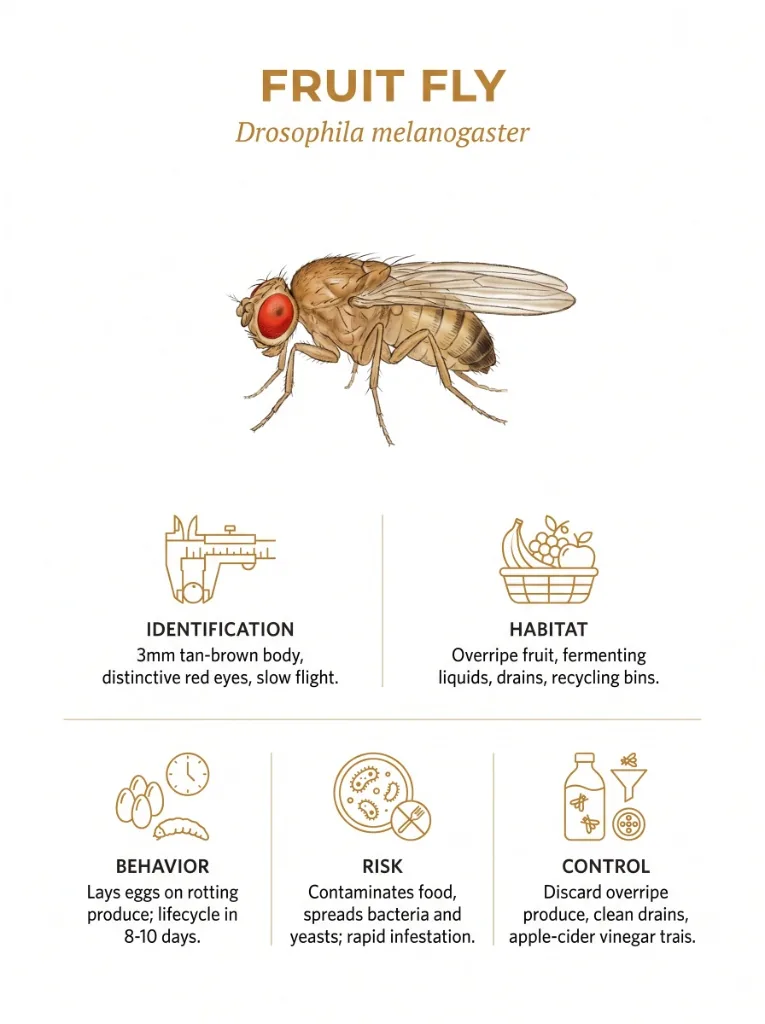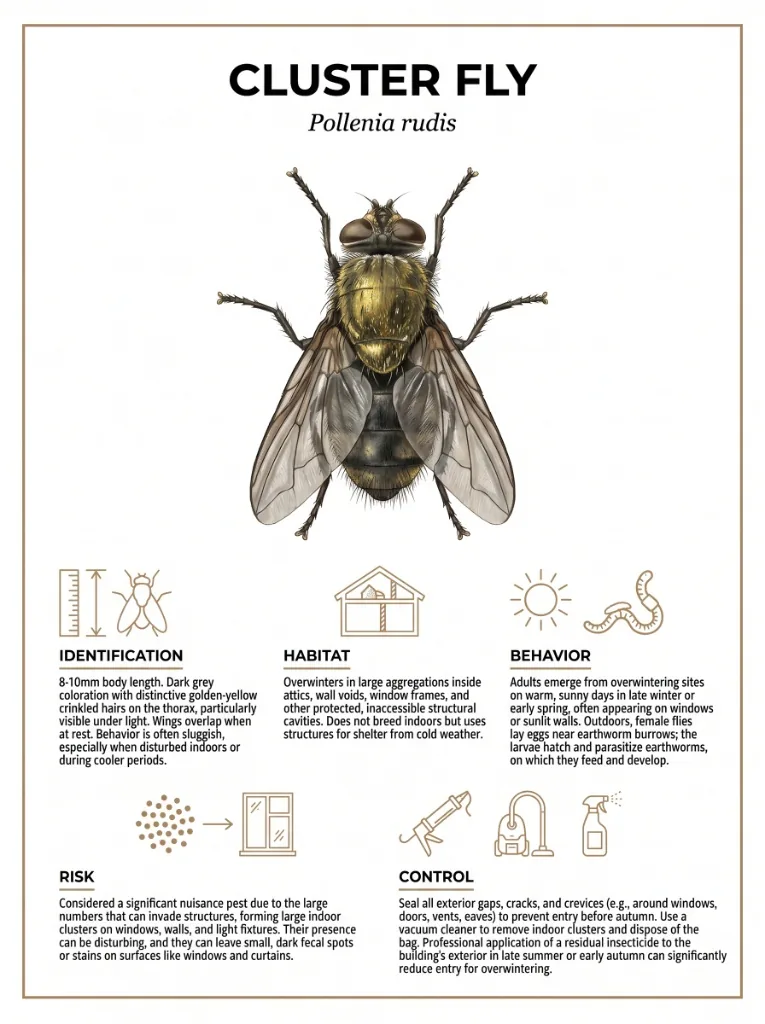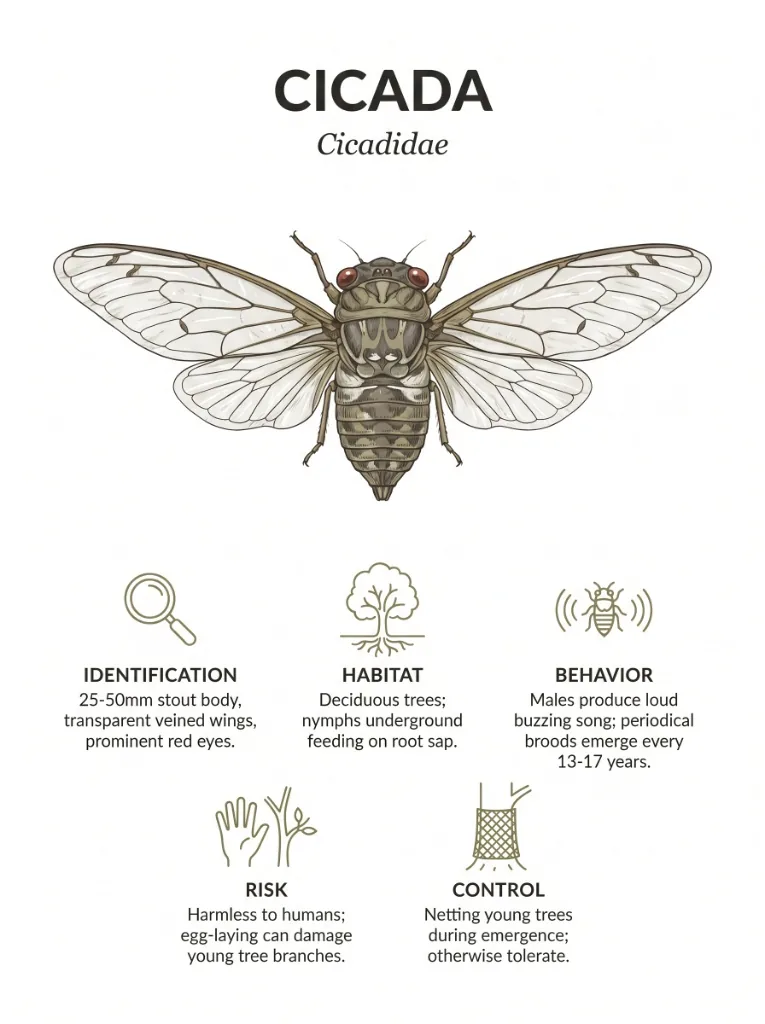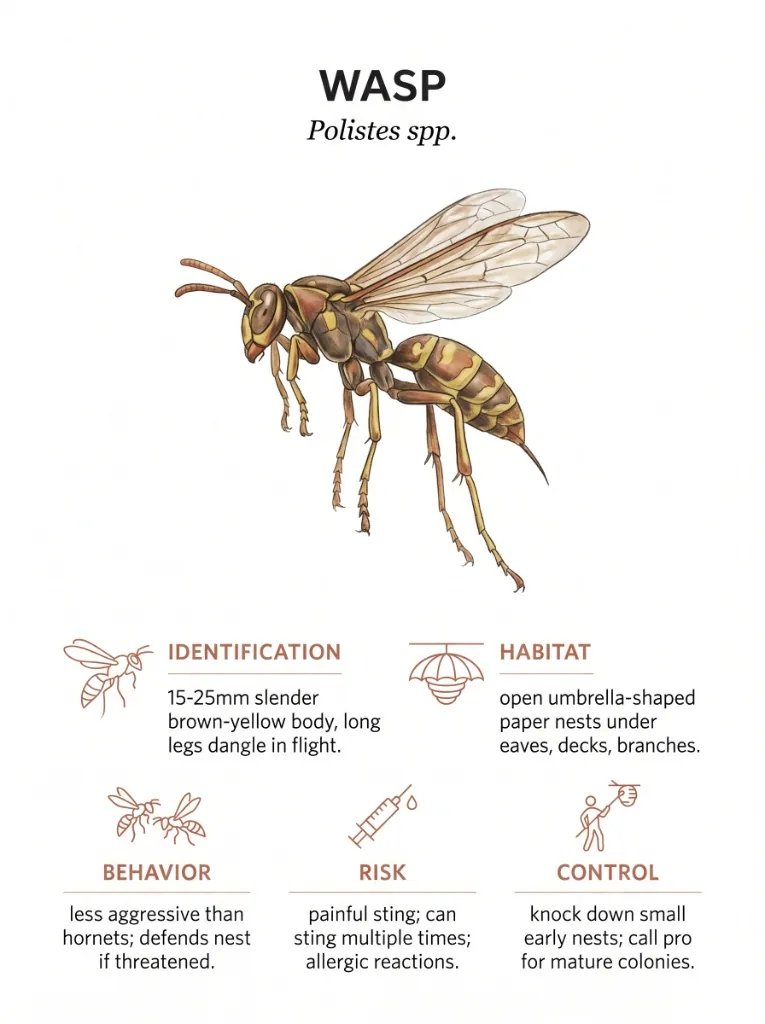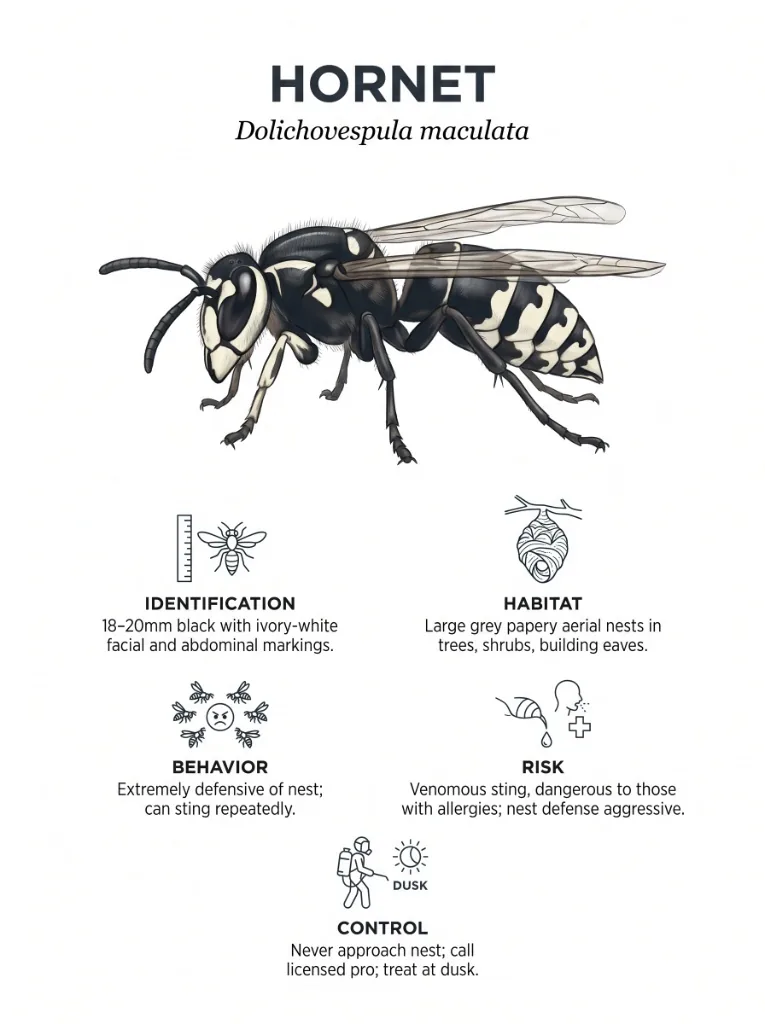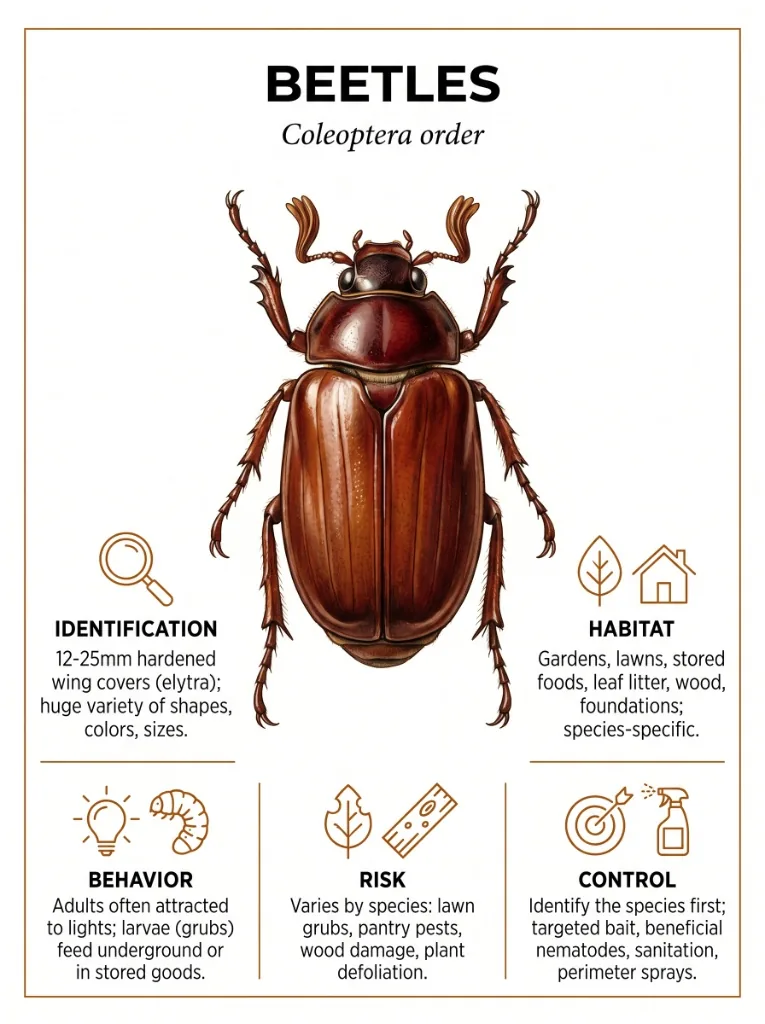
Not sure what you're dealing with? Start with the size, the color, and where you spotted it — indoors near food and water usually points to roaches or ants, while wood shavings or hollow-sounding trim can mean termites or carpenter ants. Each pest below links to a full identification page with photos, habits, and what actually gets rid of it. If you're still not sure, or the pest is a wasp, hornet, or anything that stings, skip the guesswork — (919) 606-8686 — we'll identify it for free on your inspection visit.
Ants
10 pestsTrail-followers, scavengers, and structural nesters — from sugar ants to fire ants. The Triangle has an unusually diverse ant population, and species ID is the first step in choosing the right treatment.
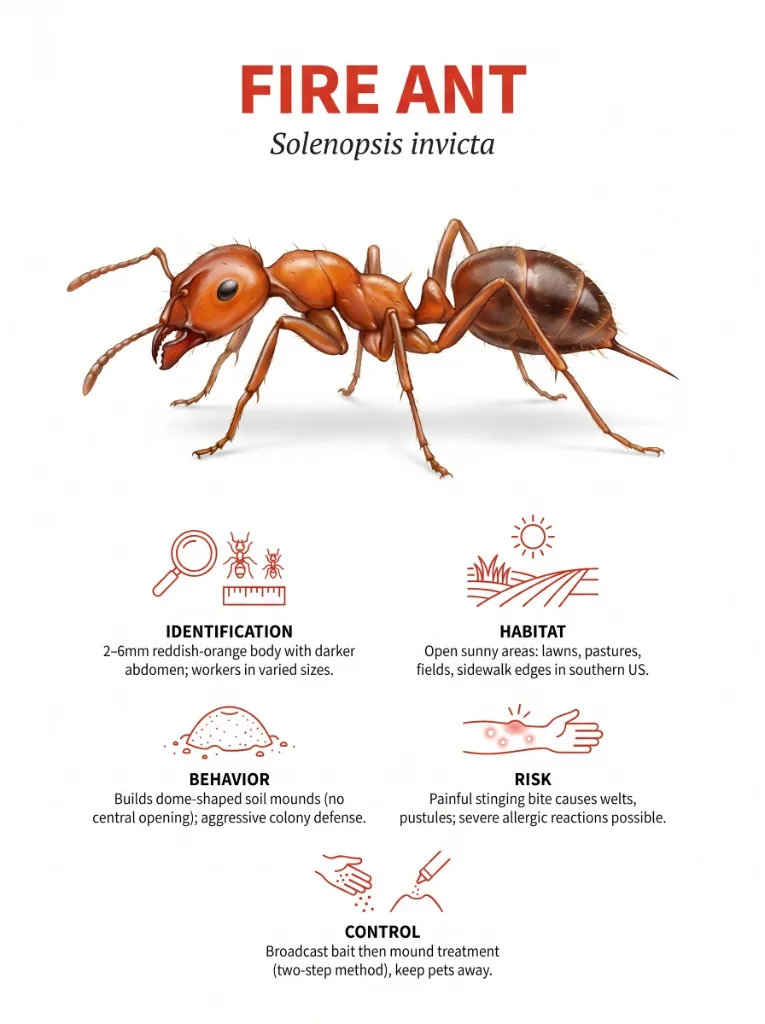
Cockroaches
3 pestsAllergen-spreading, fast-breeding kitchen and bathroom invaders. Durham's warm, humid summers keep roach populations active nearly year-round, especially near water and food sources.
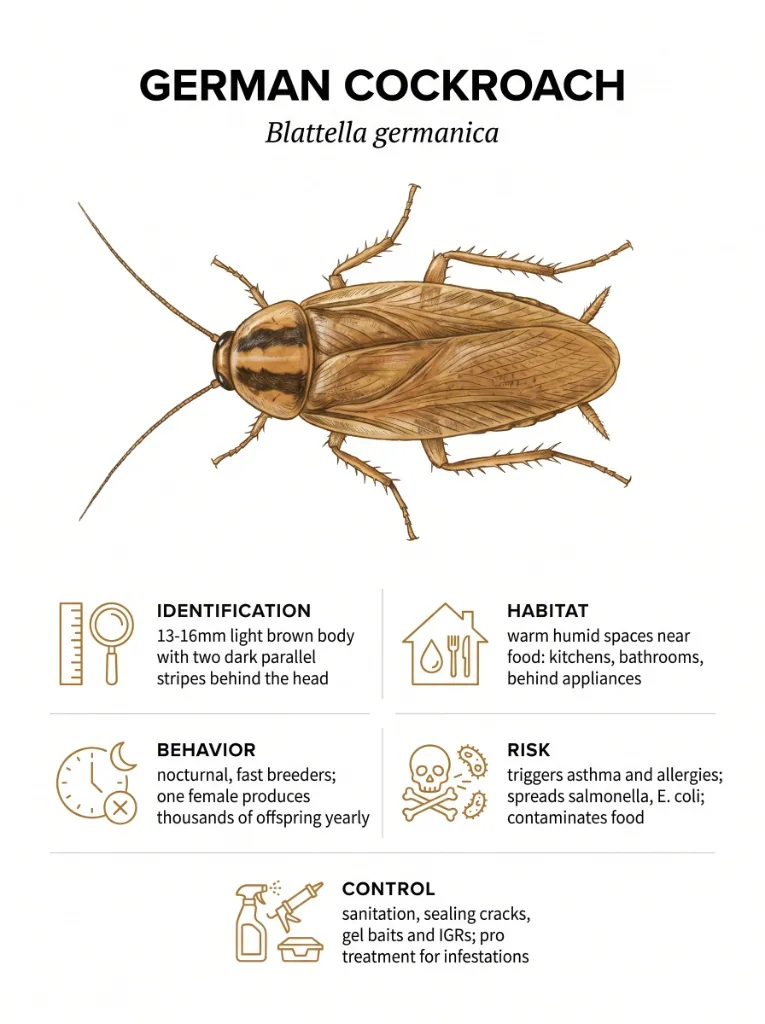
Rodents
3 pestsMice that chew wires, contaminate food, and squeeze through dime-sized gaps. Fall's first cool nights reliably push Triangle rodents indoors looking for warmth and shelter.
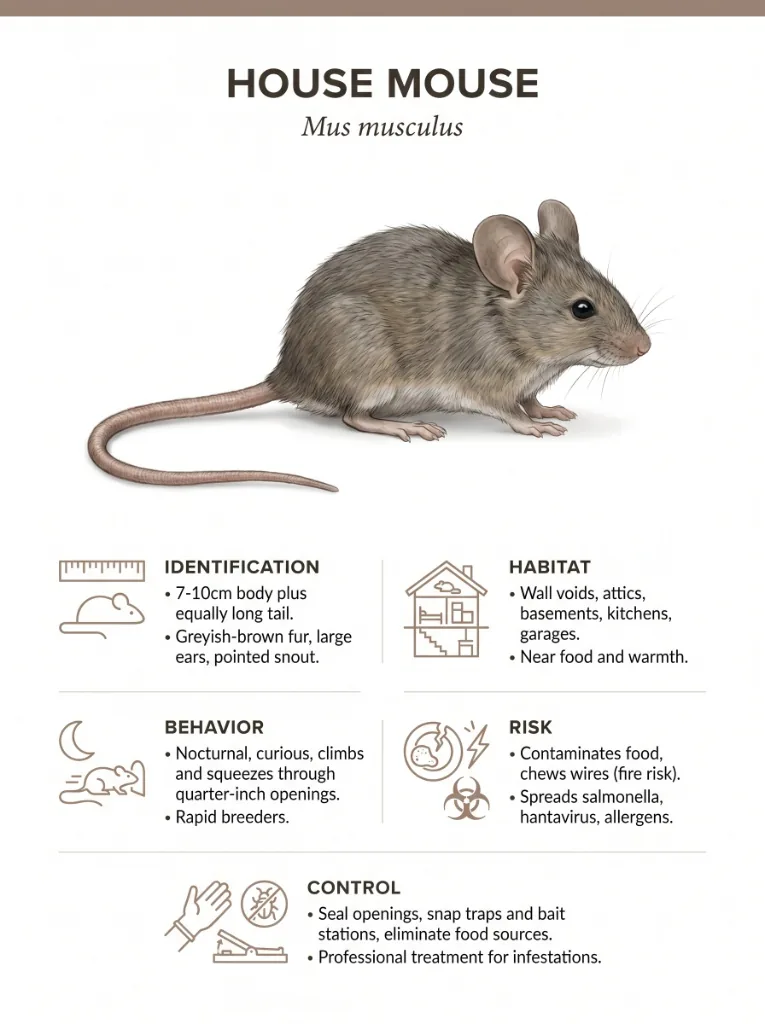
Flies & Flying Pests
4 pestsHouseflies, fruit flies, mosquitoes, cluster flies, cicadas — anything with wings and a buzz. Most breed in moisture or decaying organic matter that's easy to overlook.
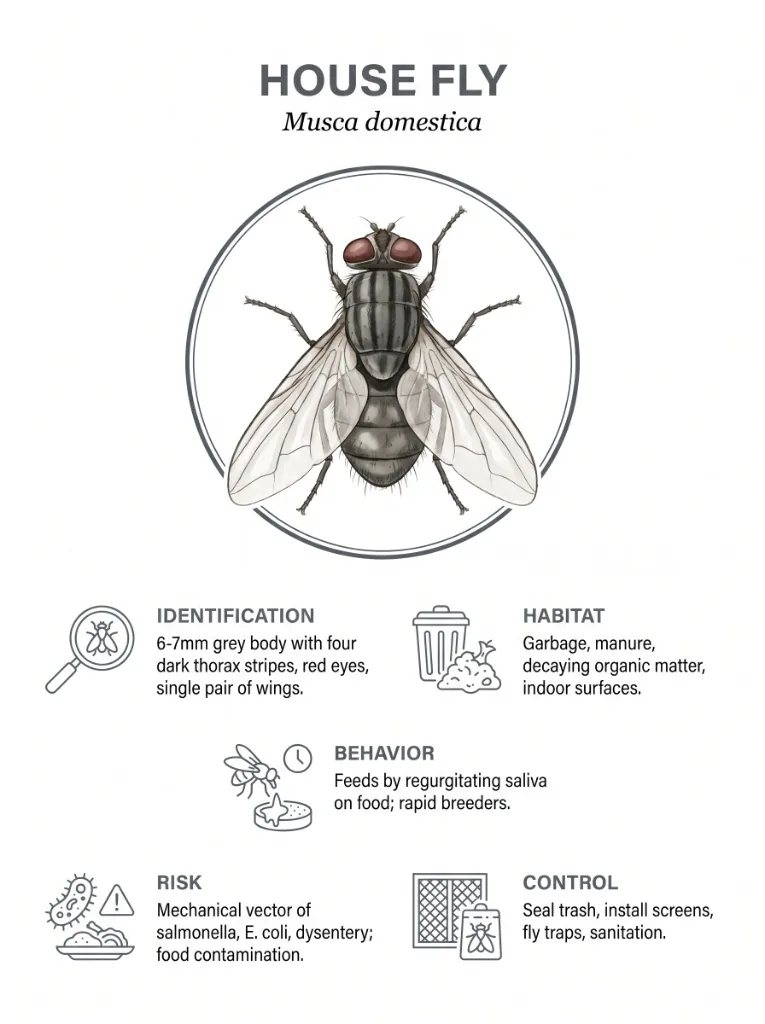
Stinging Insects
3 pestsYellow jackets, wasps, and hornets — painful, sometimes life-threatening. Correct species ID matters here more than almost any other pest category, since risk levels vary sharply.
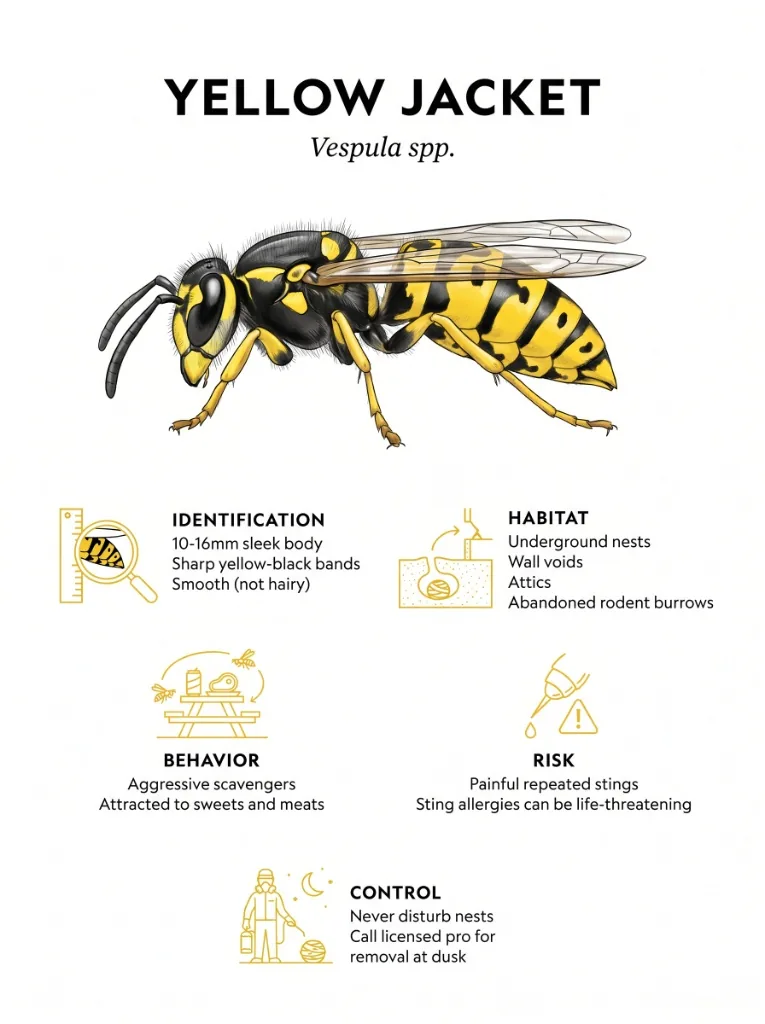
Spiders
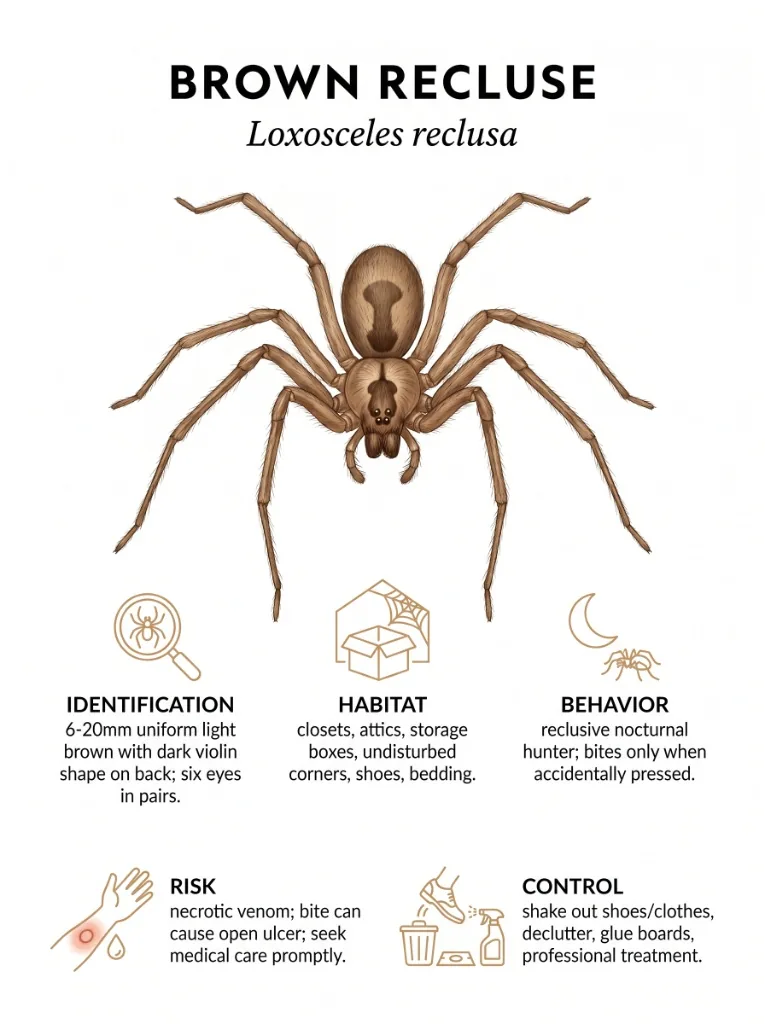
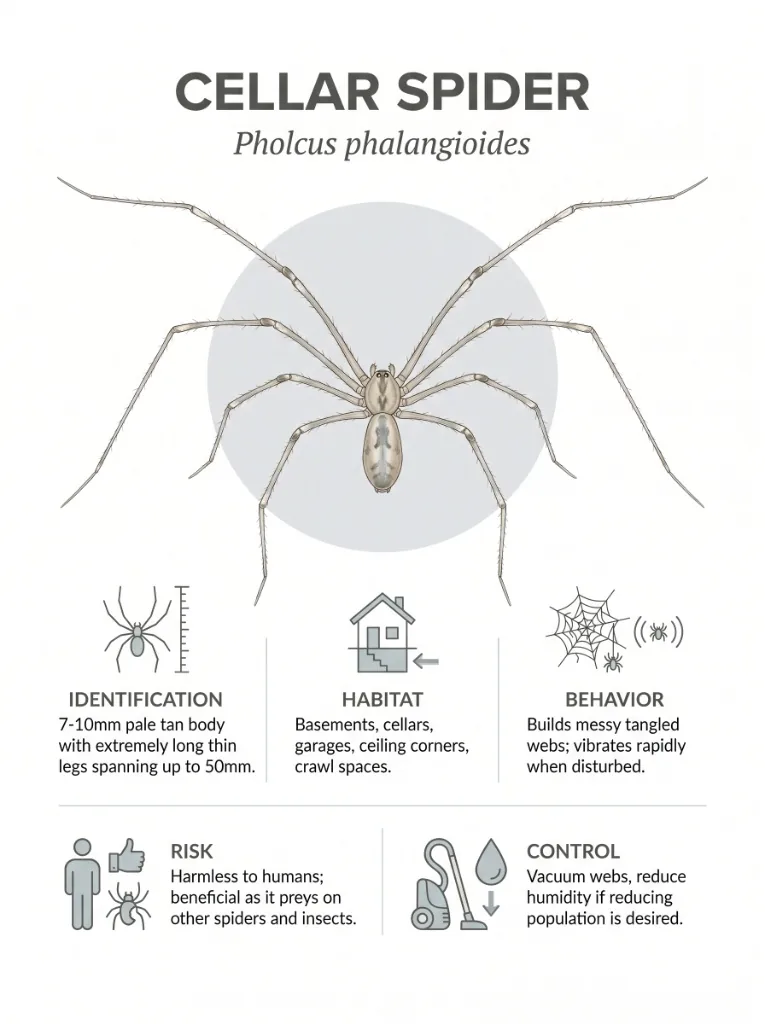
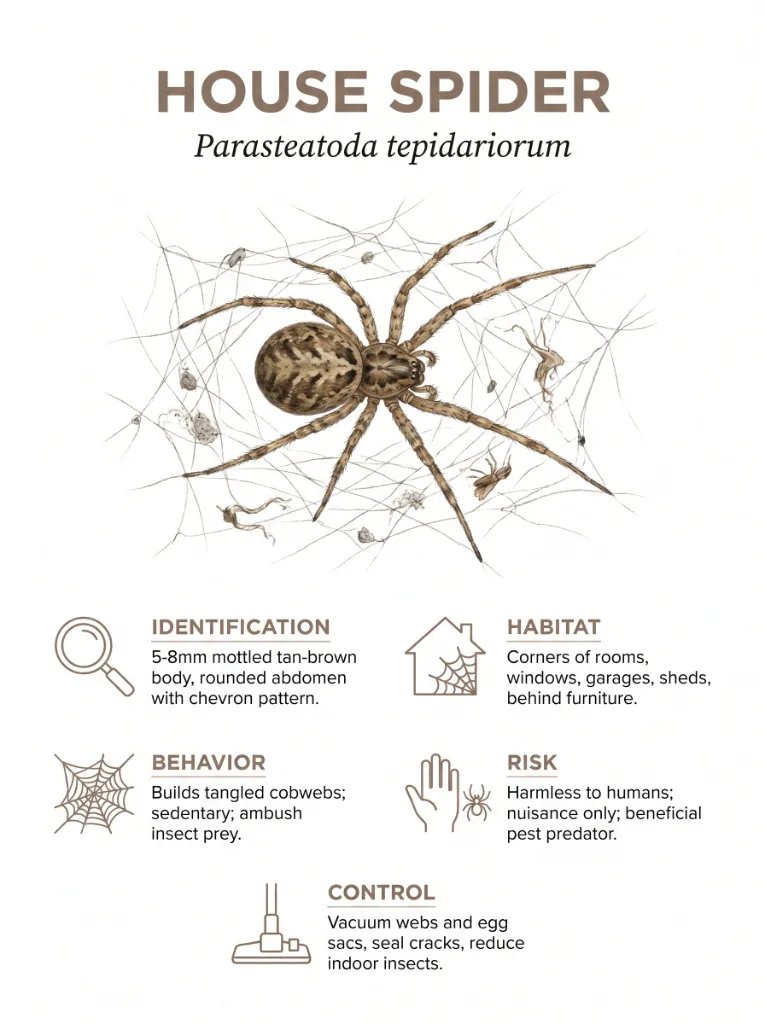
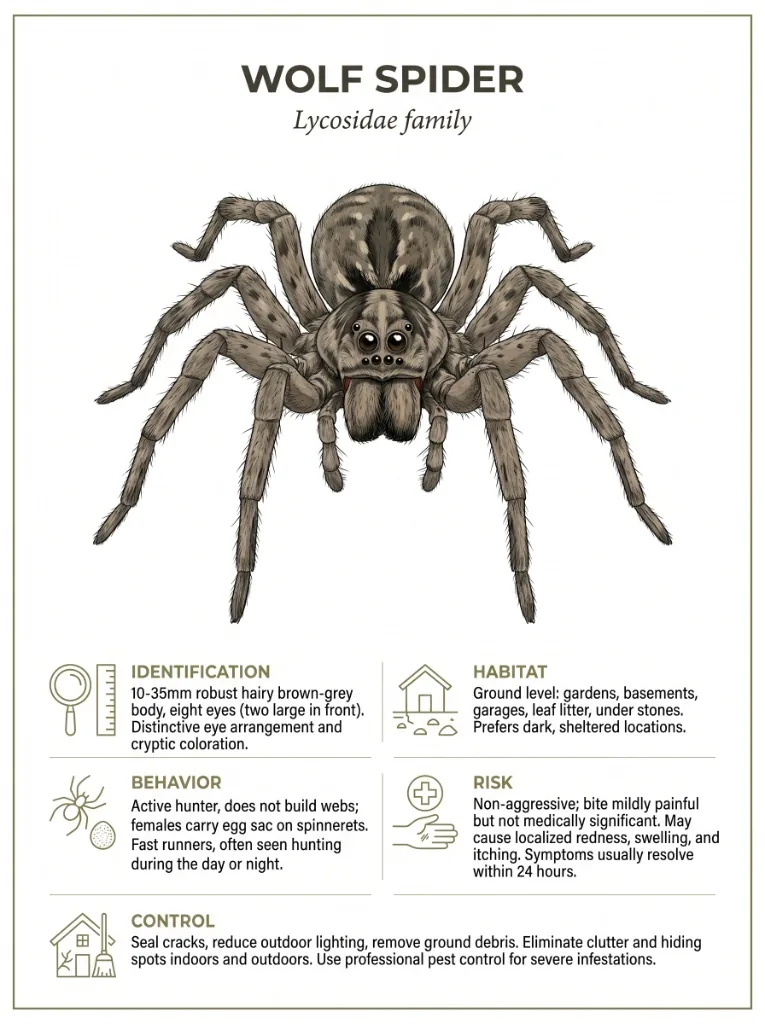
5 pestsFrom harmless cellar spiders to medically significant widows and recluses. Most Triangle spider sightings are the harmless end of that spectrum, but a few genuinely warrant caution.
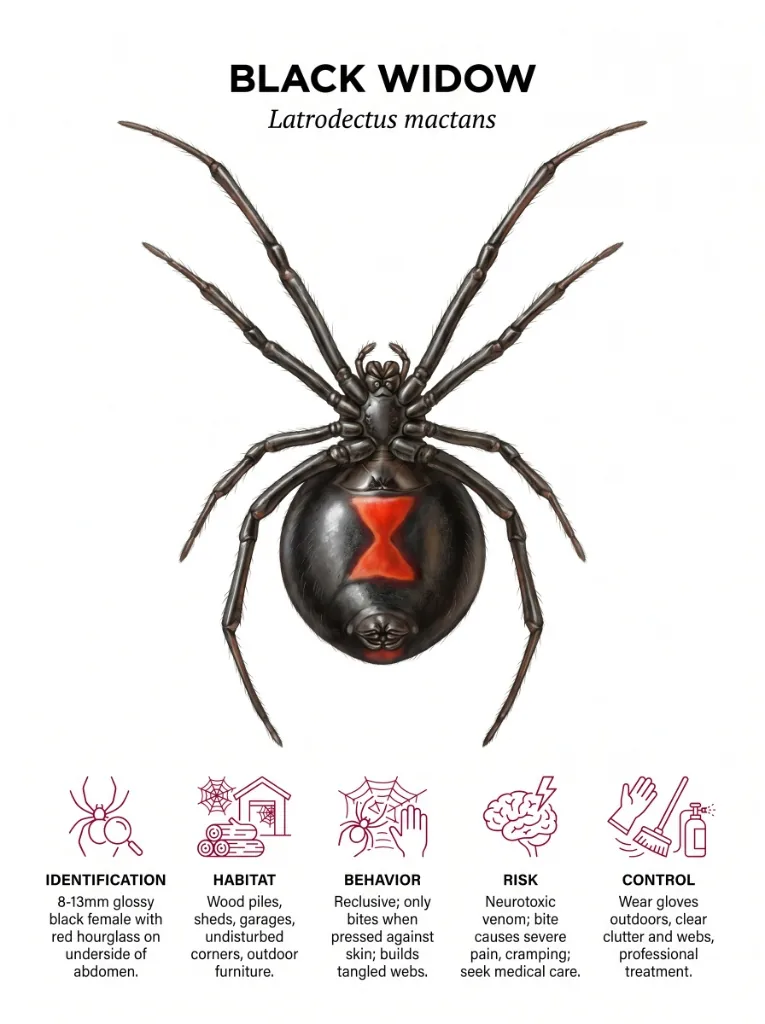
Biting Pests
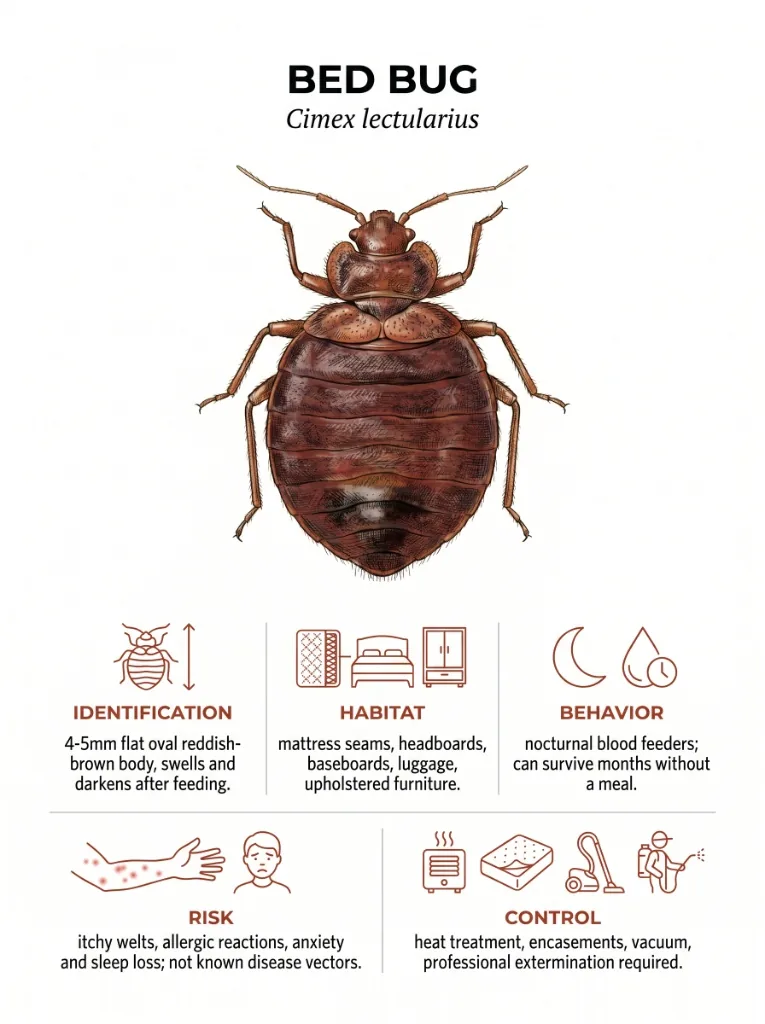
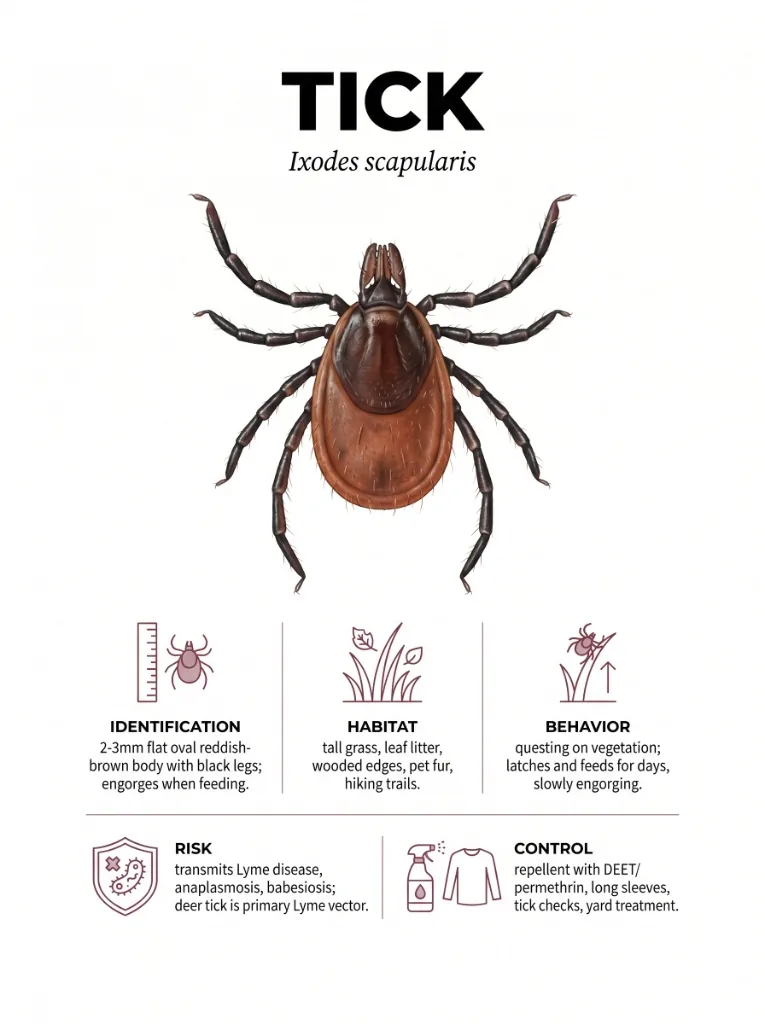
3 pestsBed bugs, ticks, fleas — pests that feed on blood and cause itching, welts, or disease. Early identification keeps a small problem from becoming a much bigger one.
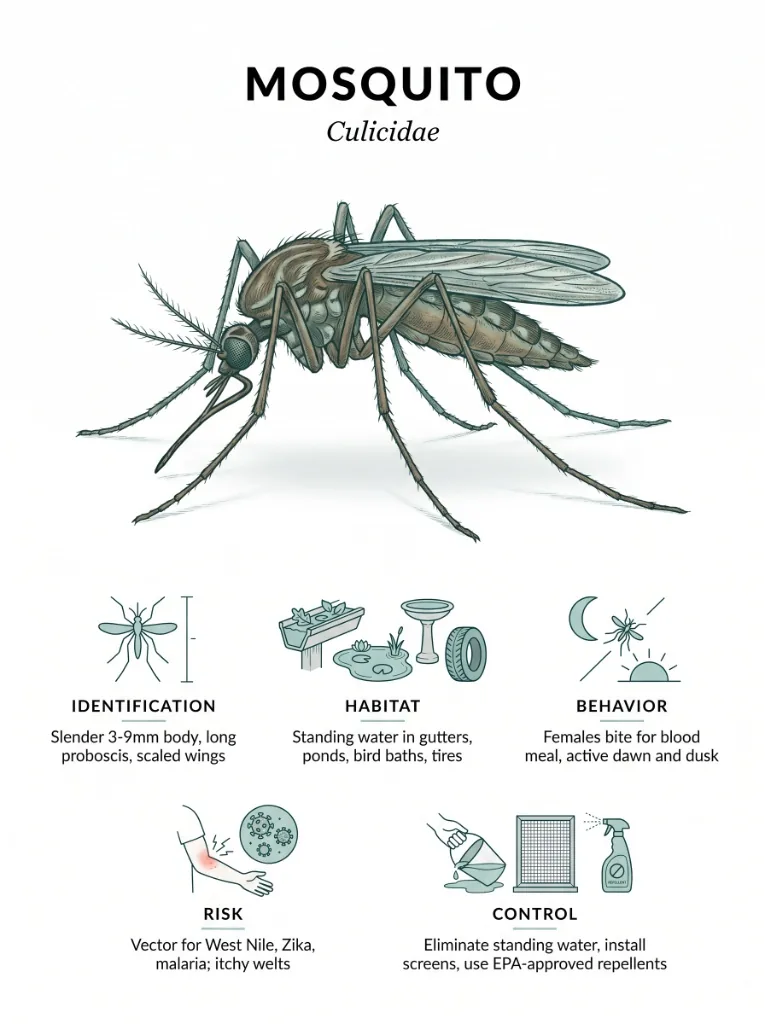
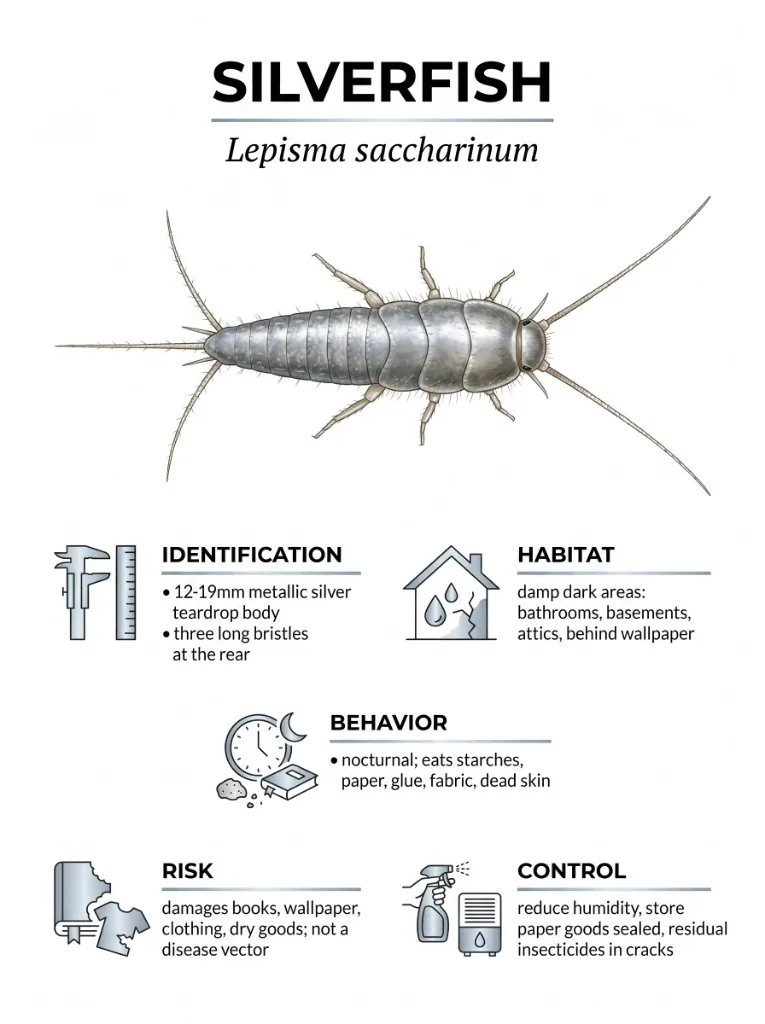
Occasional Invaders
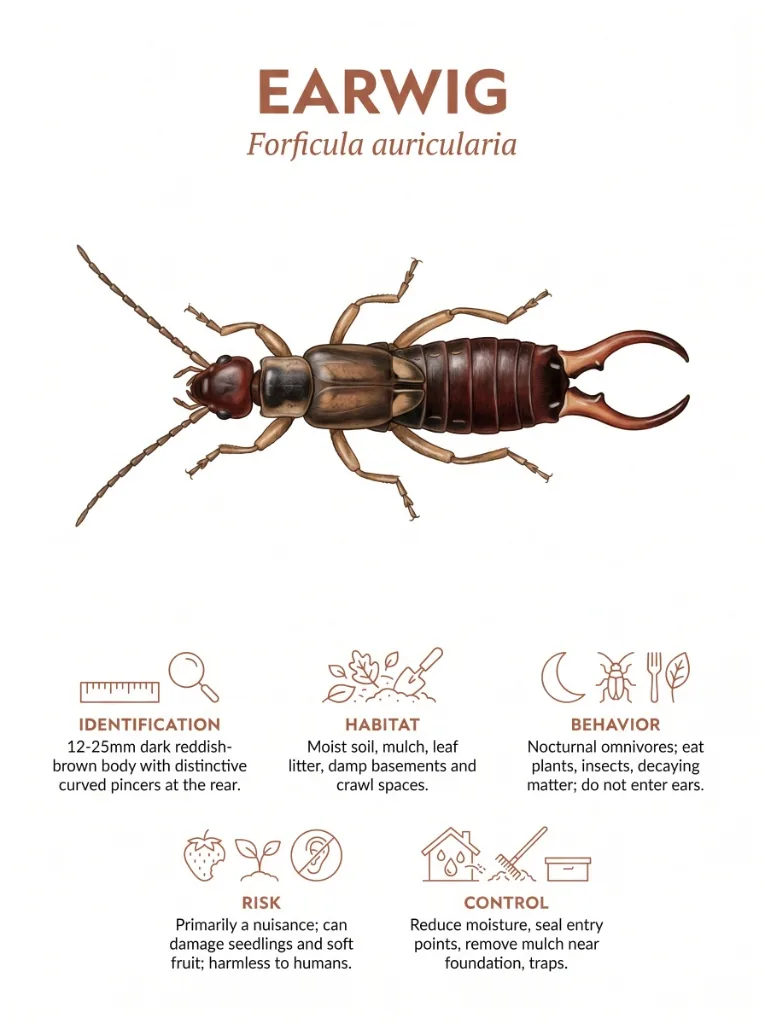
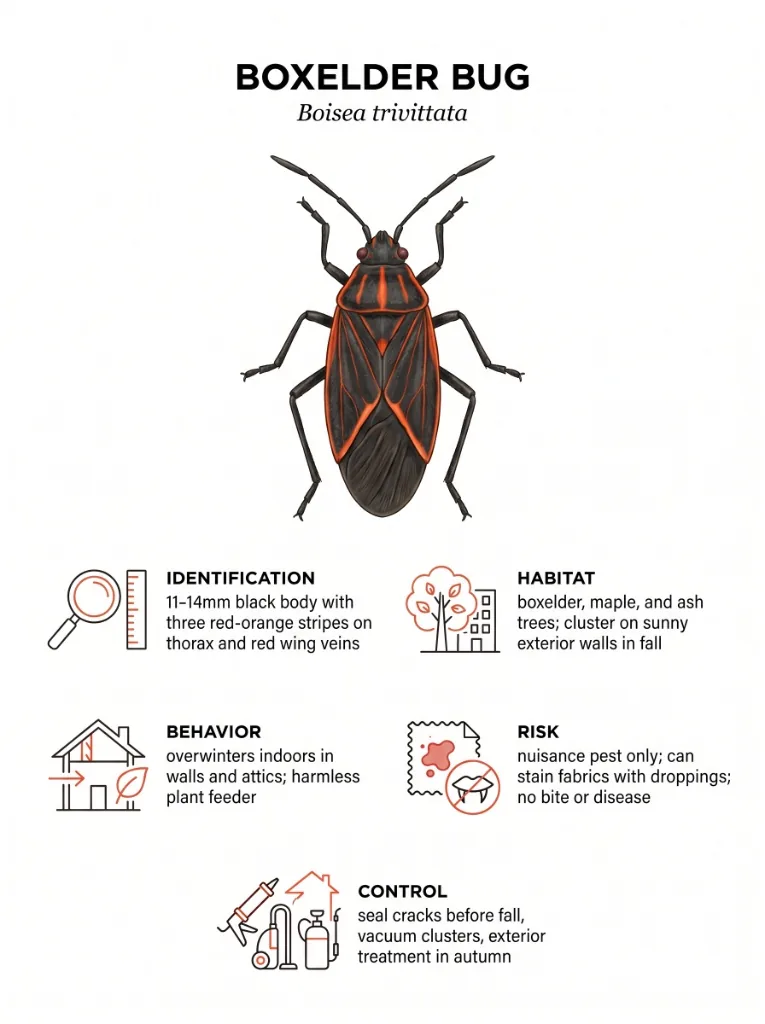
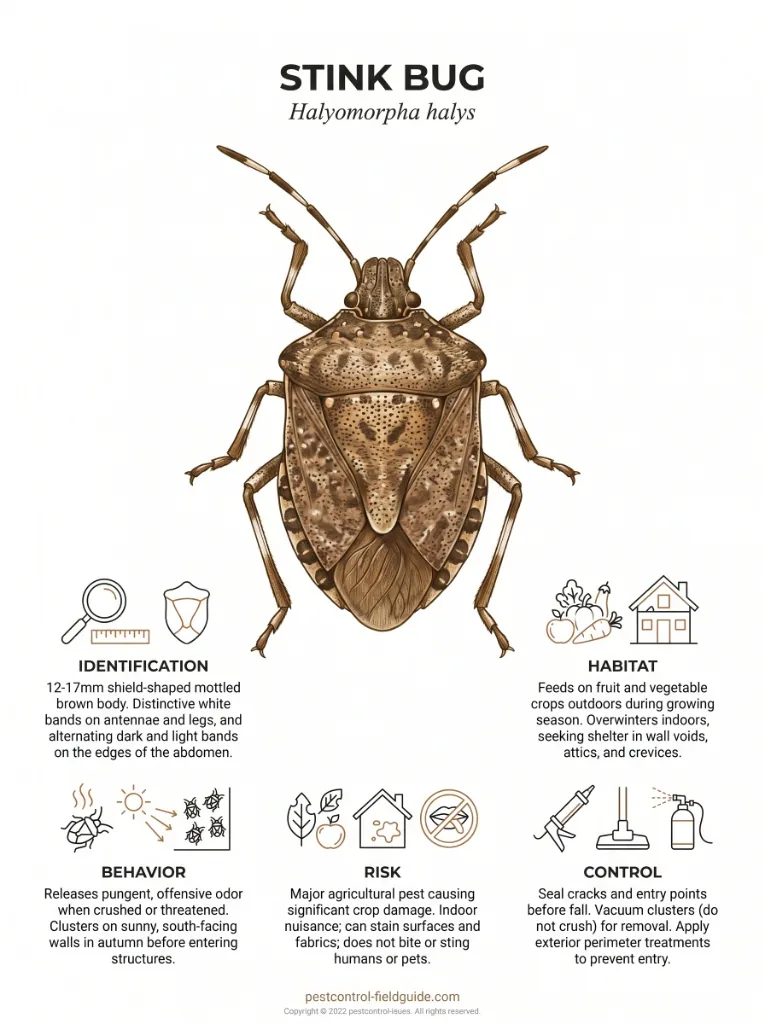
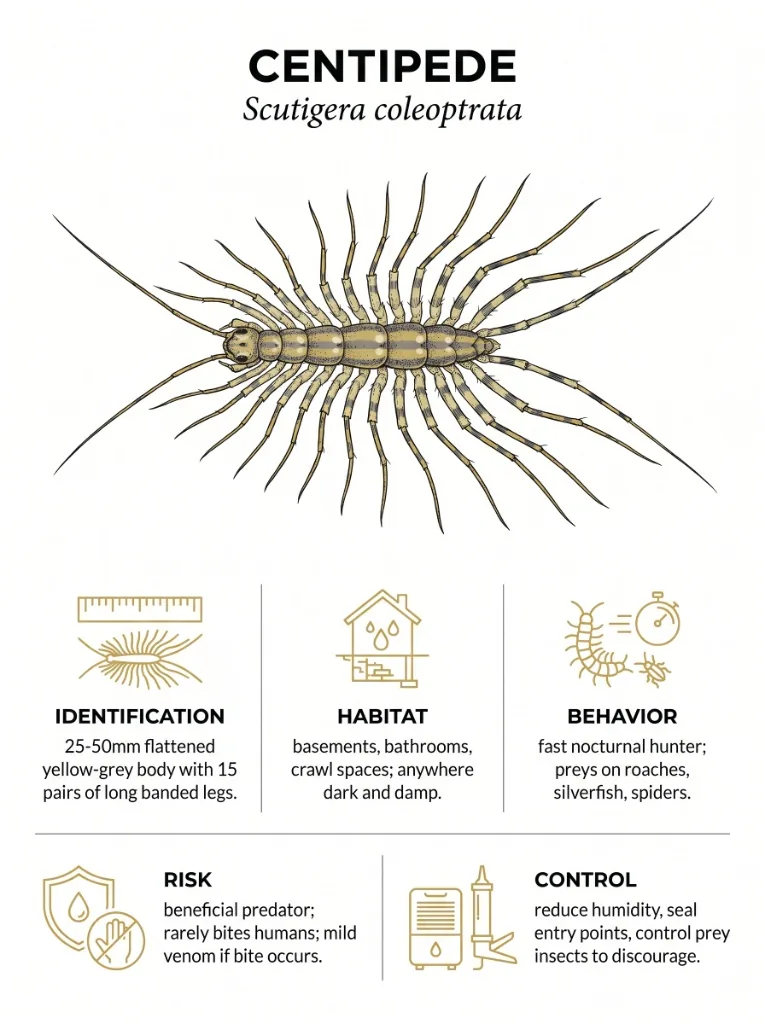
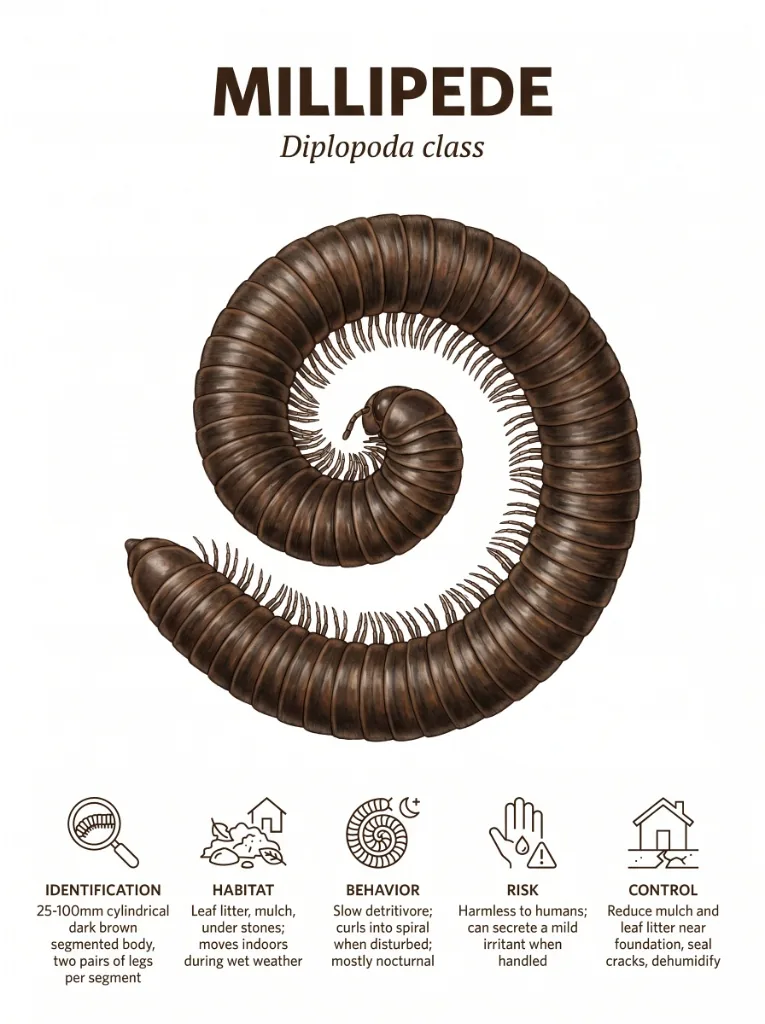
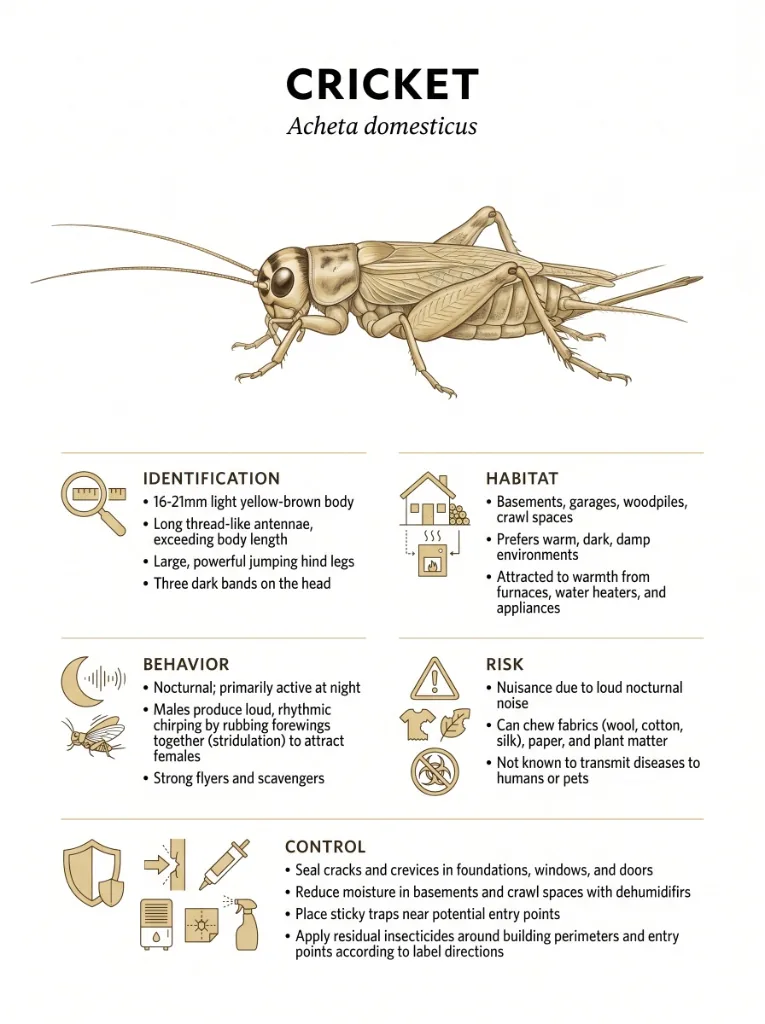
7 pestsSilverfish, earwigs, stink bugs, centipedes — sneak in when weather changes. They're rarely destructive, but large numbers usually point to an exterior gap worth sealing.
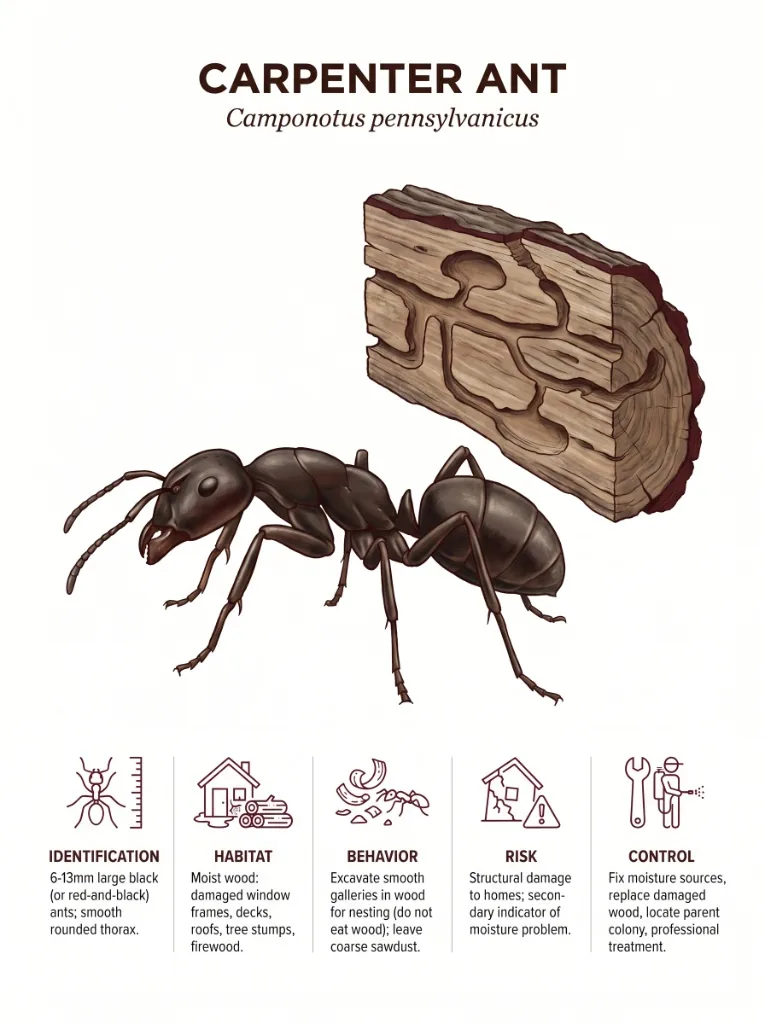
Wood-Destroying
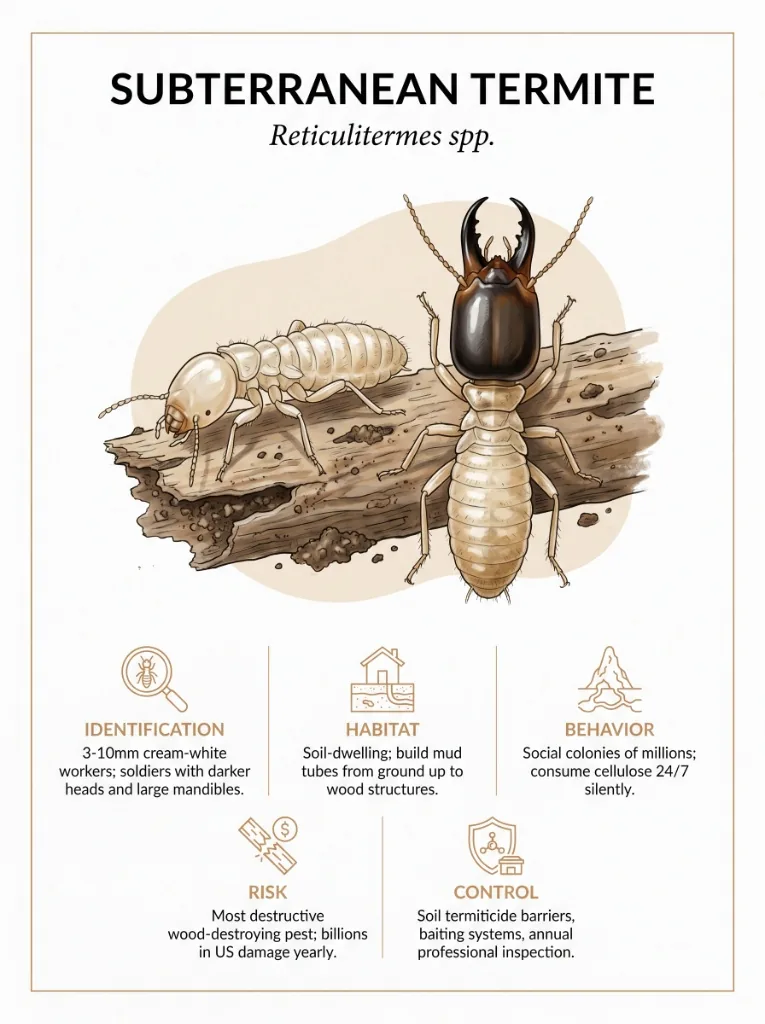
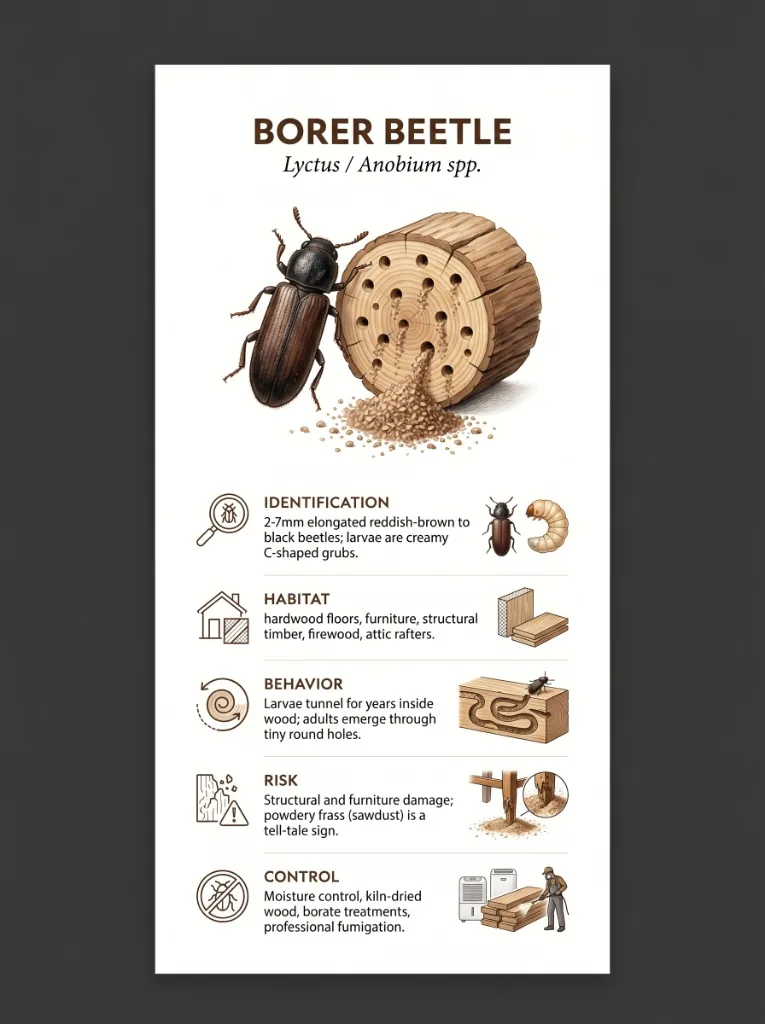
3 pestsSubterranean termites, carpenter ants, and borer beetles — silent structural damage. NC State Extension entomology guidance points to an annual inspection for homes in our region.
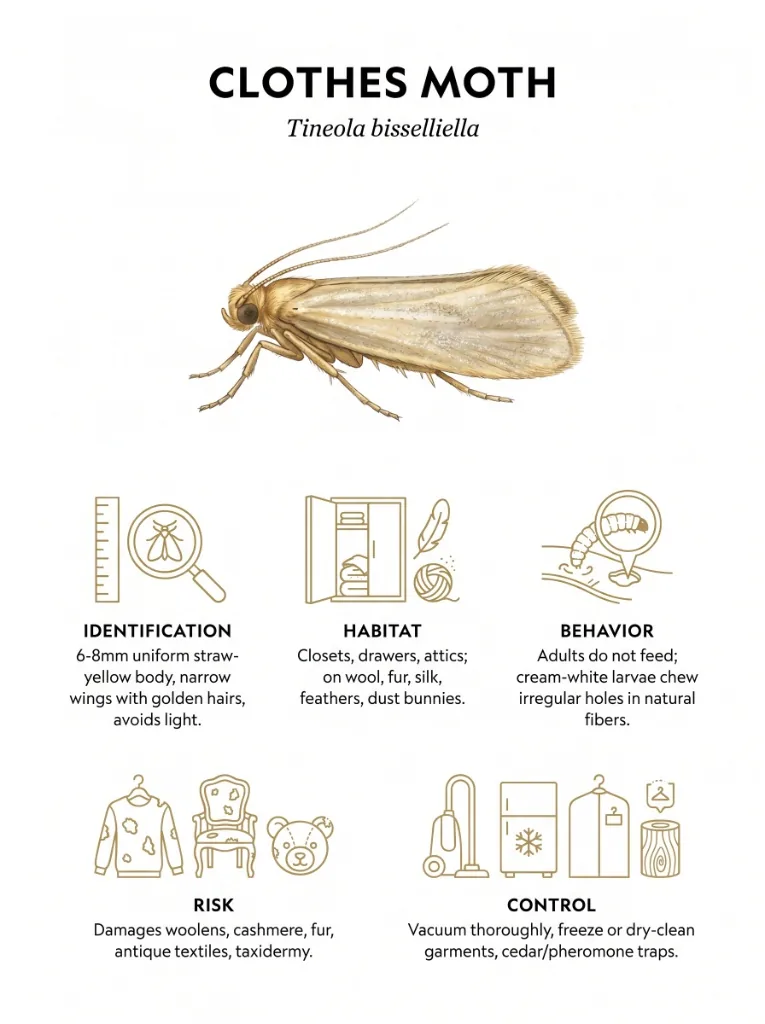
Fabric & Pantry
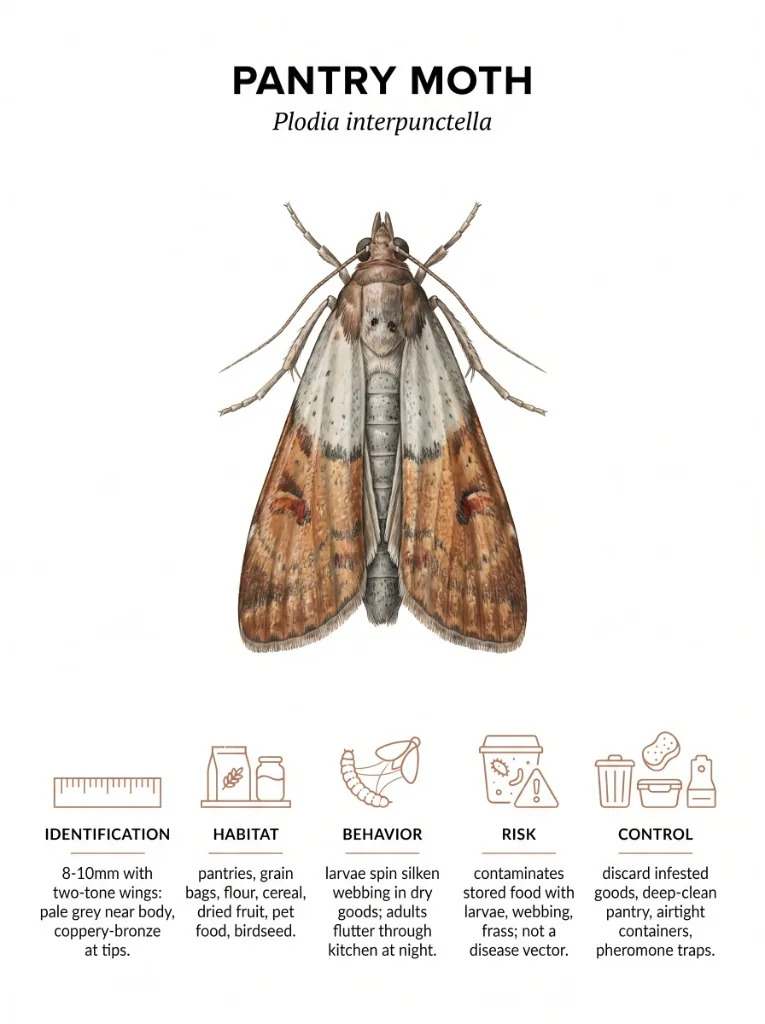
2 pestsClothes moths and pantry moths that ruin garments and contaminate dry goods. Both are more common in Durham homes than most people expect, especially in closets and pantries.
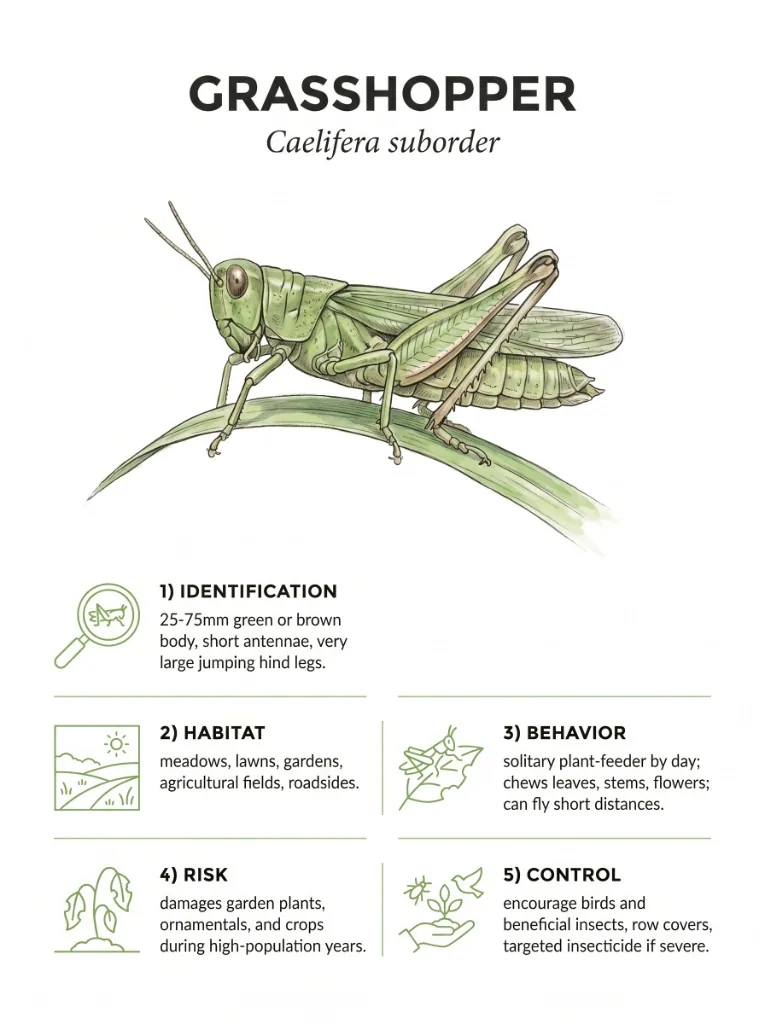
Garden & Outdoor
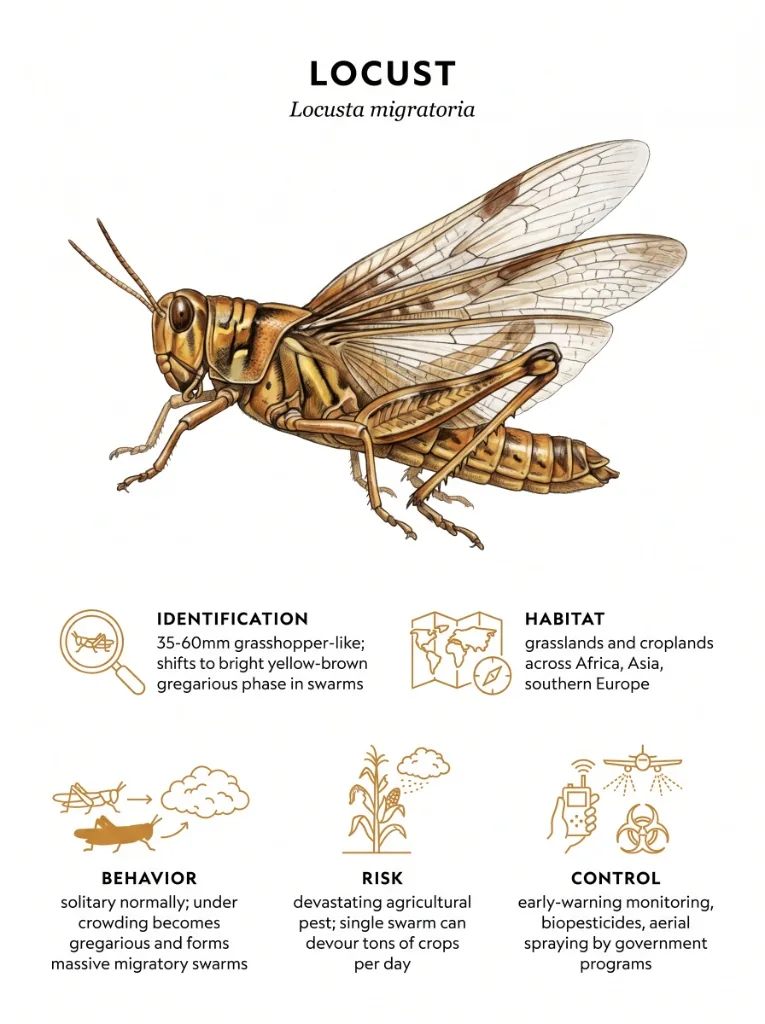
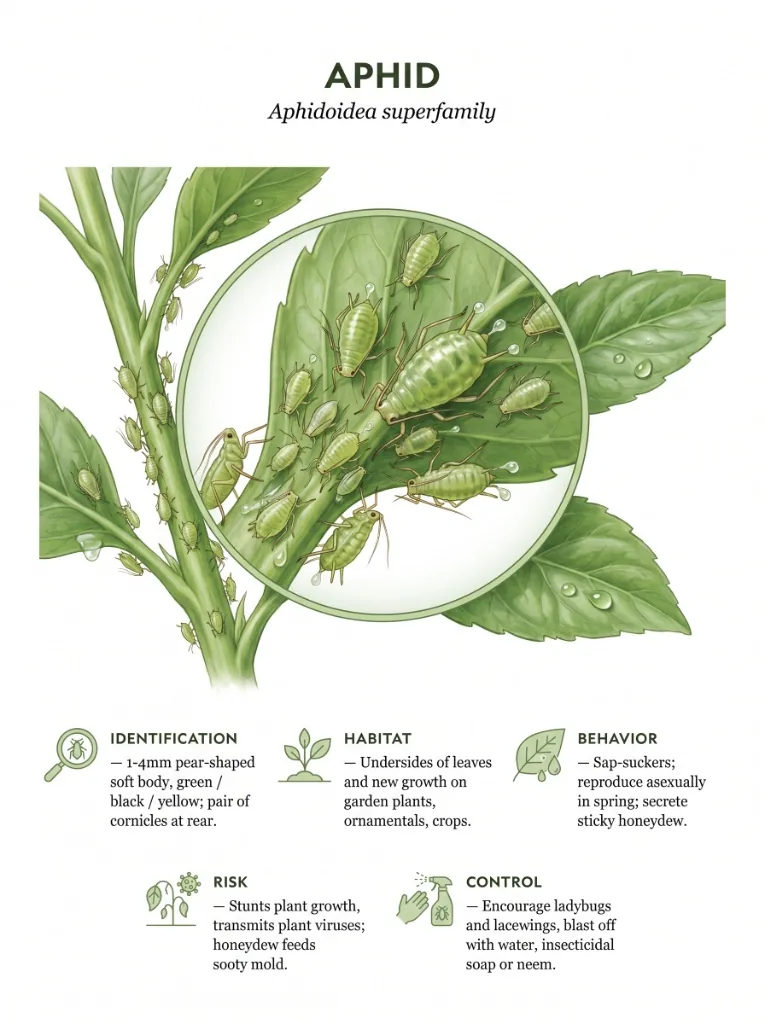
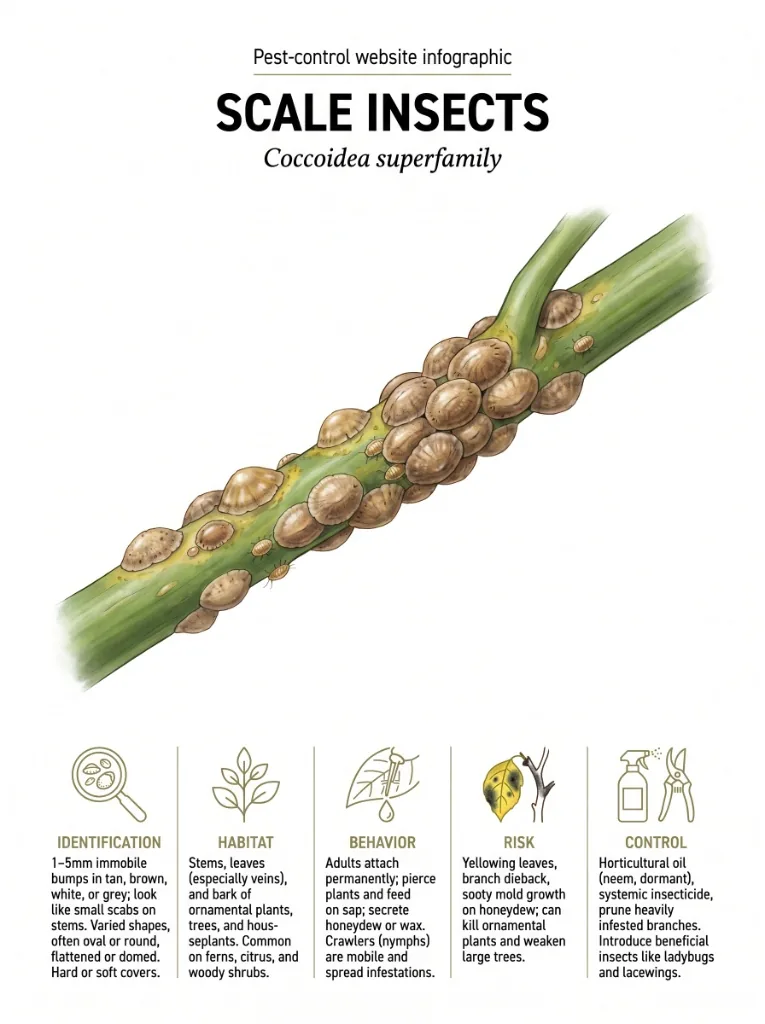
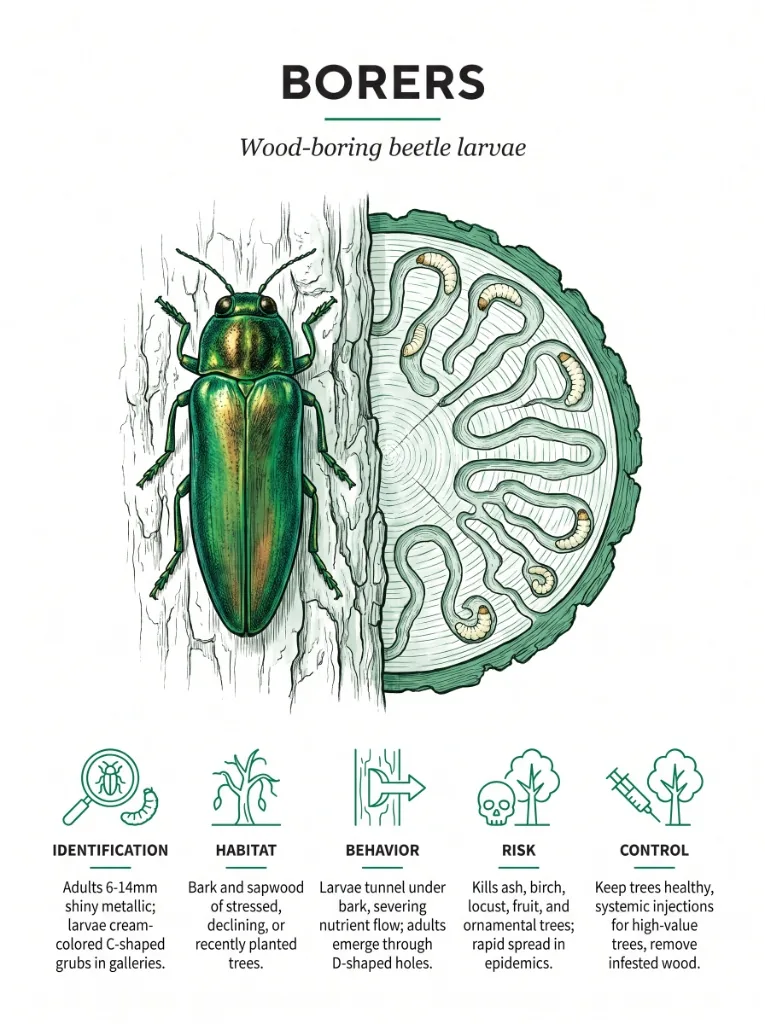
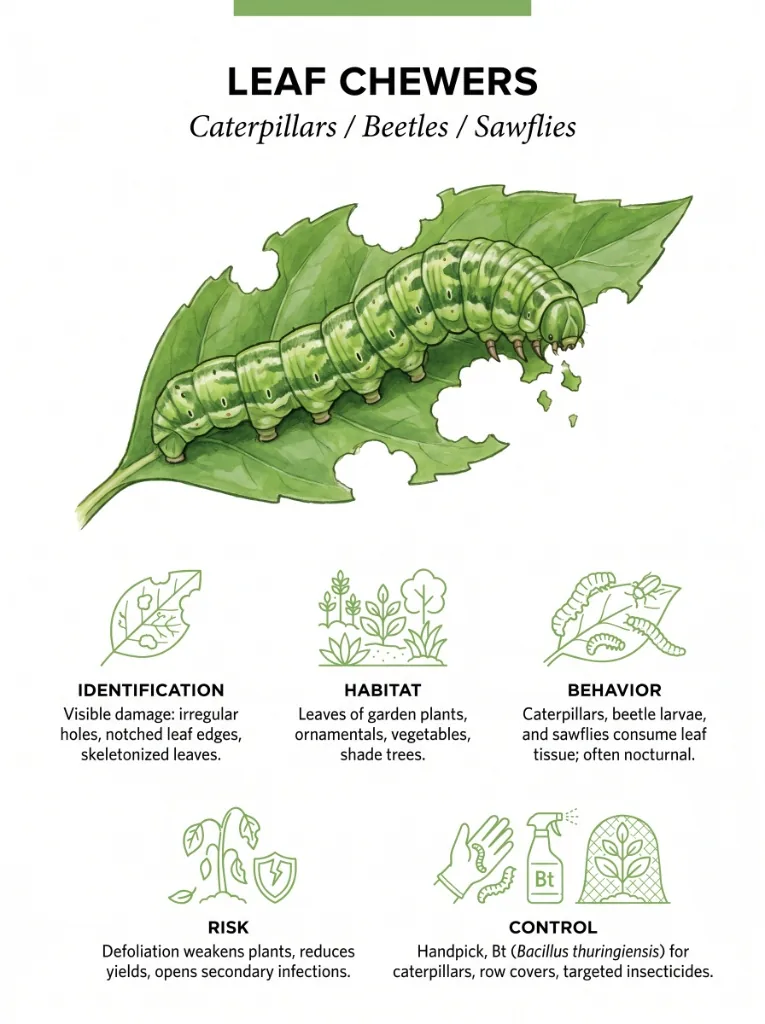
7 pestsAphids, scale insects, leaf chewers, wood borers, grasshoppers, locusts — primarily landscape concerns. Left unchecked, several of these can also become an indoor nuisance in the Triangle.
Can't ID it?
Send us a photo — we'll identify it free.
Castle Exterminators is family-owned and based in Durham. We've been identifying and treating Triangle pests since 2011. Get a free in-person inspection or just text us a clear photo.