Cluster Fly — Identification
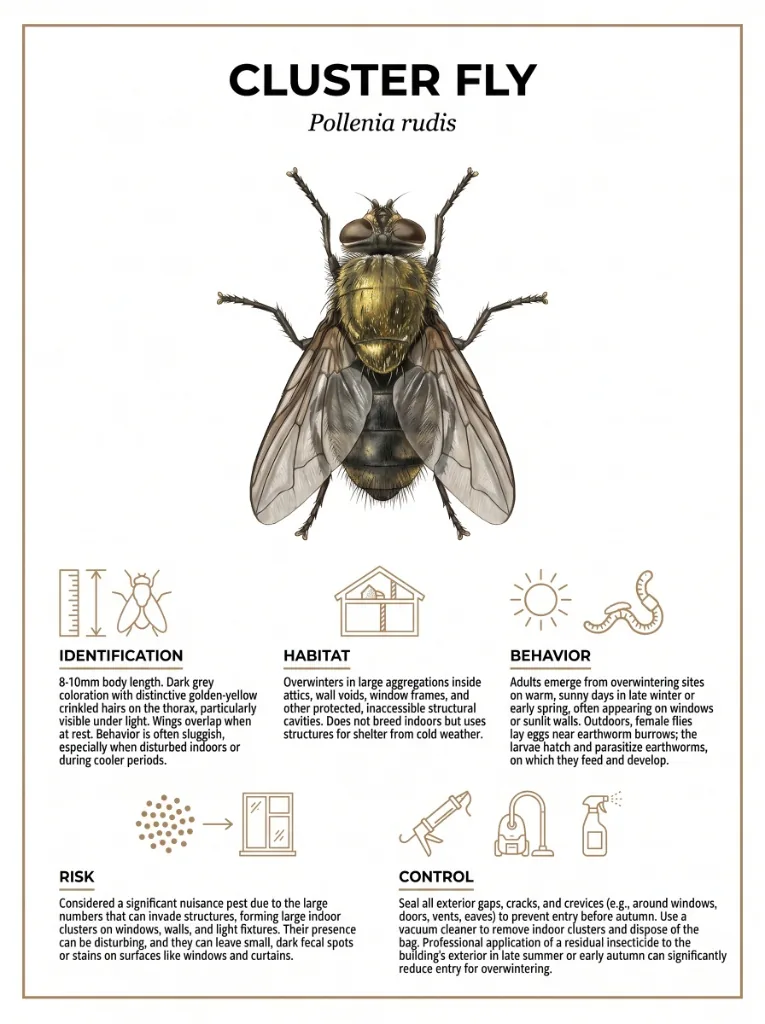
Pollenia rudis
- Size
- 8–10 mm
- Category
- Flies & Flying Pests
Identification only
Castle does not provide cluster fly treatment. This guide is here to help you identify it. See the services we do offer.
Quick identification
8–10 mm dark grey body with golden-yellow crinkled thorax hairs; wings overlap at rest.
In the Triangle
Common in older Triangle homes with attics and rural / wooded properties.
Not sure what you found?
Call or send us a photo. If it's a pest we treat, we'll book a free inspection; if not, we'll tell you honestly.
Contact us (919) 606-8686NC license #1979PW
Family-owned in Durham since 2011. Meet Castle.
Free pest inspections and written estimates. How pricing works.
About the cluster fly
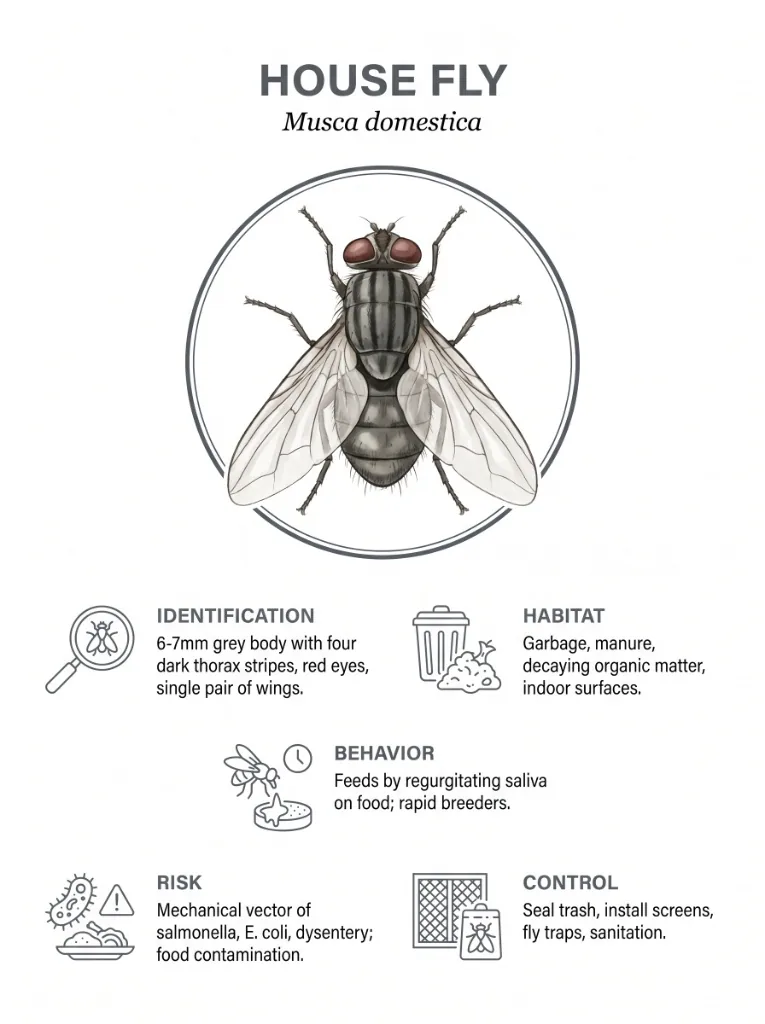
Cluster flies are often mistaken for house flies at a glance, but they are noticeably larger, slower, and covered in fine golden-yellow crinkled hairs on the thorax that give them a slightly fuzzy appearance. Unlike house flies, cluster fly larvae do not develop in garbage or decaying food — they are parasitic on earthworms outdoors, which is why cluster fly problems correlate with lawns and wooded properties rather than sanitation issues.
The name comes from their fall behavior: as temperatures drop, adult cluster flies seek out attics, wall voids, and soffits in large numbers to overwinter as a group, entering through tiny gaps around rooflines and siding. On warm winter days they become active again and cluster sluggishly on sunny interior windows, and a heavy population can leave visible dark fecal spots on walls, curtains, and windowsills over the season.
Why Cluster Flies Choose Your Attic
Cluster flies specifically seek gaps around rooflines, soffits, fascia boards, and attic vents in late summer and early fall. Older homes with more weathered trim and larger attic spaces are particularly attractive overwintering sites, and once a colony successfully overwinters in a structure, it tends to return to the same location in following years, drawn back by residual pheromone traces.
Cluster Fly Prevention
Prevention is far more effective than dealing with flies already inside walls — once they are in a void, they are largely inaccessible until they emerge on their own. Sealing gaps around roofline trim, soffits, vents, and window frames in late summer, before the fall migration begins, is the single most effective step. An exterior perimeter treatment timed just before their seasonal move indoors adds another layer of protection for homes with a history of cluster fly activity.
Frequently asked
Cluster Fly questions homeowners ask
Are cluster flies attracted to dirty homes like regular house flies?
Why do I see flies on my windows in winter?
Homeowner guides
Related pests
More in flies & flying pests