House Fly
Musca domestica
About the house fly
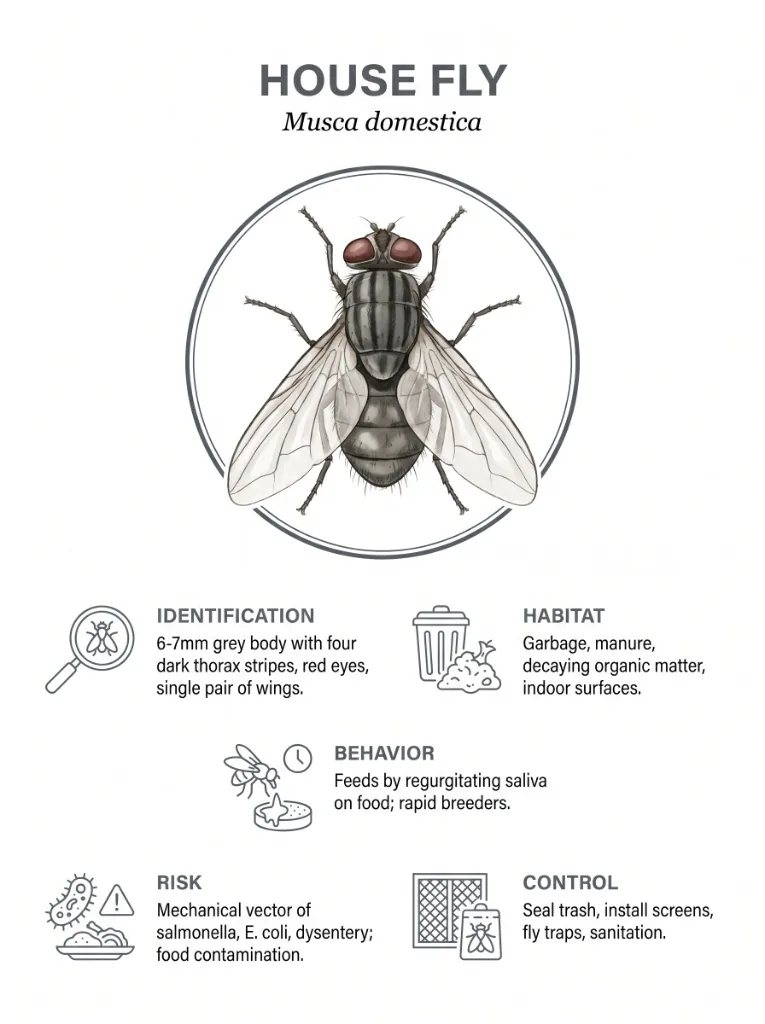
House flies are the everyday grey fly you see around garbage, manure, and decaying matter. They feed by regurgitating saliva onto food, which is exactly how they mechanically transfer salmonella, E. coli, dysentery, and other pathogens onto your kitchen surfaces. They breed in days, not weeks, so even one or two ignored flies become an infestation quickly. Sanitation, sealing trash, screens on doors and windows, and fly traps are the foundation of control.
Quick ID
6–7 mm grey body with four dark thorax stripes, red eyes, single pair of wings.
In the Triangle
Year-round across the Triangle; peak in summer.
Think you have house flys?
Free inspection from a licensed Castle Exterminators technician — Durham, Chapel Hill, Raleigh, Cary & the Triangle. We'll confirm the species and recommend a treatment plan.
Request Free Inspection (919) 606-8686