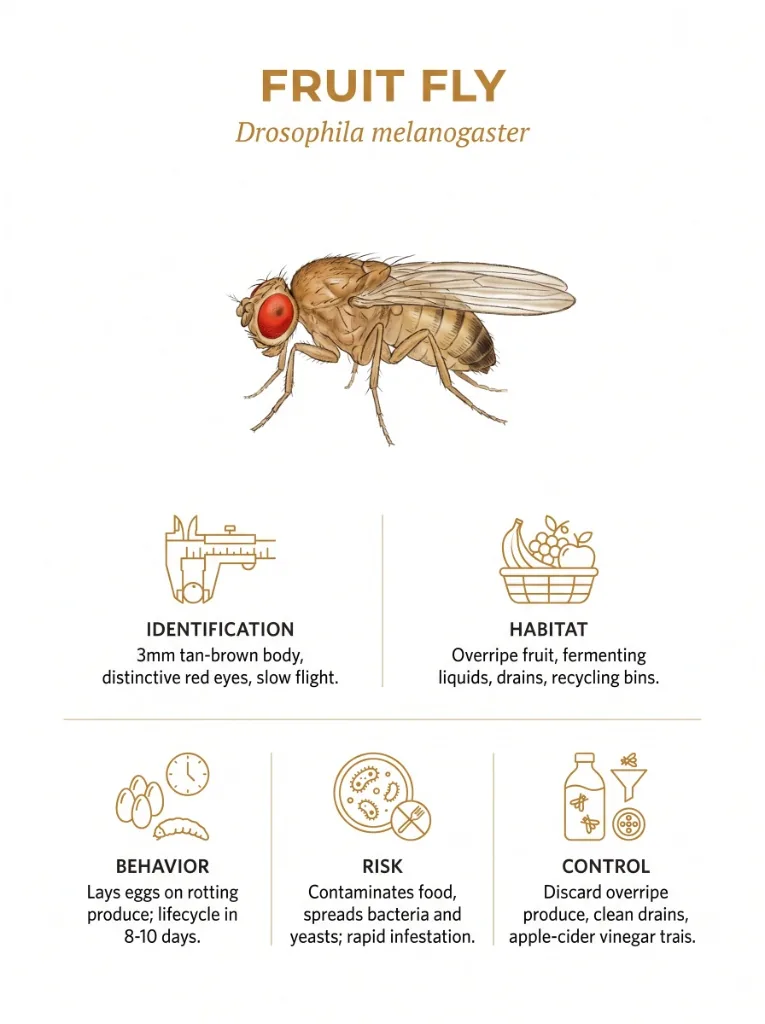
Fruit Fly (Drosophila melanogaster) identification infographic showing size, habitat, behavior, risk, and control
Low concern

Fruit Fly — Identification & Control

Drosophila melanogaster

Size
3 mm
Category
Flies & Flying Pests

About the fruit fly

Fruit flies are tiny, tan-brown insects with unmistakable bright red eyes, and their reputation for appearing overnight is well earned — with a full life cycle of only eight to ten days from egg to adult, a handful of flies can multiply into a visible swarm in under two weeks if a breeding source goes unaddressed. Adults hover with a distinctive slow, floating flight pattern around bowls of fruit, kitchen drains, recycling bins, and any surface with fermenting residue.

The real breeding sites are usually less obvious than the fruit bowl: overripe produce past the point most people would notice, sticky residue in recycling bins, drain buildup, mop buckets, and even a nearly-empty wine bottle left out overnight can all support a full breeding cycle. Beyond the nuisance factor, fruit flies contaminate exposed food and can mechanically transfer yeasts and bacteria as they move between rotting material and countertops.

Quick ID

3 mm tan-brown body with distinctive red eyes and slow, hovering flight.

In the Triangle

Universal nuisance year-round; especially bad in late summer when fruit ripens fast.

Think you have fruit flys?

Free inspection from a licensed Castle Exterminators technician — Durham, Chapel Hill, Raleigh, Cary & the Triangle. We'll confirm the species and recommend a treatment plan.

Request Free Inspection (919) 606-8686
Finding the Hidden Breeding Source

Because fruit flies breed anywhere moist and fermenting, the fruit bowl is often just where you notice them, not where they are breeding. Check inside garbage disposals and drains, under the sink for leaks, recycling bins for sticky residue, and any produce tucked in the back of the pantry or refrigerator crisper that has gone soft. A simple test: cover a suspected drain overnight with plastic wrap and a small hole — if flies appear trapped underneath by morning, that drain is a breeding site.

Eliminating a Fruit Fly Infestation

Sanitation resolves the vast majority of fruit fly problems: discard overripe or damaged produce promptly, empty and rinse recycling and compost containers regularly, clean drains with a brush and enzyme cleaner, and wipe up spilled juice or alcohol immediately. An apple-cider vinegar trap (a small dish of vinegar with a drop of dish soap, covered in plastic wrap with tiny holes poked in it) is highly effective at catching adults already flying while you eliminate the breeding source, which is the step that actually stops new flies from appearing.

Frequently asked

Fruit Fly questions homeowners ask

Why do fruit flies keep coming back even after I clean the kitchen?
There is almost always a hidden breeding source still active — commonly a drain, a recycling bin, or produce tucked out of sight. Since the life cycle is only about a week, any missed source keeps producing new flies.
Do fruit flies spread disease?
They are not a major disease vector like house flies, but they can mechanically carry yeasts and bacteria from decaying material onto exposed food and countertops, which is enough reason to address an infestation promptly.

Related pests

More in flies & flying pests

Browse all pests