
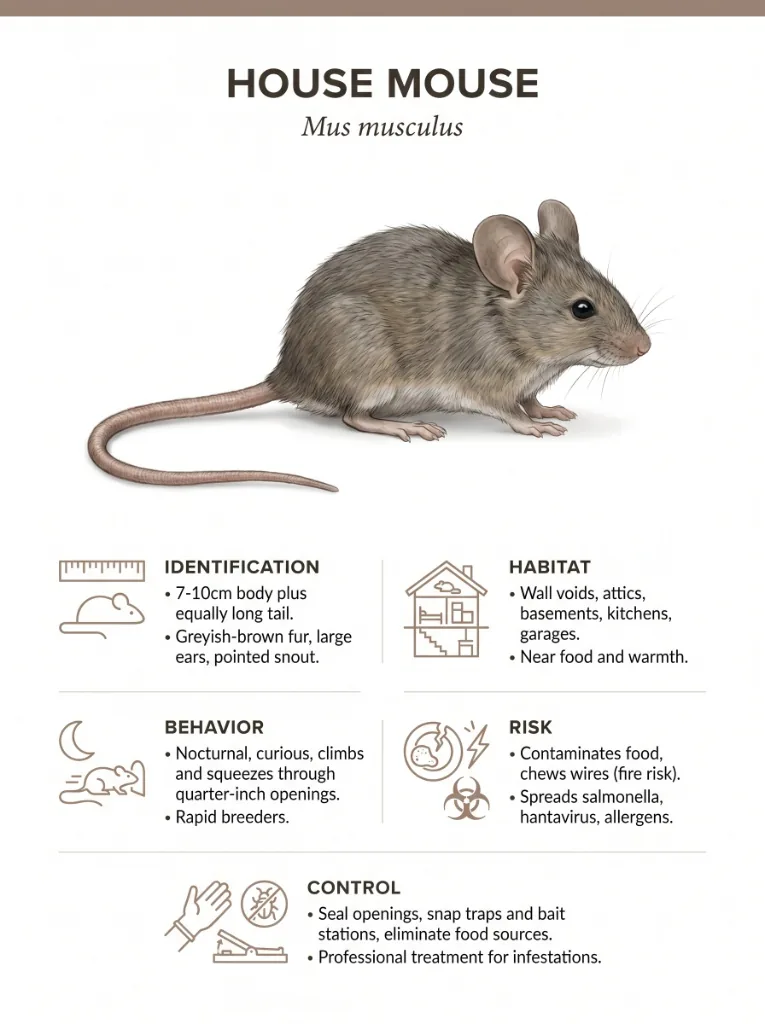
House Mouse
Mus musculus
About the house mouse
The house mouse is the most common indoor rodent in North Carolina. Adults can squeeze through gaps as small as a quarter-inch, climb walls and pipes, and breed rapidly — a single pair can produce dozens of offspring in a year. They contaminate food with droppings and urine, chew electrical wires (a leading cause of mystery house fires), and spread salmonella, hantavirus, and allergens. Effective control requires sealing entry points + traps + bait stations + sanitation.
Quick ID
7–10 cm body plus equally long tail; greyish-brown fur, large ears, pointed snout.
In the Triangle
Universal in Triangle homes during fall and winter when temperatures drop — especially in homes with attached garages or older crawl spaces.
Think you have house mouses?
Free inspection from a licensed Castle Exterminators technician — Durham, Chapel Hill, Raleigh, Cary & the Triangle. We'll confirm the species and recommend a treatment plan.
Request Free Inspection (919) 606-8686