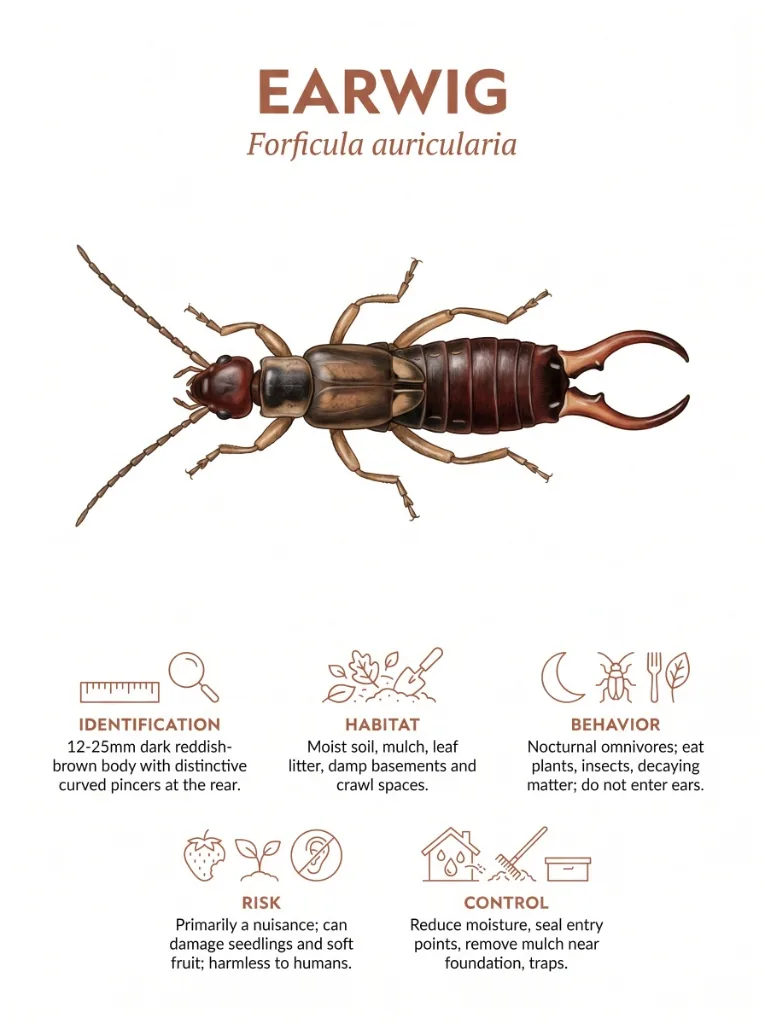
Earwig (Forficula auricularia) identification infographic showing size, habitat, behavior, risk, and control
Low concern

Earwig Bug — Identification & Earwig Control

Forficula auricularia

Size
12–25 mm
Category
Occasional Invaders

About the earwig

Earwigs carry one of the most persistent pest myths in the insect world — the old folk belief that they crawl into sleeping people's ears and burrow into the brain. This is entirely false; earwigs have no biological drive or ability to do this, and the myth almost certainly comes from their name and the appearance of their curved rear pincers (called cerci), not any actual behavior. In reality, earwigs are nocturnal omnivores that spend daylight hours hidden in damp, dark cracks and emerge at night to feed.

Outdoors, earwigs feed on decaying plant matter, other small insects, and occasionally seedlings and soft fruit, making them a minor garden nuisance rather than a serious agricultural threat. Indoors they cause no structural or fabric damage and are strictly an occasional-invader nuisance, typically following moisture indoors during wet weather and retreating once conditions dry out. Their pincers can pinch if handled roughly, but this rarely breaks skin and is not a real safety concern.

Quick ID

12–25 mm dark reddish-brown body with distinctive curved pincers at the rear.

In the Triangle

Very common in Triangle mulch beds, basements, and crawl spaces during wet weather.

Think you have earwigs?

Free inspection from a licensed Castle Exterminators technician — Durham, Chapel Hill, Raleigh, Cary & the Triangle. We'll confirm the species and recommend a treatment plan.

Request Free Inspection (919) 606-8686
Where Earwigs Live Around Your Home

Earwigs need consistent moisture and darkness, so mulch beds pressed against the foundation, leaf litter, dense groundcover, and stacked firewood are their preferred outdoor habitat. Indoors, they favor basements, crawl spaces, and bathrooms — anywhere damp and dark — and tend to appear in noticeable numbers only during or right after extended wet weather.

Earwig Control That Actually Works

Because earwigs are moisture-dependent, the most effective long-term control is reducing the damp conditions that support them: pull mulch back several inches from the foundation, improve drainage and gutter runoff away from the house, and run a dehumidifier in persistently damp basements or crawl spaces. Sealing foundation cracks and door thresholds blocks the entry points earwigs use during wet weather. For active outdoor populations near the home, a perimeter treatment applied before a wet season reduces the numbers pressing toward the house.

Frequently asked

Earwig questions homeowners ask

Do earwigs really crawl into your ears at night?
No, this is a long-standing myth with no biological basis. Earwigs have no attraction to human ears and no ability or instinct to burrow into skin; the name comes from an old European folk tale, not documented behavior.
Are earwigs harmful to my garden?
Mostly no — earwigs are largely beneficial or neutral, feeding on decaying matter and some small pest insects. In large numbers they can nibble seedlings and soft fruit, but they are rarely a serious garden threat.

Related pests

More in occasional invaders

Browse all pests