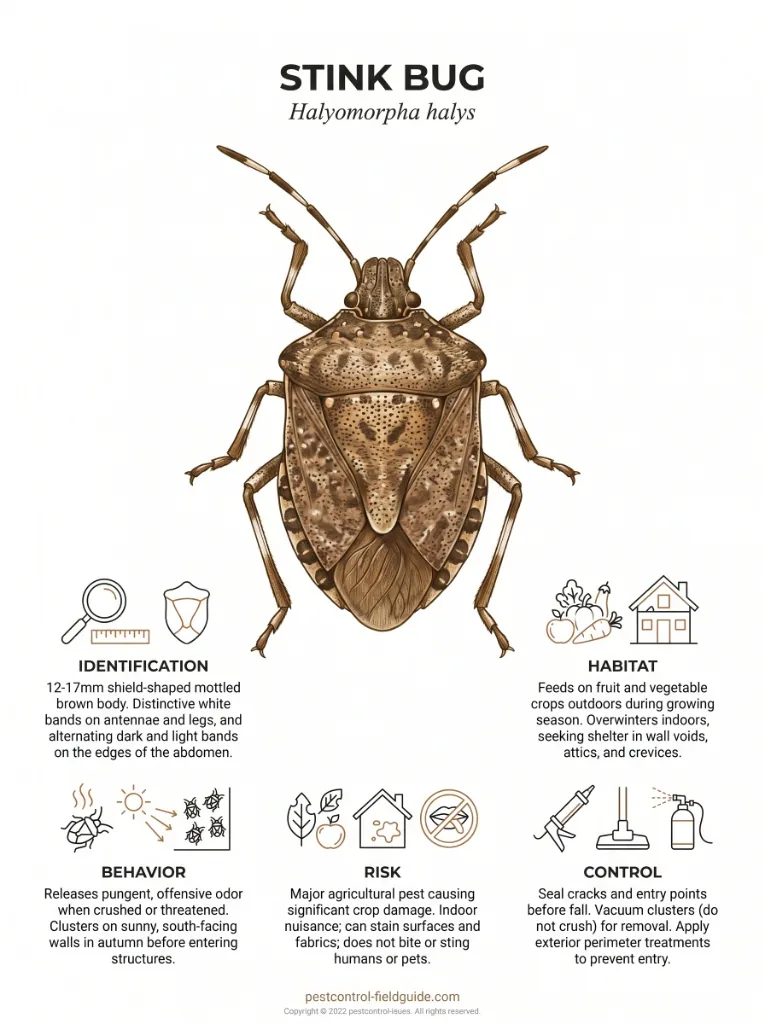
Stink Bug (BMSB) (Halyomorpha halys) identification infographic showing size, habitat, behavior, risk, and control
Moderate concern

Stink Bug — Identification & Control

Halyomorpha halys

Size
12–17 mm
Category
Occasional Invaders

About the stink bug (bmsb)

The brown marmorated stink bug (BMSB) is an invasive species, originally from East Asia, that has spread aggressively across the eastern United States since its accidental introduction and is now a well-established seasonal nuisance across the Triangle. Adults are easy to identify by their shield-shaped, mottled brown body and the distinctive white banding on both their antennae and legs — a marking unique enough that it separates them from native stink bug species at a glance.

During summer, brown marmorated stink bugs feed on a wide range of fruit and vegetable crops outdoors, causing measurable agricultural damage across the region. As temperatures drop in fall, they shift behavior dramatically, clustering by the dozens on sun-warmed, south-facing exterior walls and pushing into any available crack, attic gap, or wall void to overwinter indoors. Their signature defense — a famously pungent odor released when crushed or disturbed — is exactly why vacuuming, rather than swatting, is the recommended way to remove them once inside.

Quick ID

12–17 mm shield-shaped mottled brown body with distinctive white bands on antennae and legs.

In the Triangle

Major fall nuisance across the Triangle — particularly noticeable in homes near orchards and farmland.

Think you have stink bug (bmsb)s?

Free inspection from a licensed Castle Exterminators technician — Durham, Chapel Hill, Raleigh, Cary & the Triangle. We'll confirm the species and recommend a treatment plan.

Request Free Inspection (919) 606-8686
Identifying a Brown Marmorated Stink Bug

Look for a shield-shaped, mottled brown body roughly half to three-quarters of an inch long, with alternating light and dark bands running along the antennae and the outer edges of the legs — this banding is the clearest way to distinguish BMSB from the several native brown stink bug species also found in the Triangle, most of which lack the distinctive leg and antenna markings.

Managing Stink Bugs Before and After Fall

Prevention centers on sealing exterior gaps before their fall migration begins: caulk around window and door frames, repair damaged screens, and close gaps around utility penetrations and roofline trim. An exterior perimeter treatment applied in late summer, before the seasonal move indoors, reduces the numbers that reach your walls in the first place. For stink bugs already inside, vacuum them directly into a bag that can be sealed and discarded outside, rather than crushing or swatting them, to avoid releasing their characteristic odor throughout the room.

Frequently asked

Stink Bug (BMSB) questions homeowners ask

Why do stink bugs smell so bad when I kill them?
Stink bugs release a defensive chemical from glands on their abdomen when crushed or threatened, producing the pungent, lingering odor they are named for. Vacuuming rather than crushing avoids releasing this smell into the room.
Are brown marmorated stink bugs dangerous to people?
No — they do not bite, sting, or transmit disease to humans or pets. The concerns are purely the odor nuisance indoors and crop damage to fruits and vegetables outdoors during the growing season.

Related pests

More in occasional invaders

Browse all pests