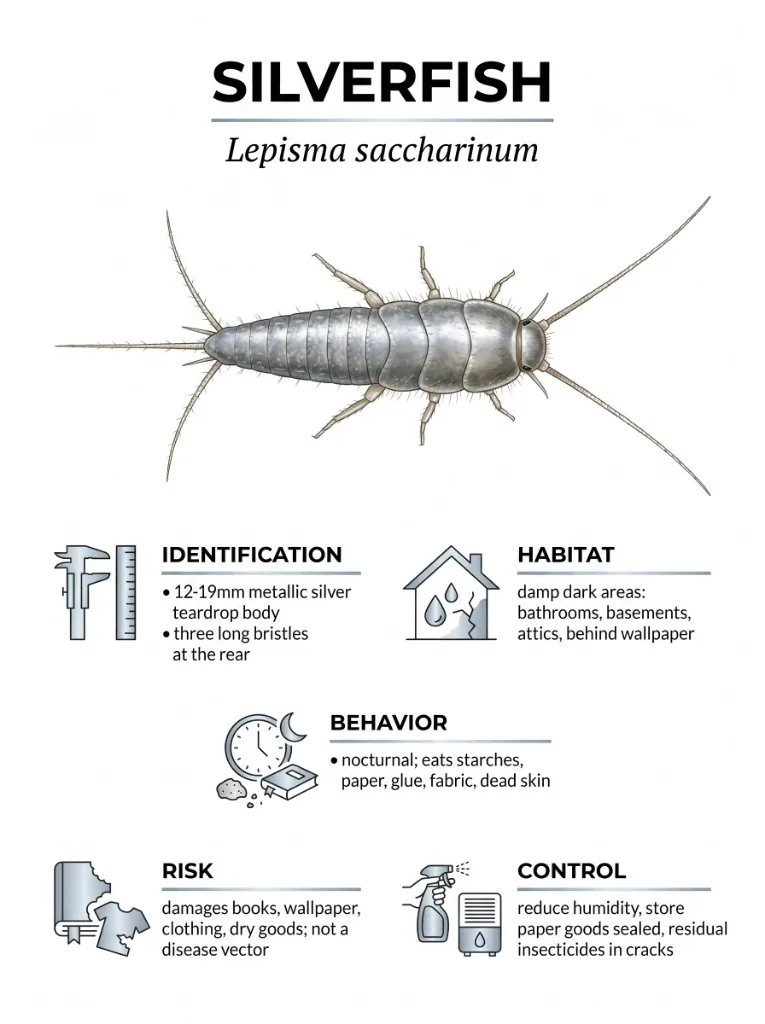
Silverfish (Lepisma saccharinum) identification infographic showing size, habitat, behavior, risk, and control
Low concern

Silverfish Bug — Identification & Pest Control

Lepisma saccharinum

Size
12–19 mm
Category
Occasional Invaders

About the silverfish

Silverfish get their name from their metallic silver-grey, teardrop-shaped bodies and the quick, fish-like wriggling motion they use to dart away the moment a light comes on. They are surprisingly fast for their size, entirely nocturnal, and equipped with three long, thread-like bristles at the rear that make them easy to distinguish from other small household insects at a glance.

Silverfish feed on starches, cellulose, glue, and protein — which puts book bindings, wallpaper paste, cardboard, natural fabric fibers, and even dead skin cells on their menu. They pose no disease risk and do not bite people, but sustained feeding can genuinely damage stored books, old documents, wallpaper, and clothing over time in a home where they are established. Because they require very high humidity to survive and reproduce, their presence is almost always a direct signal of a moisture problem somewhere in the home.

Quick ID

12–19 mm metallic silver teardrop body with three long bristles at the rear.

In the Triangle

Common in older Triangle homes with damp basements, crawl spaces, and poorly ventilated bathrooms.

Think you have silverfishs?

Free inspection from a licensed Castle Exterminators technician — Durham, Chapel Hill, Raleigh, Cary & the Triangle. We'll confirm the species and recommend a treatment plan.

Request Free Inspection (919) 606-8686
Why Silverfish Need High Humidity

Silverfish are unusually dependent on humidity for survival — most species need relative humidity above roughly 75% to thrive and reproduce, far higher than most other household pests require. This is exactly why they concentrate in basements, bathrooms, attics with poor ventilation, and behind wallpaper where moisture accumulates, and why a persistent silverfish problem almost always points to an underlying humidity or ventilation issue worth addressing on its own.

Silverfish Pest Control Steps

Reducing humidity is the single most effective long-term step: running a dehumidifier in damp basements, improving bathroom exhaust ventilation, and fixing any plumbing leaks or condensation sources removes the conditions silverfish depend on. Sealing cracks and gaps where they hide — behind baseboards, around pipe penetrations, under wallpaper edges — limits both harborage and entry points. Residual insecticide treatment in cracks and crevices adds direct control for established populations, and storing vulnerable paper items, books, and fabrics in sealed containers protects them while the underlying moisture issue is resolved.

Frequently asked

Silverfish questions homeowners ask

Are silverfish dangerous to people or pets?
No — silverfish do not bite, sting, or transmit disease. The concern is purely property damage to books, documents, wallpaper, and natural fabric fibers if an infestation is left unaddressed.
Why do I keep finding silverfish in my bathroom specifically?
Bathrooms combine two things silverfish need most: consistently high humidity from showers and baths, and dark, undisturbed spaces behind fixtures and under cabinets — making them one of the most common indoor silverfish habitats.

Related pests

More in occasional invaders

Browse all pests