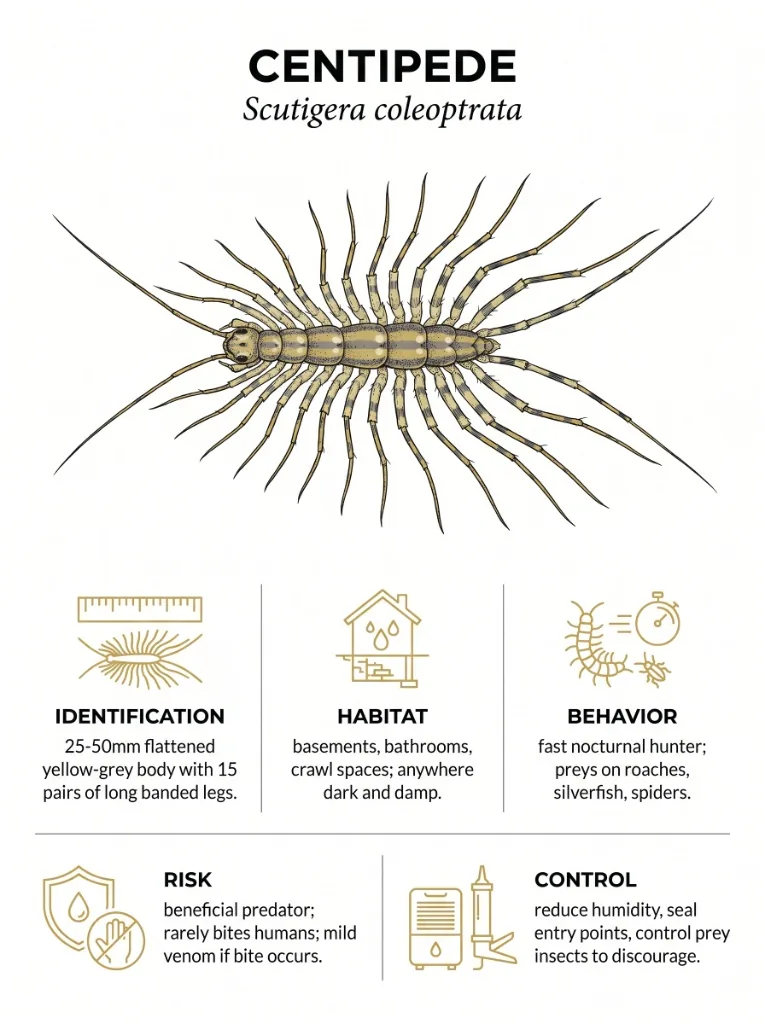
House Centipede (Scutigera coleoptrata) identification infographic showing size, habitat, behavior, risk, and control
Low concern

House Centipede — Identification & Control

Scutigera coleoptrata

Size
25–50 mm
Category
Occasional Invaders

About the house centipede

House centipedes have a reputation that outpaces the actual risk they pose. With their pale yellow-grey bodies, dark longitudinal stripes, and 15 pairs of extraordinarily long, banded legs, they move in fast, erratic bursts that startle most people who encounter one darting across a bathroom floor or basement wall. They can technically bite, but their mouthparts are usually too weak to puncture human skin, and on the rare occasion one does, the venom causes at most mild, brief irritation similar to a bee sting.

What most people do not realize is that house centipedes are active predators, and the things they hunt — roaches, silverfish, spiders, and other small household pests — are usually more problematic than the centipede itself. A house centipede sighting is often a sign that one of those prey species has a foothold in the home, which is why we treat the underlying pest population rather than the centipede alone.

Quick ID

25–50 mm flattened yellow-grey body with 15 pairs of long banded legs.

In the Triangle

Common in Triangle basements, crawl spaces, and damp bathrooms.

Think you have house centipedes?

Free inspection from a licensed Castle Exterminators technician — Durham, Chapel Hill, Raleigh, Cary & the Triangle. We'll confirm the species and recommend a treatment plan.

Request Free Inspection (919) 606-8686
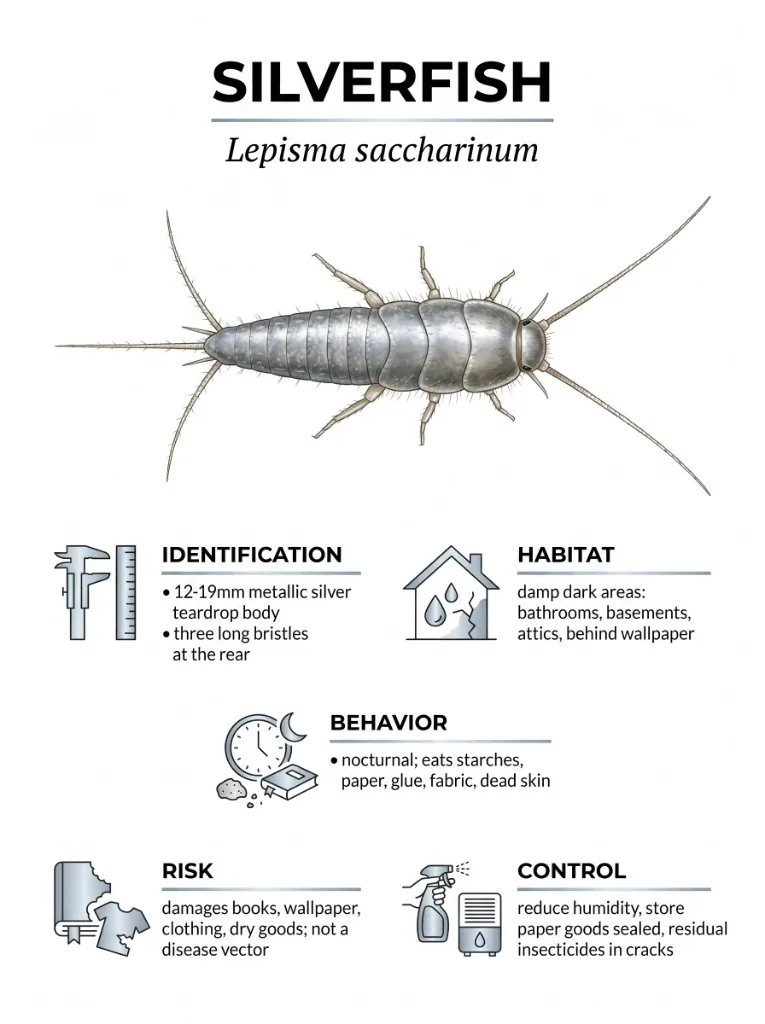
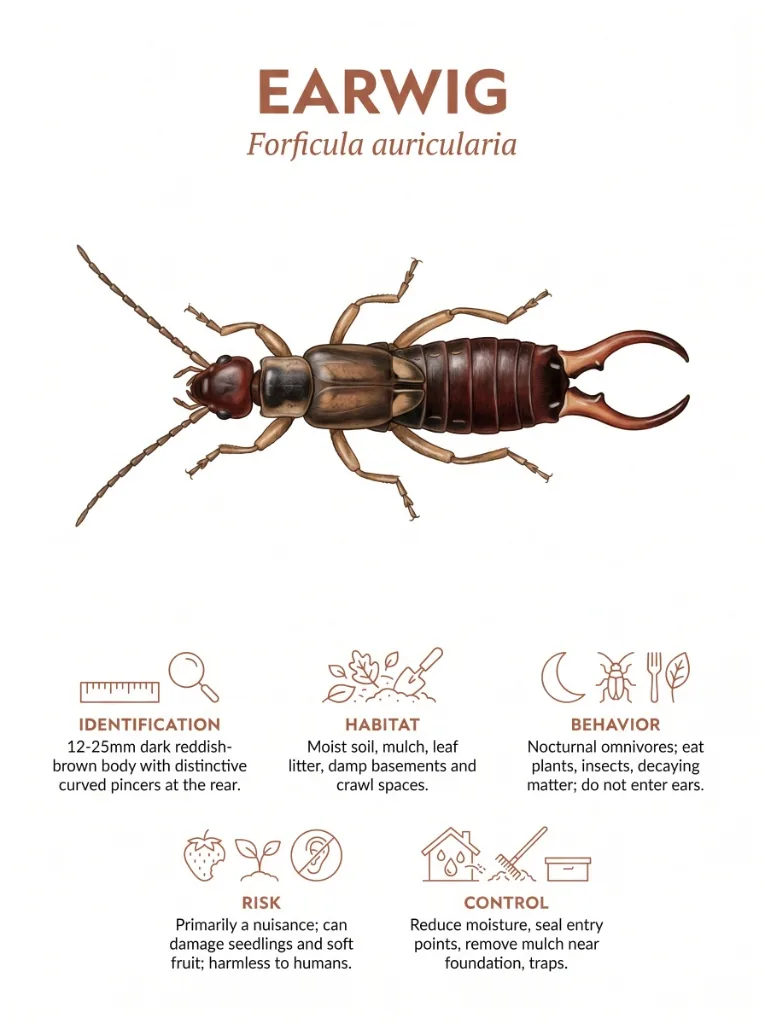
Where House Centipedes Hide

House centipedes need moisture and darkness, so basements, crawl spaces, bathrooms, closets, and cluttered storage areas are their preferred habitat indoors. Outdoors they live under mulch, leaf litter, stones, and woodpiles, and they typically enter homes through foundation gaps, door thresholds, and vents while hunting insects along the perimeter.

Centipede Control Strategy

Because centipedes follow their prey, effective control addresses moisture and the insects they hunt at the same time. Running a dehumidifier in basements and crawl spaces, fixing leaks, and improving ventilation removes the damp conditions both centipedes and their prey depend on. Sealing foundation cracks and door gaps blocks entry routes, and treating the underlying prey population (roaches, silverfish, spiders) is usually the fastest way to see centipede sightings drop, since removing the food source removes the reason they came inside.

Frequently asked

House Centipede questions homeowners ask

Should I kill house centipedes since they eat other pests?
That is a personal call — they are genuinely beneficial predators — but most homeowners still prefer them gone due to their startling speed and appearance. Reducing moisture and their prey insects naturally reduces centipede sightings without needing to target them directly.
Are house centipede bites dangerous?
Bites are rare because their mandibles are usually too weak to break human skin, and when a bite does occur it causes mild, short-lived irritation comparable to a minor bee sting for most people.

Related pests

More in occasional invaders

Browse all pests