
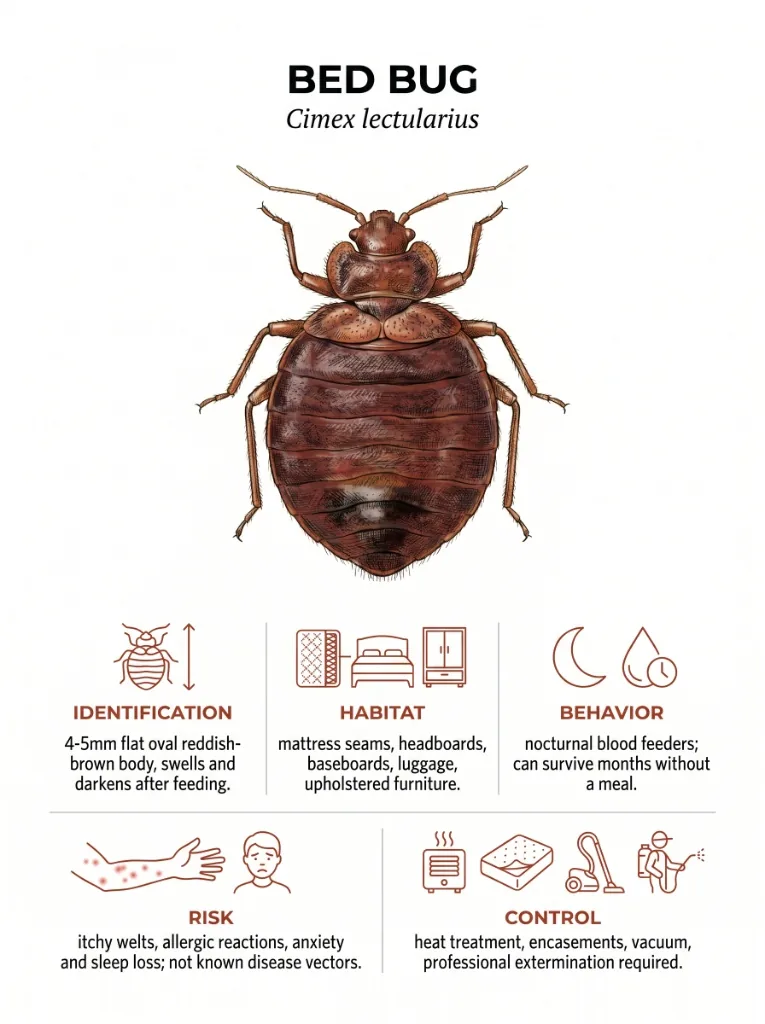
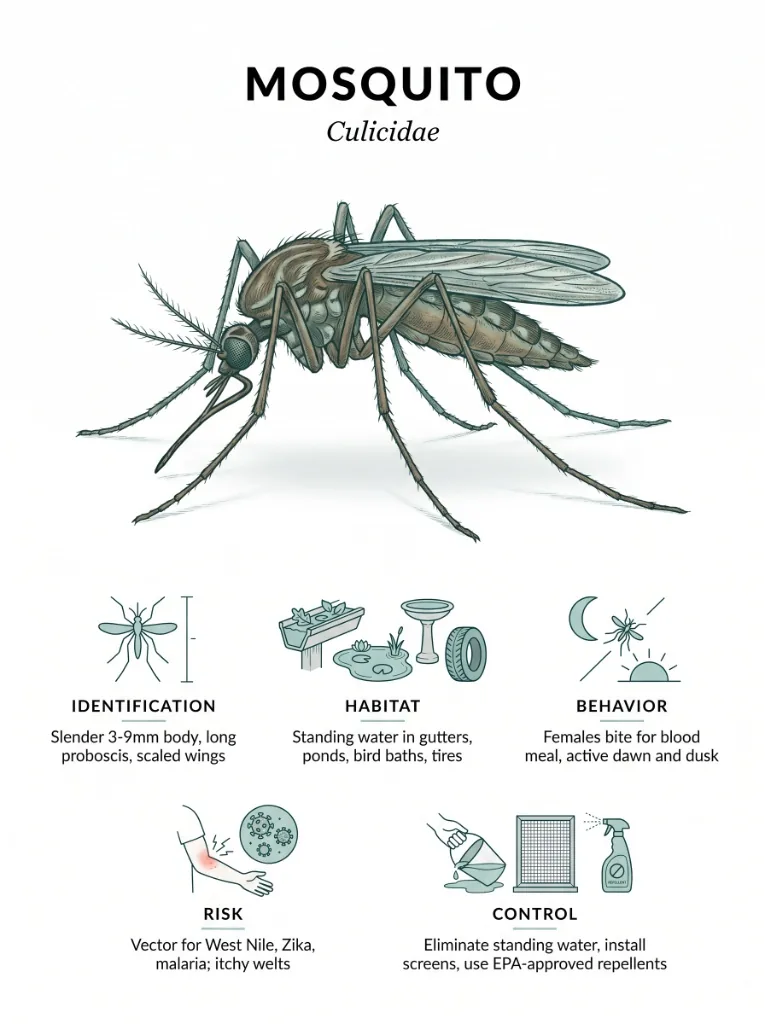
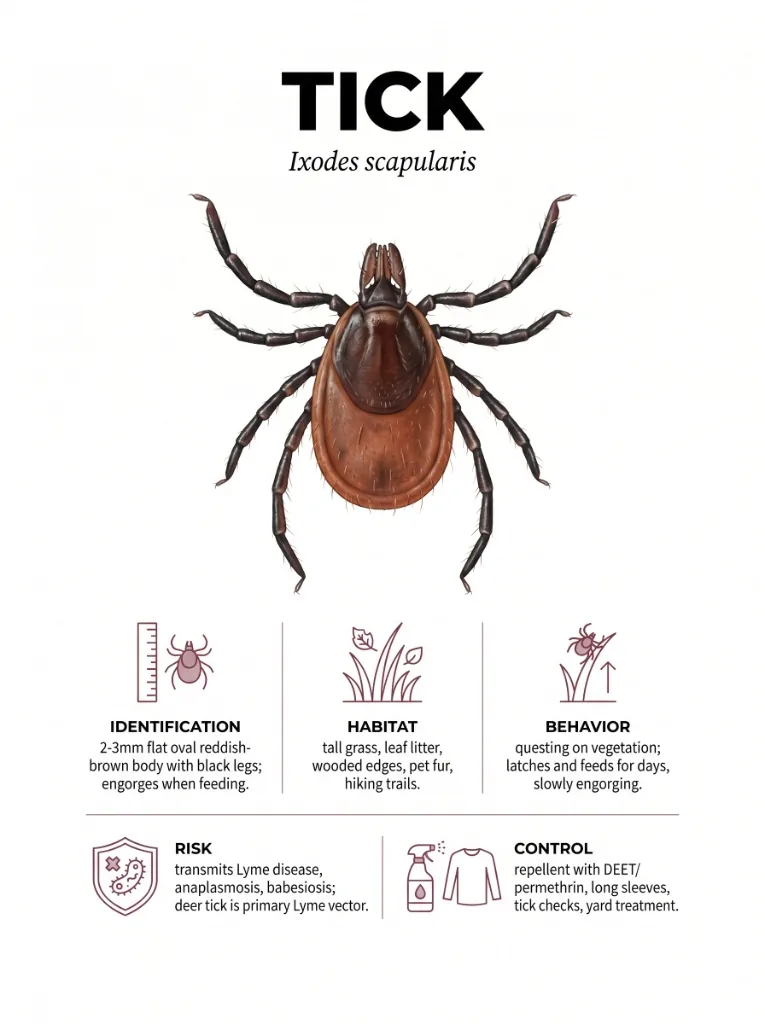
Bed Bug (Cimex lectularius) identification infographic showing size, habitat, behavior, risk, and control
High concern

Bed Bug — Identification & Bed Bug Treatment

Cimex lectularius

Size
4–5 mm
Category
Biting Pests

About the bed bug

Bed bugs (Cimex lectularius) are flat, oval, reddish-brown insects about the size and shape of an apple seed that feed exclusively on human blood, almost always at night. They do not transmit any known disease — but they cause severe itching, sleep disruption, anxiety, and social embarrassment, and they are one of the hardest household pests in the world to eliminate without professional help.

Bed bug infestations across the United States, and across the Triangle specifically, have been rising steadily since the early 2000s. Any home can get them — bed bugs do not correlate with cleanliness, income, or neighborhood. They arrive on luggage, secondhand furniture, backpacks, and clothing, and once established they hide in cracks so small that DIY treatments almost always fail. Effective control means heat treatment, targeted residual insecticides, encasements, and follow-up — done by a licensed team.

Quick ID

4–5 mm flat oval reddish-brown body that swells and darkens after feeding.

In the Triangle

Rising problem across the Triangle — especially in apartments, hotels, and homes after travel.

Think you have bed bugs?

Free inspection from a licensed Castle Exterminators technician — Durham, Chapel Hill, Raleigh, Cary & the Triangle. We'll confirm the species and recommend a treatment plan.

Request Free Inspection (919) 606-8686
Biology & Life Cycle

A female bed bug lays one to five eggs per day, and hundreds in her lifetime. Eggs hatch in one to two weeks; nymphs go through five molts, each requiring a blood meal, and reach reproductive maturity in about a month under warm conditions. Adults can live several months to over a year and — critically — can survive weeks to months between blood meals. That longevity is why an empty home is not a solution: bed bugs will simply wait.

They are photonegative (avoid light) and thigmotactic (prefer tight cracks), which is why they hide in the tightest seams of mattresses, headboards, box springs, baseboard cracks, electrical outlets, and picture frames. They come out at night to feed and retreat before dawn.

How Bed Bugs Enter Your Home

Bed bugs almost never fly or migrate — they hitchhike. The most common vectors in the Triangle are:

  • Travel — bed bugs picked up in a hotel, short-term rental, or family stay, then transported home in a suitcase.
  • Secondhand furniture — mattresses, box springs, couches, and upholstered chairs from curbsides, thrift stores, or online marketplaces.
  • Multifamily buildings — apartments and duplexes where a neighboring unit's infestation migrates through shared walls, outlets, and plumbing.
  • Guests or workers unknowingly bringing them in on clothing or gear.
  • College dorms and student housing — a common Triangle vector during move-in and move-out weeks.

Understanding the vector matters, because inspecting and treating every potential harborage — not just the bed — is what separates a successful treatment from a repeat call.

Signs of a Bed Bug Infestation

  • Bites — small red itchy welts, often in a line or cluster on skin exposed at night (arms, shoulders, ankles). Reactions vary widely by person.
  • Small dark spots on sheets, mattress seams, or the wall behind the headboard — dried bed bug fecal spotting.
  • Small rust-colored smears on sheets — crushed bugs after feeding.
  • Shed skins — translucent exoskeletons in mattress seams, box-spring corners, or behind the headboard.
  • Live bugs in the tightest seams of the mattress, at the labels, and in the joints of the box spring.
  • Sweet, musty smell in heavy infestations.

A licensed inspection — sometimes assisted by a canine bed bug detection specialist — confirms the presence and scope before treatment begins.

Why DIY Almost Always Fails

Store-bought bed bug sprays and foggers have a well-documented failure rate. Modern bed bugs have widespread resistance to pyrethroid actives — the ingredient in most over-the-counter products — and foggers scatter surviving bugs deeper into wall voids and adjacent rooms, spreading the problem instead of solving it. Meanwhile bed bugs' ability to survive months without feeding means partial treatments are not partial victories; they are delayed relapses.

Effective bed bug control requires professional-grade tools — targeted heat treatment that raises the entire treated area above the lethal temperature threshold, precision non-repellent residuals in every crack and crevice, encasements to lock survivors out of the mattress and box spring, and follow-up inspections. This is one of the pests where paying for a professional is not a preference — it is the only path that reliably ends the problem.

Our Treatment Approach

Every bed bug plan starts with a licensed inspection to confirm identification and map the extent of the infestation across the affected rooms. From there, treatment usually combines:

  • Whole-room heat treatment that raises the room temperature to a level that penetrates mattresses, box springs, headboards, and hidden harborage. Heat kills all life stages simultaneously — eggs, nymphs, adults.
  • Targeted residual insecticides in cracks, crevices, and wall-void injection points where survivors could regroup.
  • Mattress and box-spring encasements to lock any survivors in a starvation trap and simplify future monitoring.
  • Follow-up inspections at defined intervals until the room is confirmed clear.
  • Prep guidance so your treatment day works as efficiently as possible.

Every plan is scoped and priced with a personalized quote based on the number of rooms affected and the treatment mix that fits your home.

Travel & Prevention Tips

  • On check-in, put luggage in the hotel bathtub while you inspect the mattress seams, headboard, and behind the headboard.
  • When you get home from travel, unpack in the garage or laundry room — not the bedroom — and dry all clothing on high heat for thirty minutes.
  • Do not bring home curbside furniture, especially mattresses, box springs, and upholstered pieces. It's the #1 residential vector we see.
  • Inspect secondhand furniture with a flashlight before it enters the house.
  • In apartments, seal outlet plates and gaps along baseboards against shared walls.
  • Encase existing mattresses and box springs proactively — it is the cheapest single defensive move you can make.
  • Take bites, welts, or unexplained itching seriously; early detection makes treatment much easier.

Frequently asked

Bed Bug questions homeowners ask

Do bed bugs mean my house is dirty?
No. Bed bugs feed on blood, not crumbs. Infestations happen in five-star hotels, brand-new homes, and immaculate houses just as easily as anywhere else. Cleanliness has essentially no correlation with bed bug risk — how they arrived (travel, secondhand furniture, shared walls) is what matters.
Can bed bugs spread disease?
Current research does not link bed bugs to the transmission of any human disease. The real harms are severe itching, skin infections from scratching, sleep loss, and significant anxiety — all of which are legitimate reasons to treat aggressively even without a disease vector.
How long does professional bed bug treatment take?
A whole-room heat treatment plus residual application is typically completed in a single treatment day. Follow-up inspections at defined intervals confirm the room stays clear. Total time from first treatment to confirmed all-clear typically runs a few weeks, depending on infestation size and how well prep instructions were followed.
Can I stay in my home during bed bug treatment?
You will need to be out of the treated space during the heat treatment itself (safety of pets, plants, and heat-sensitive items is discussed during prep), and re-entry timing depends on the specific products and equipment used. Your technician walks you through the exact schedule and prep list up front.
Will my landlord or insurance pay for bed bug treatment?
In NC rental situations, responsibility depends on the lease and how the infestation was introduced — landlords are increasingly required to treat, especially in multifamily buildings. Homeowner insurance generally excludes pest infestations, including bed bugs. Documentation of the professional inspection helps in either case.

Related pests

More in biting pests

Browse all pests