Deer Tick
Ixodes scapularis
About the deer tick
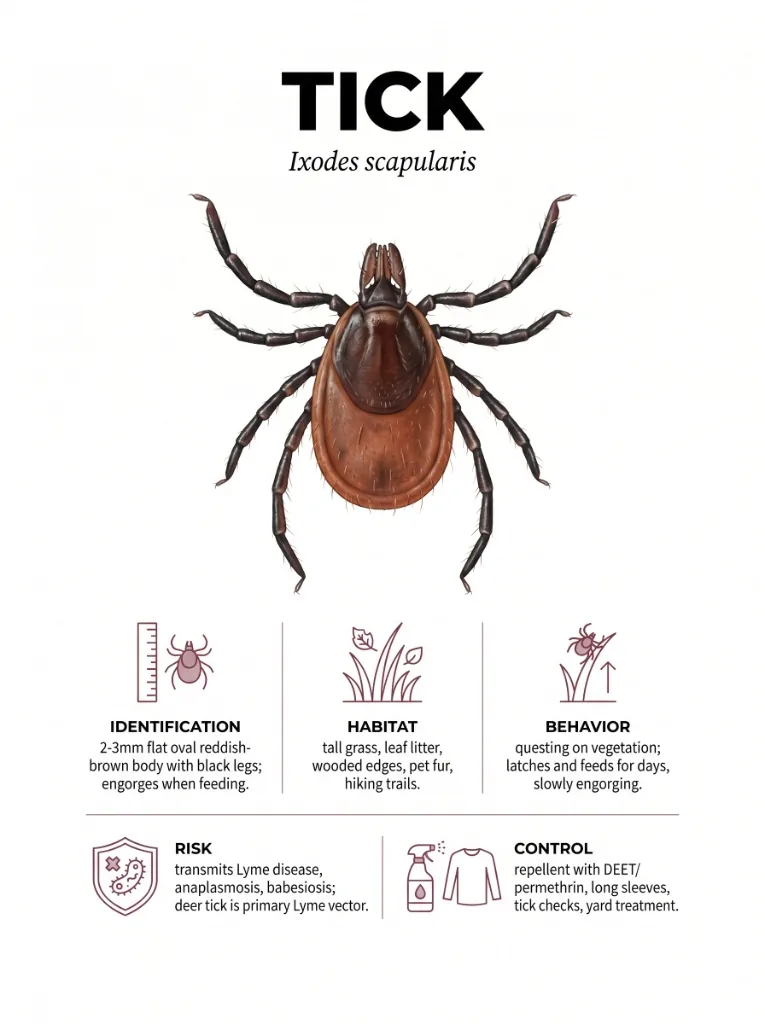
Deer ticks (also called black-legged ticks) are the primary vector of Lyme disease in the eastern US, along with anaplasmosis and babesiosis. They quest on tall grass and leaf litter, latch onto people or pets passing by, and slowly feed for days as they engorge. Prevention is everything: DEET or permethrin repellent, long sleeves and pants on hikes, prompt tick checks after coming inside, and treating yard edges if you live near woods.
Quick ID
2–3 mm flat oval reddish-brown body with distinctly black legs; engorges to grape-size when feeding.
In the Triangle
The Triangle is solidly in NC's Lyme range; expect ticks anywhere there's tall grass, leaf litter, or deer pressure.
Think you have deer ticks?
Free inspection from a licensed Castle Exterminators technician — Durham, Chapel Hill, Raleigh, Cary & the Triangle. We'll confirm the species and recommend a treatment plan.
Request Free Inspection (919) 606-8686