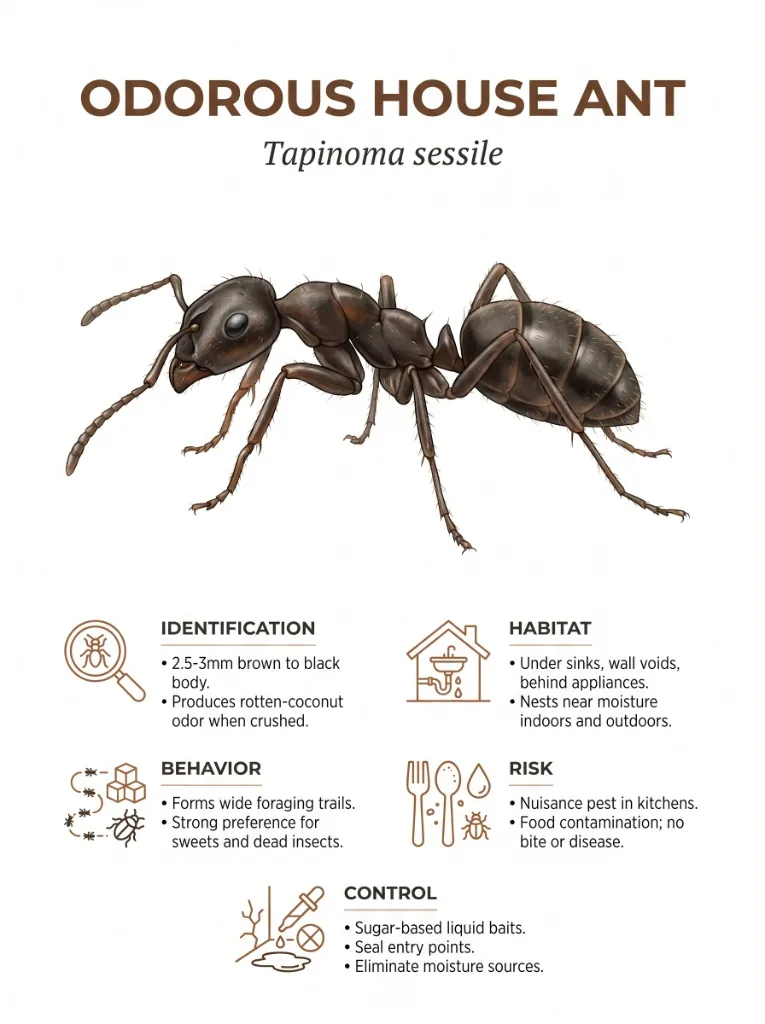
Odorous House Ant (Tapinoma sessile) identification infographic showing size, habitat, behavior, risk, and control
Low concern

Odorous House Ant — Identification & Control

Tapinoma sessile

Size
2.5–3 mm
Category
Ants

About the odorous house ant

The odorous house ant (Tapinoma sessile) is the single most-frequently-encountered indoor ant in North Carolina — and one of the most misidentified. Adults are small (2.5-3 mm), dark brown to black, and get their name from the distinctive rotten-coconut or blue-cheese smell they release when crushed. That smell is the fastest field ID.

Odorous house ants form massive colonies with multiple queens and multiple satellite nests. This makes them genuinely tricky to control — because spraying visible trails with repellent insecticides causes the colony to fragment (a behavior called budding), turning one colony into several. Effective treatment uses non-repellent products and slow-acting baits that workers carry back to the queens. Odorous house ants are the ant category where DIY spray-cans most reliably make the problem worse.

Quick ID

2.5–3 mm brown to black body; produces rotten-coconut odor when crushed.

In the Triangle

One of the most-reported indoor ants in Durham and Chapel Hill kitchens, especially after spring rains.

Think you have odorous house ants?

Free inspection from a licensed Castle Exterminators technician — Durham, Chapel Hill, Raleigh, Cary & the Triangle. We'll confirm the species and recommend a treatment plan.

Request Free Inspection (919) 606-8686
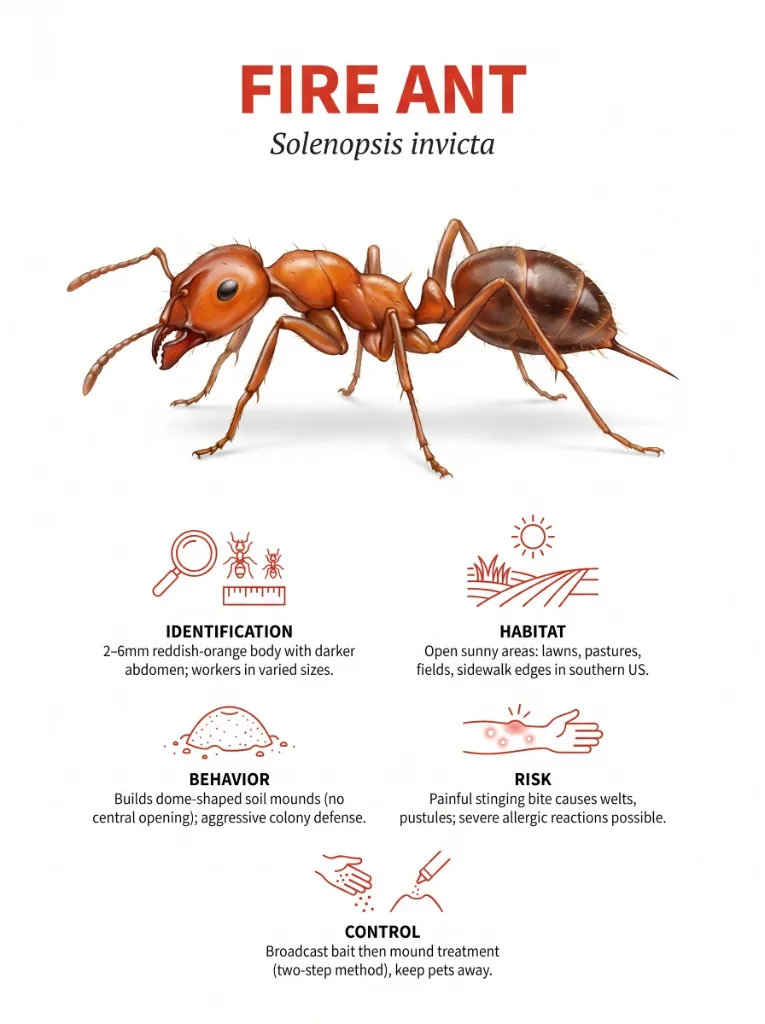
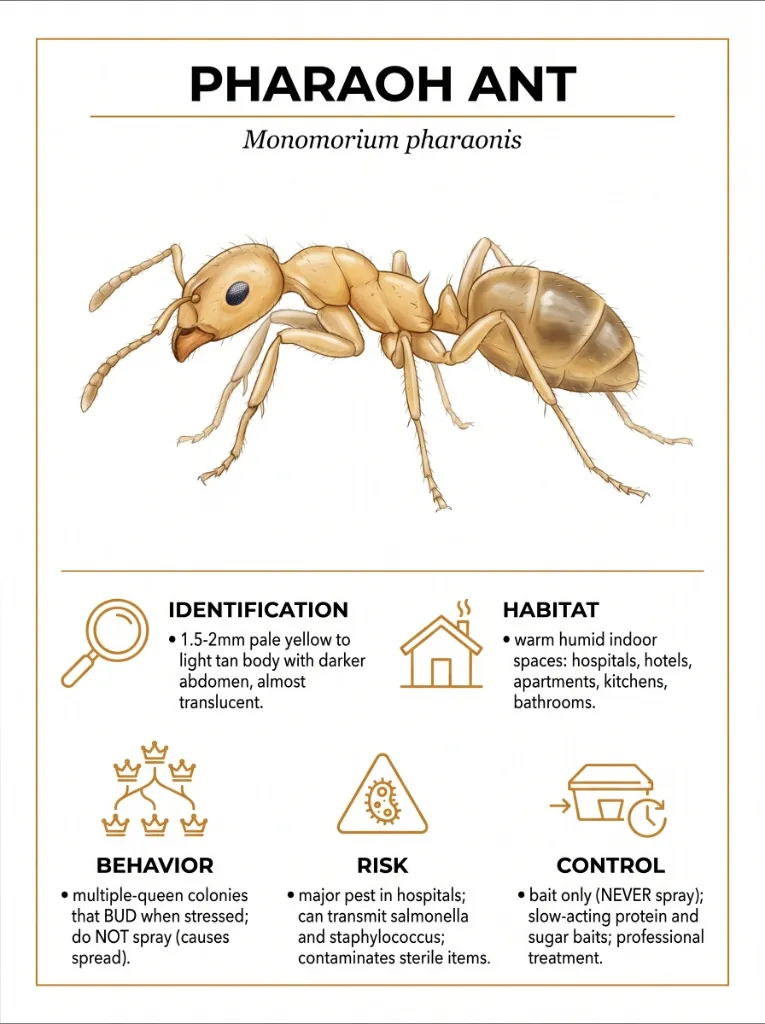
Identifying Odorous House Ants

  • Size & color — 2.5-3 mm, uniformly dark brown to nearly black.
  • Body shape — thorax has an uneven profile (jagged when viewed from the side); single-node waist that is hidden by the abdomen.
  • The smell test — crush one and it releases a distinct rotten-coconut or blue-cheese odor. No other Triangle ant does this.
  • Behavior — long distinct trails along baseboards, counters, and around plumbing; workers move in a jerky rapid pace.

Colony Biology & Why They Bud

Odorous house ant colonies contain hundreds to hundreds of thousands of workers and multiple queens. Multiple queens plus multiple satellite nest sites means the colony is not a single point of failure — kill one queen or one nest and the rest of the colony continues. Worse, when a colony is stressed (particularly by repellent spraying), workers and queens split off to form new nests. A single spray-can 'treatment' commonly turns one ant problem into three or four.

Nests can be in almost any protected moist harborage: wall voids, under insulation, in mulch beds, under stones, under floors, and inside potted plants. They move nests frequently, sometimes within hours of a disturbance.

Where They Enter Triangle Homes

  • Trails from mulch beds through weep holes and foundation gaps.
  • Along utility line entries — cable, AC line-sets, plumbing penetrations.
  • Under exterior door thresholds, especially garage service doors.
  • Through window frame gaps.
  • Along tree limbs and shrubs touching the roof.

Once inside, they trail along baseboards to moisture (bathrooms, kitchens) and food (any pet food bowl, sugar residue, kitchen crumbs).

Why DIY Sprays Fail on Them Specifically

The single most important thing to know about odorous house ants is: do NOT spray the visible trail with an off-the-shelf repellent insecticide. Repellent sprays trigger the colony to bud. A trail that was one nest becomes several nests scattered across the house, each with its own queens producing new workers. The apparent short-term effect (the ants you saw are dead) is followed by a dramatically bigger problem within days to weeks.

Effective control uses either slow-acting sugar baits that workers carry back to the queens, or non-repellent residual products that ants walk across without noticing and carry through the colony. Both approaches require correct product selection and placement — this is exactly the kind of ant control where professional treatment pays for itself in one visit.

Our Treatment Approach

  • Follow the trail — every technician traces active trails to nest locations both indoors and outdoors before treatment begins.
  • Non-repellent perimeter treatment and interior crack-and-crevice applications that transfer through the colony.
  • Sugar-based bait placements where trails cross harborage — workers carry the active back to the queens.
  • Moisture assessment — odorous house ants strongly prefer moist conditions; correcting leaky plumbing, gutter drainage, and crawl-space humidity supports long-term control.
  • Ongoing exterior perimeter service for chronic-pressure properties.

Every plan is scoped with a personalized quote based on trail density and property conditions.

Prevention Tips

  • Do not spray a visible trail with grocery-store bug spray. It will make the problem worse.
  • Fix any dripping faucet, sweating pipe, or slow drain promptly.
  • Wipe down kitchen counters and stove nightly; sweep floors.
  • Store pet food in sealed containers; never leave a bowl out overnight.
  • Pull mulch back at least 15 cm from the foundation.
  • Trim tree limbs and shrubs off the house.
  • Seal exterior gaps at utility penetrations.
  • If you see a trail, take a picture, note the entry point, and call for professional treatment.

Frequently asked

Odorous House Ant questions homeowners ask

How do I know if I have odorous house ants?
Small (2.5-3 mm) uniformly dark brown-to-black ants trailing along baseboards, counters, or around plumbing — and the give-away is the smell when one is crushed: rotten coconut or blue cheese. No other common NC ant has that smell.
Why don't the ant sprays from the hardware store work?
For odorous house ants specifically, repellent sprays cause the colony to fragment — a behavior called budding — splitting one colony into several. The short-term satisfaction of killing the ants you can see is usually followed by a bigger problem within days. Non-repellent products and slow-acting baits are the proven approach.
How long does professional treatment take to work?
Trail activity typically drops sharply within a few days as workers carry the actives back to the colony. Full colony elimination — the point where new trails stop appearing — usually happens over two to four weeks. Follow-up visits keep the reduction in place.
Are they harmful?
Not medically. They do not sting meaningfully and are not known disease vectors. The impact is contamination of kitchen surfaces and food, and the sheer nuisance of large trails in a home. That said, the risk of budding turns a small odorous house ant sighting into a much larger problem if treated wrong.
Will they come back next year?
Where the outdoor colony is not eliminated and where exterior conditions still favor them (mulch beds, moisture, cracks in the foundation), yes — annual or ongoing service is common for chronic-pressure properties. A single interior treatment usually resolves the immediate infestation.

Related pests

More in ants

Browse all pests