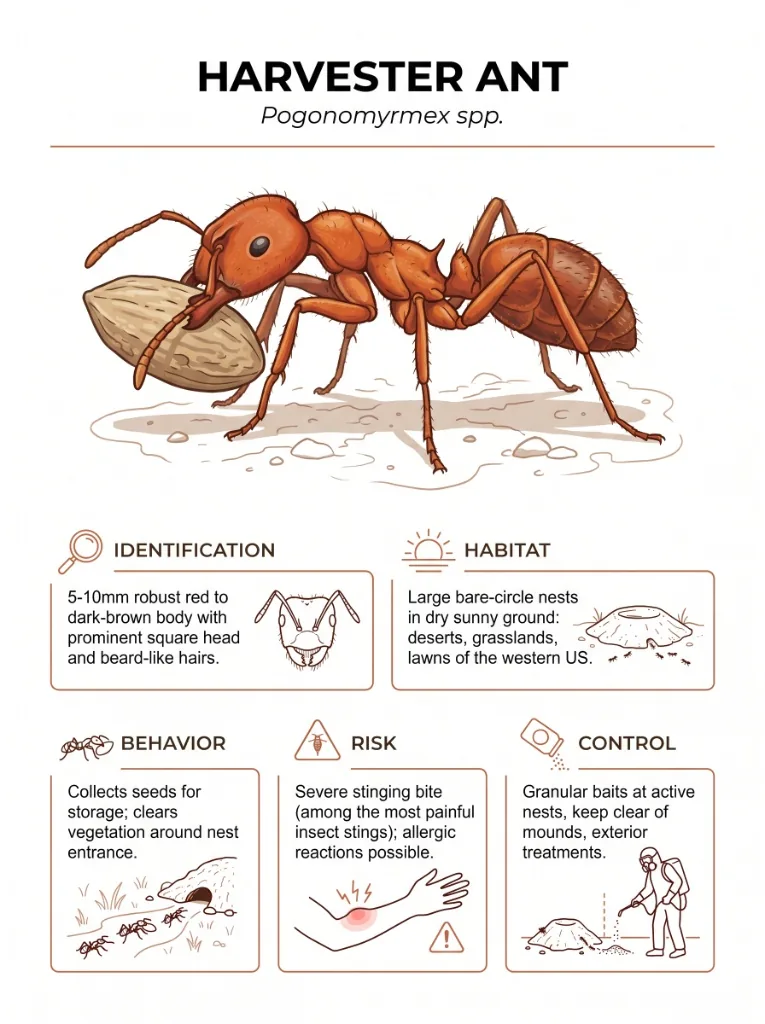
Harvester Ant (Pogonomyrmex spp.) identification infographic showing size, habitat, behavior, risk, and control
High concern

Harvester Ant — Identification & Control

Pogonomyrmex spp.

Size
5–10 mm
Category
Ants

About the harvester ant

Harvester ants are large, robust ants — reddish to dark brown, with a distinctive square head and fine beard-like hairs beneath it — best known for two behaviors: methodically clearing all vegetation in a wide circle around their nest entrance, and delivering one of the most painful stings recorded among North American insects. Their bare-soil mounds, ringed by cleared ground, are one of the most recognizable ant nest signatures in the insect world.

Harvester ants are primarily a western and southwestern United States species, thriving in the arid, open landscapes of that region. They are only rarely encountered in North Carolina, and we include identification information here mainly so Triangle residents who travel west, or who see references to harvester ants online, can recognize the species and understand why it is not a common local pest — unlike fire ants, which are a genuine and growing concern in central North Carolina.

Quick ID

5–10 mm robust red to dark-brown body with prominent square head and beard-like hairs.

In the Triangle

Not native to the Triangle; included for identification reference if you encounter one while traveling west.

Think you have harvester ants?

Free inspection from a licensed Castle Exterminators technician — Durham, Chapel Hill, Raleigh, Cary & the Triangle. We'll confirm the species and recommend a treatment plan.

Request Free Inspection (919) 606-8686
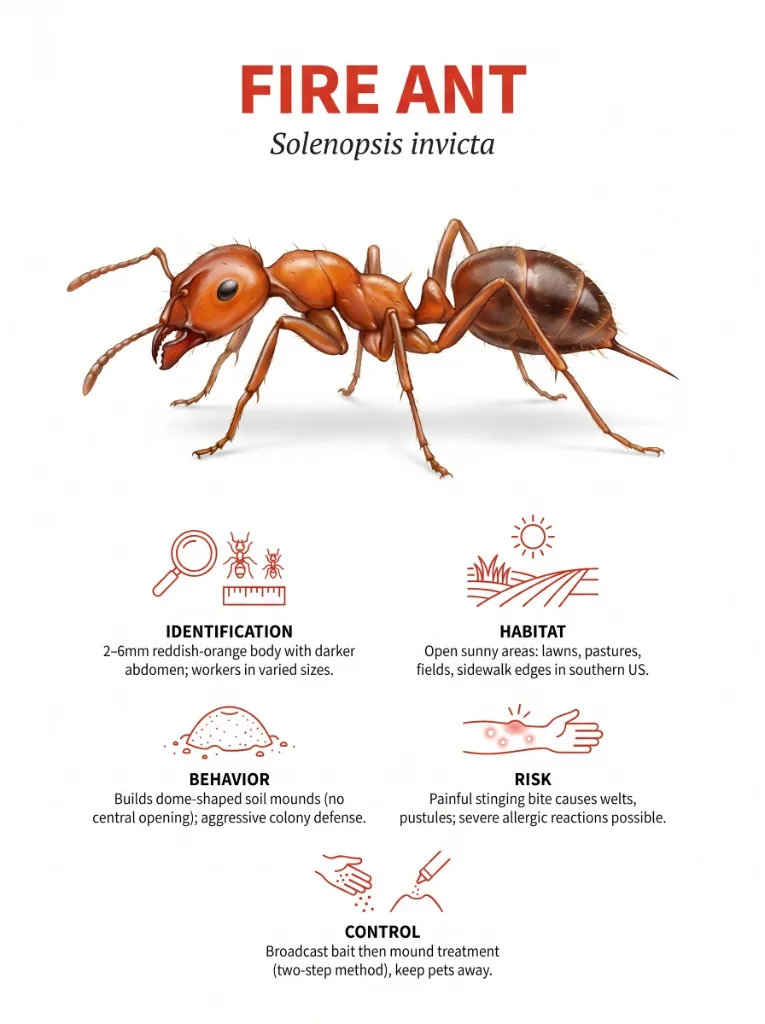
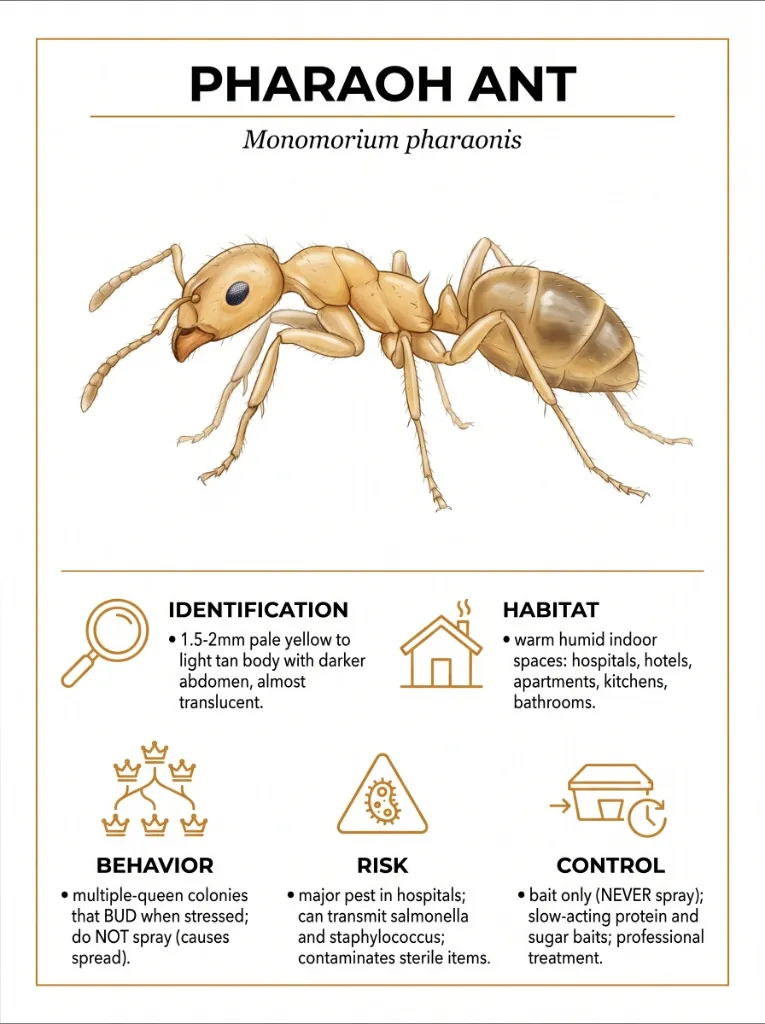
How to Recognize a Harvester Ant Mound

The clearest identifying feature is the mound itself: a patch of completely bare soil, often a foot or more across, with all surrounding vegetation methodically removed by the colony. Workers are large and robust with a noticeably square head shape and short beard-like hairs on the underside, distinguishing them from the smaller, less distinctly-shaped ants common in the Triangle.

If You Encounter a Harvester Ant Sting

Harvester ant stings are unusually painful for their size, and reactions can be significant in allergic individuals, similar to a wasp or bee sting. If you encounter this species while traveling in the western US, avoid disturbing bare-soil mounds and seek medical attention for any sting that causes swelling beyond the immediate area, difficulty breathing, or dizziness. Because this species is not established in North Carolina, if you believe you have found one locally, we recommend an identification check — Triangle mounds matching this description are far more likely to be a native ant species.

Frequently asked

Harvester Ant questions homeowners ask

Are harvester ants found in North Carolina?
Harvester ants are not established in North Carolina; they are primarily a western and southwestern US species. If you see a large bare-soil mound locally, it is far more likely to be a different native ant species.
How painful is a harvester ant sting compared to a fire ant sting?
Harvester ant stings are generally considered more painful than fire ant stings, ranking among the most painful insect stings recorded in North America, though fire ants remain the more common and relevant concern for Triangle homeowners.

Related pests

More in ants

Browse all pests