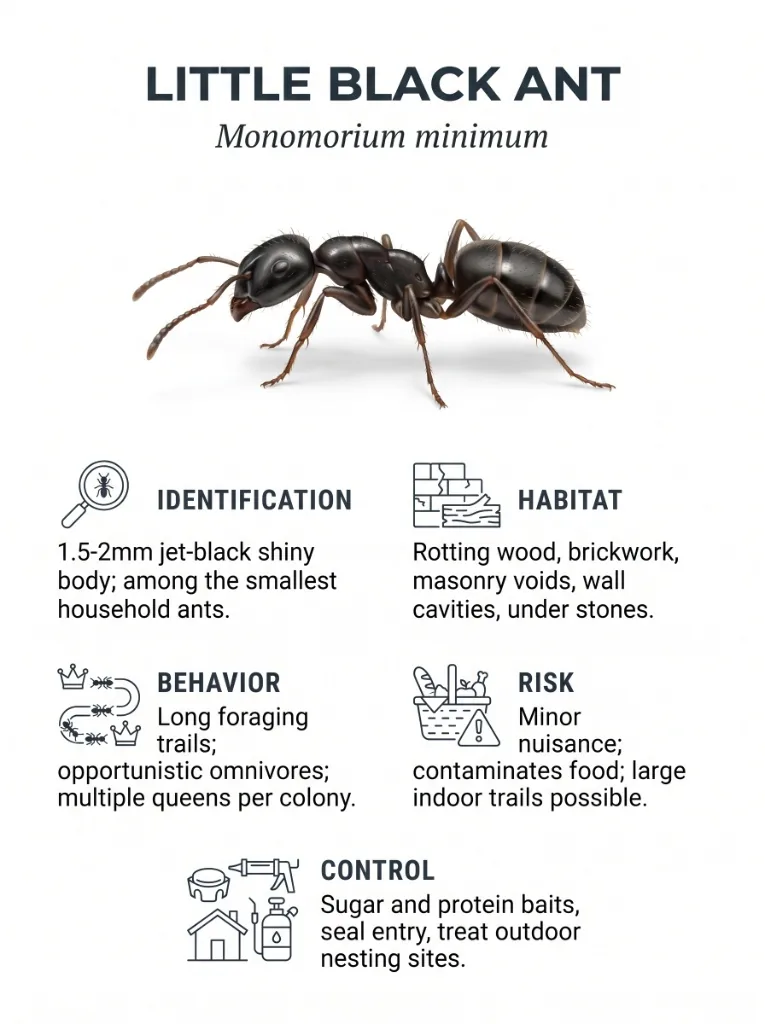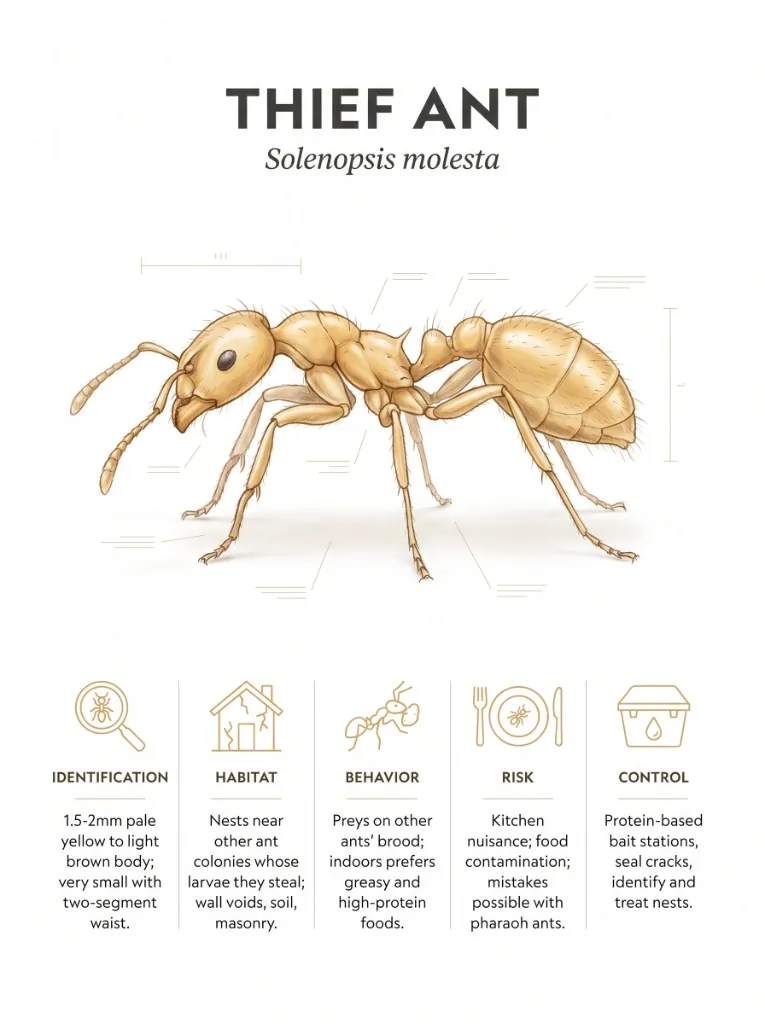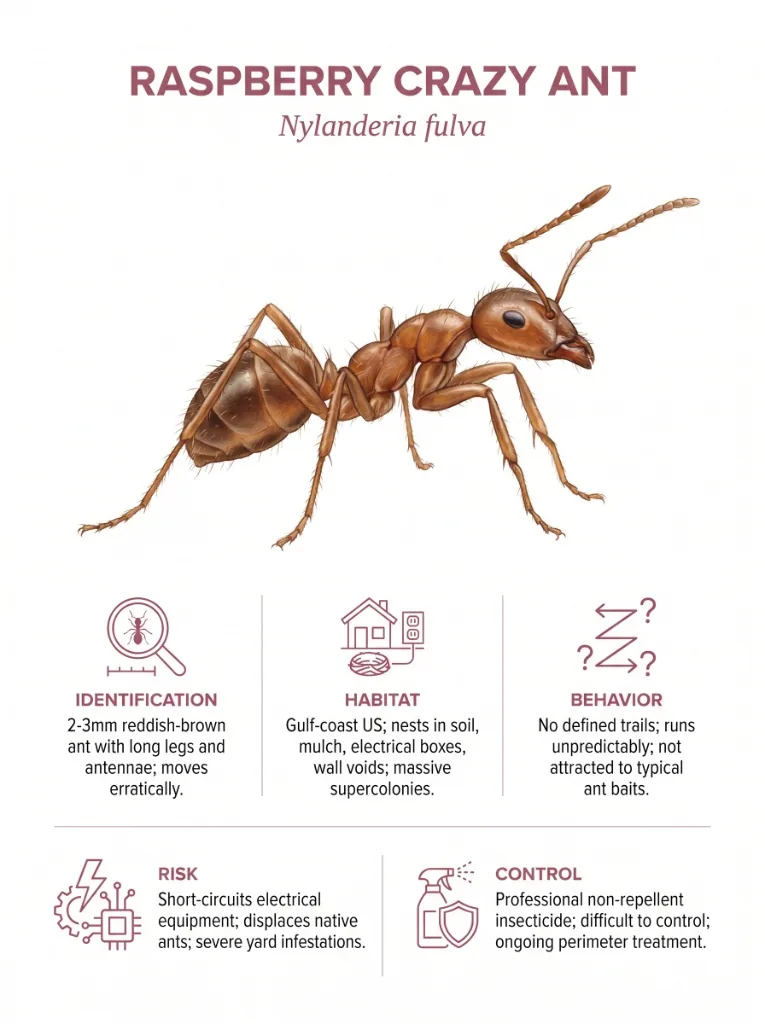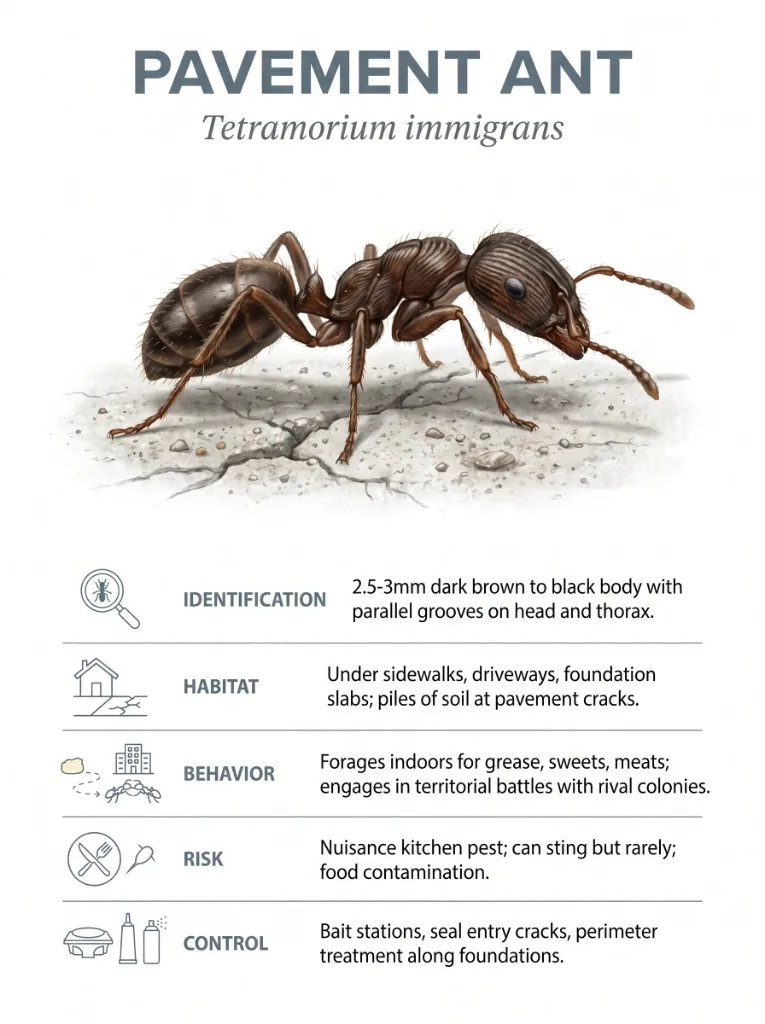
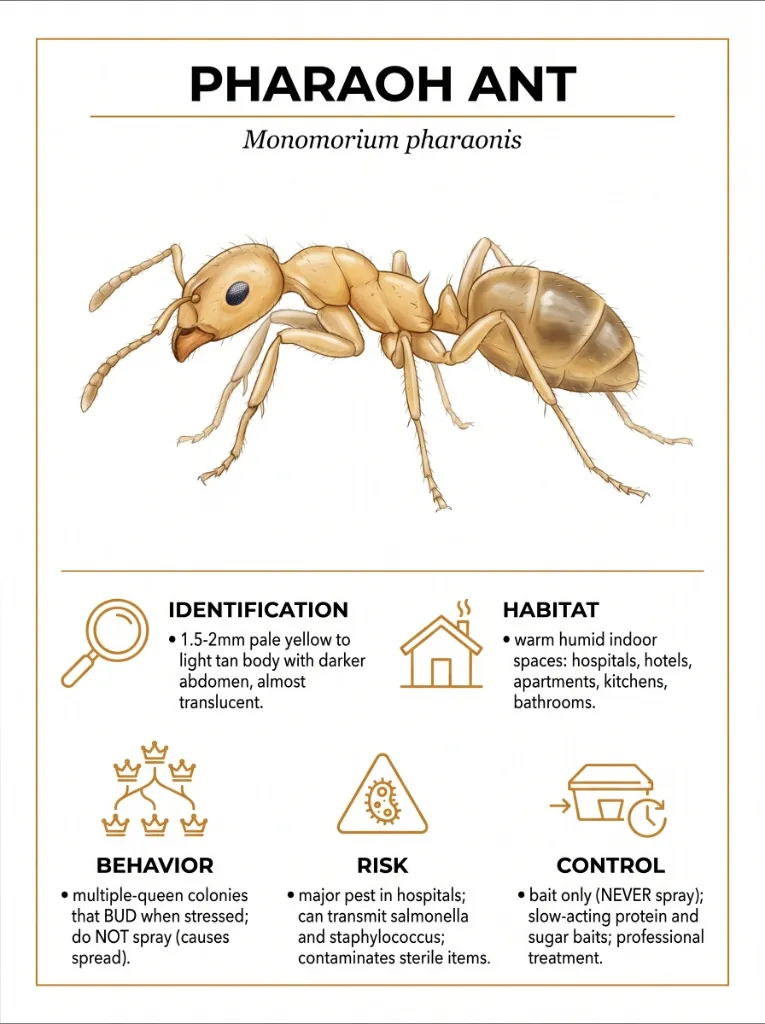
Pharaoh Ant (Monomorium pharaonis) identification infographic showing size, habitat, behavior, risk, and control
Moderate concern

Pharaoh Ant — Identification & Control

Monomorium pharaonis

Size
1.5–2 mm
Category
Ants

About the pharaoh ant

Pharaoh ants (Monomorium pharaonis) are one of the most difficult indoor ant species to control anywhere in the United States, including the North Carolina Triangle. Adults are tiny (1.5-2 mm), pale yellow to nearly translucent, with a slightly darker abdomen. They are a strictly-indoor tropical species that survives year-round in warm-humid indoor environments — kitchens, bathrooms, hospitals, apartments, hotels — and does not survive outdoors in NC winters.

What makes pharaoh ants notorious is their extreme response to repellent insecticides. They are the classic budding species: any spray, dust, or repellent product applied to a trail causes queens and workers to split off and start multiple new colonies. A single amateur spray-can 'treatment' has been documented to turn one pharaoh ant colony into dozens across an entire apartment building. Professional bait-only treatment is the standard of care.

Quick ID

1.5–2 mm pale yellow to light tan body with darker abdomen; almost translucent.

In the Triangle

Encountered year-round indoors across the Triangle, especially in apartments, restaurants, and older buildings.

Think you have pharaoh ants?

Free inspection from a licensed Castle Exterminators technician — Durham, Chapel Hill, Raleigh, Cary & the Triangle. We'll confirm the species and recommend a treatment plan.

Request Free Inspection (919) 606-8686
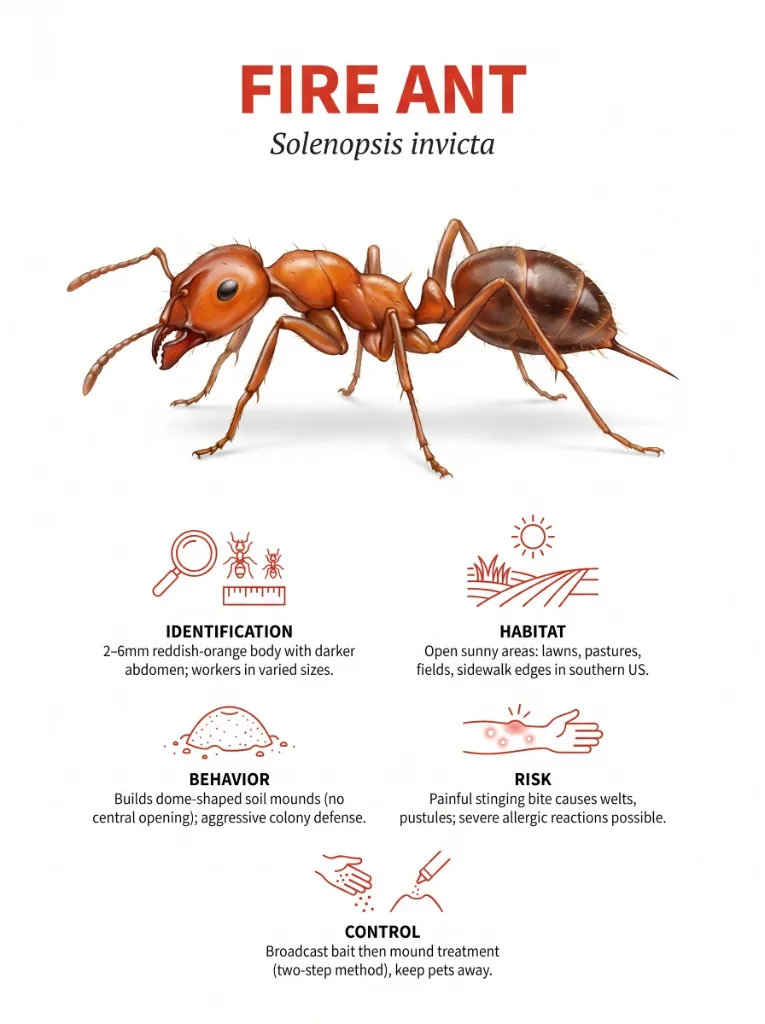
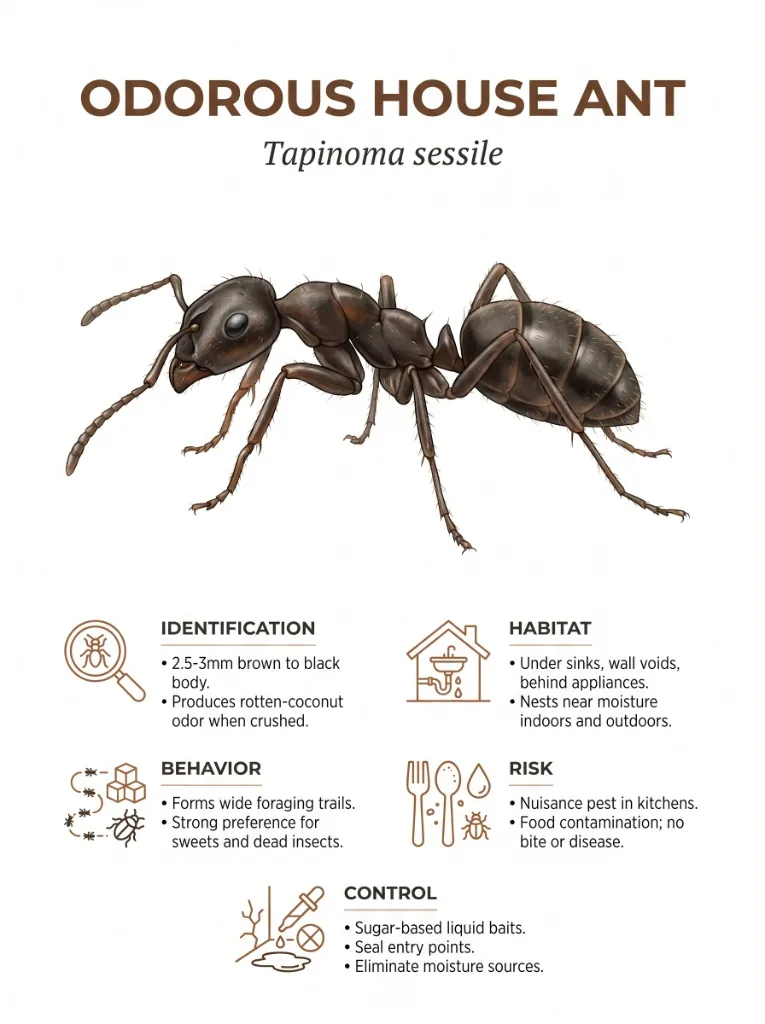
Identifying Pharaoh Ants

  • Size — 1.5-2 mm. Very small.
  • Color — pale yellow to almost translucent honey-colored body with a slightly darker abdomen.
  • Body — two-node waist (magnifier needed).
  • Behavior — trails inside kitchens and bathrooms, often up cabinet edges, along tile grout lines, and around plumbing.
  • Habitat — strictly indoor in NC. Never found outdoors in winter; rarely outdoors even in summer.

Because they are so pale, they are often missed until a substantial trail is established.

Why They Are So Difficult to Control

Three characteristics make pharaoh ants uniquely problematic:

  • Multiple queens — hundreds to thousands per colony.
  • Continuous indoor breeding — no winter dieback; reproduction continues year-round in a climate-controlled home.
  • Extreme budding response — any repellent stressor causes queens and workers to split off and start new colonies. This is not a minor effect; it is the defining challenge of pharaoh ant control.

These traits are why they became notorious in hospitals and medical facilities decades ago — spraying them made the problem catastrophically worse. Modern control is bait-based only, and requires patience: even correctly executed, treatment can take weeks.

Health & Sanitation Concerns

Pharaoh ants mechanically carry salmonella, staphylococcus, streptococcus, and pseudomonas — pathogens they pick up in bathrooms, drains, and garbage and transfer to counters and food surfaces. Their small size and persistent trailing lets them contaminate large surface areas. In hospital and nursing-home settings they have been implicated in nosocomial infections; in residential settings they pose a real (though smaller) contamination concern, especially in homes with immunocompromised residents.

This is one ant category where treatment is not just about nuisance — it is a hygiene issue.

Common Nesting Sites

  • Wall voids around plumbing lines.
  • Insulation in kitchens and bathrooms.
  • Behind and inside appliances (refrigerator motor housings, dishwasher voids).
  • Between books in bookshelves.
  • Inside furniture with hollow legs or cushioning.
  • Under tile flooring where grout has failed.
  • Inside outlet and switch plates.

In apartments and townhouses, colonies frequently migrate between units through shared wall voids and plumbing chases. This makes multifamily pharaoh ant treatment far more effective when coordinated across units.

Our Pharaoh Ant Treatment Approach

  • Bait-only strategy — no repellent sprays, no dusts in living areas that would cause budding.
  • Sugar-based AND protein-based baits deployed together, because pharaoh ants shift dietary preference over the colony cycle.
  • Slow-acting growth-regulator baits that workers carry back and feed to queens over multiple exchanges.
  • Multiple bait placement points — because colonies are widely distributed, single bait stations are not sufficient.
  • Weekly to bi-weekly follow-up in the initial phase, then transitioning to monthly monitoring.
  • Multi-unit coordination in apartments/townhomes — the only reliable path in shared-wall buildings.

Every plan is scoped with a personalized quote and a realistic timeline (typically 6-12 weeks for full elimination).

Prevention & Sanitation Tips

  • Do NOT spray, dust, or apply ANY repellent insecticide to a visible pharaoh ant trail. Ever.
  • Fix even slow plumbing leaks — pharaoh ants require moisture and colonize wet wall voids.
  • Store all pantry items — including opened pet food — in sealed hard containers.
  • Wipe counters and stove nightly.
  • Rinse recyclables before storing.
  • Inspect grocery items before putting them away — pharaoh ants ride in on packaging.
  • In apartments or townhomes, coordinate treatment with neighbors and building management.

Frequently asked

Pharaoh Ant questions homeowners ask

What happens if I spray pharaoh ants?
The colony fragments — a behavior called budding — with queens and workers splitting off into multiple new nests. What was one colony to treat becomes ten. Pharaoh ants are the most dramatic budder of the common NC species, and spraying them is the single most common cause of long-running severe infestations we field. Do not spray them.
Are pharaoh ants dangerous?
They carry salmonella, staphylococcus, streptococcus, and pseudomonas on their bodies from bathrooms and drains, and transfer that contamination to counters and food. In homes with immunocompromised residents this is a genuine hygiene concern, and in medical settings they are historically significant nosocomial infection vectors.
How long does pharaoh ant treatment take?
Realistic full elimination timelines are typically 6-12 weeks with correct professional bait treatment. This is not a fast-response pest. Every quote is personalized based on infestation extent and building type.
Can I treat pharaoh ants myself with baits from the hardware store?
Retail baits are often ineffective on pharaoh ants specifically — professional-grade insect growth regulator baits are more reliable, and correct placement (multi-point across the colony's actual extent) matters more than the product alone. Between the DIY failure rate and the risk of accidentally using a repellent product that causes budding, professional treatment is strongly recommended.
I live in an apartment — will treating just my unit work?
Rarely. Pharaoh ant colonies routinely span multiple units through shared walls and plumbing chases. Single-unit treatment usually just pushes the colony into neighboring units. The reliable path is building-wide or multi-unit coordinated treatment; talk with building management about coordinating.

Related pests

More in ants

Browse all pests