
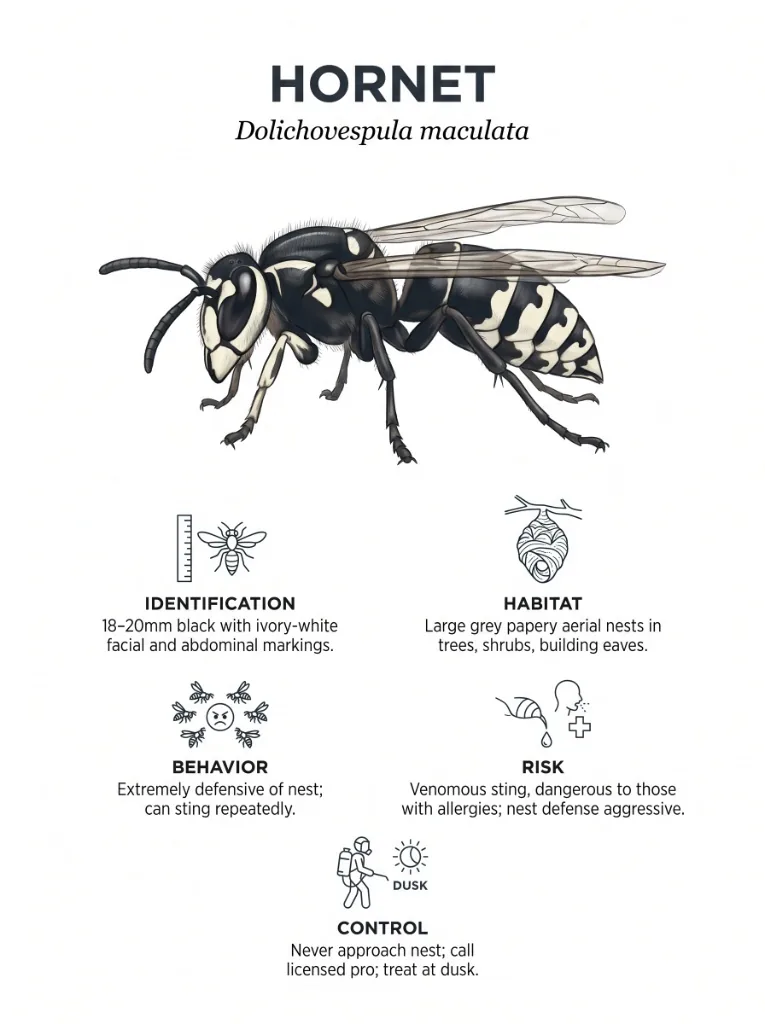
Hornet (Bald-Faced) (Dolichovespula maculata) identification infographic showing size, habitat, behavior, risk, and control
High concern

Bald-Faced Hornet — Identification & Nest Removal

Dolichovespula maculata

Size
18–20 mm
Category
Stinging Insects

About the hornet (bald-faced)

The bald-faced hornet (Dolichovespula maculata) is not technically a true hornet — it is a large aerial-nesting yellow jacket — but the name has stuck for good reason. Adults are large (18-20 mm), striking black and white, and build the impressive enclosed grey paper nests that can grow to basketball-size high in trees, on the eaves of Triangle homes, or on garages and outbuildings.

Bald-faced hornets are aggressive nest defenders — significantly more so than paper wasps, and comparable to ground-nesting yellow jackets. A colony of 200-700 workers protecting a large nest can be genuinely dangerous, and DIY removal of a mature nest is exactly the kind of story that ends in an emergency room visit. Professional removal is strongly recommended for anything larger than a golf ball.

Quick ID

18–20 mm black body with ivory-white facial and abdominal markings.

In the Triangle

Common across the Triangle, especially in wooded properties; nests grow noticeable mid-to-late summer.

Think you have hornet (bald-faced)s?

Free inspection from a licensed Castle Exterminators technician — Durham, Chapel Hill, Raleigh, Cary & the Triangle. We'll confirm the species and recommend a treatment plan.

Request Free Inspection (919) 606-8686
Identifying Bald-Faced Hornets & Their Nests

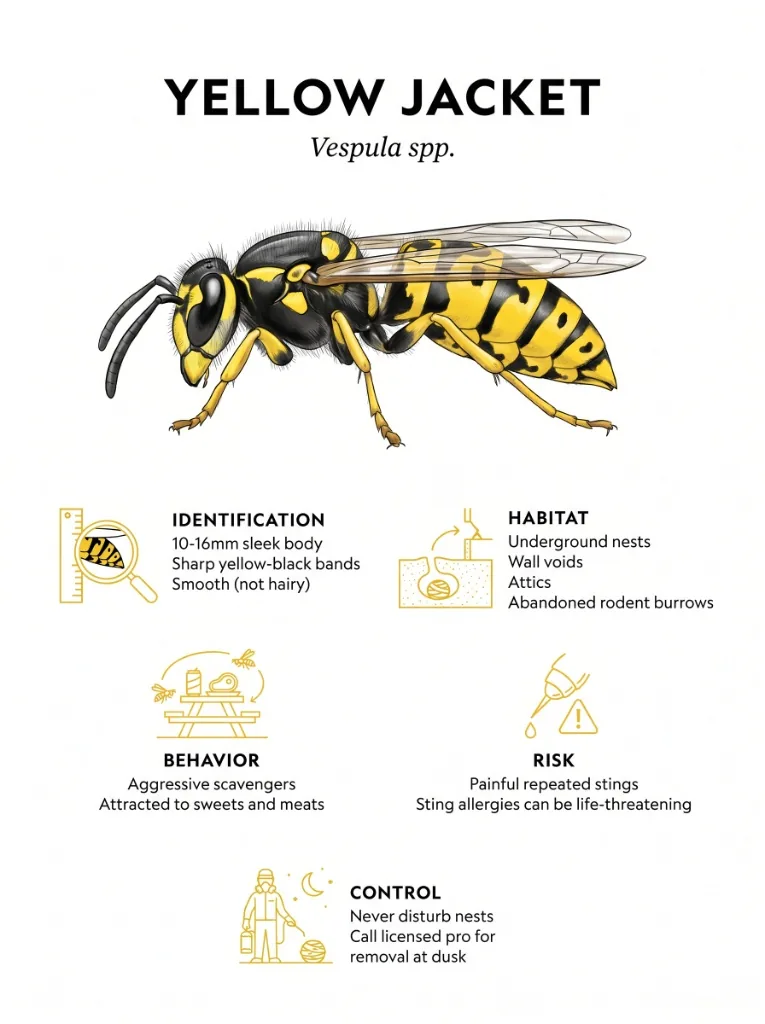
  • Body — 18-20 mm, black with white markings on the face, thorax, and abdomen. Larger than yellow jackets.
  • Nests — enclosed grey-brown paper structures shaped like a lopsided football or teardrop, hanging from tree branches, high eaves, garage soffits, or outbuilding overhangs. A single small entrance is usually near the bottom.
  • Nest size — can reach the size of a basketball or larger by late summer, containing 200-700+ workers.
  • Height — most Triangle nests are 3-6 meters up, though we occasionally find them lower on outbuildings and playhouses.

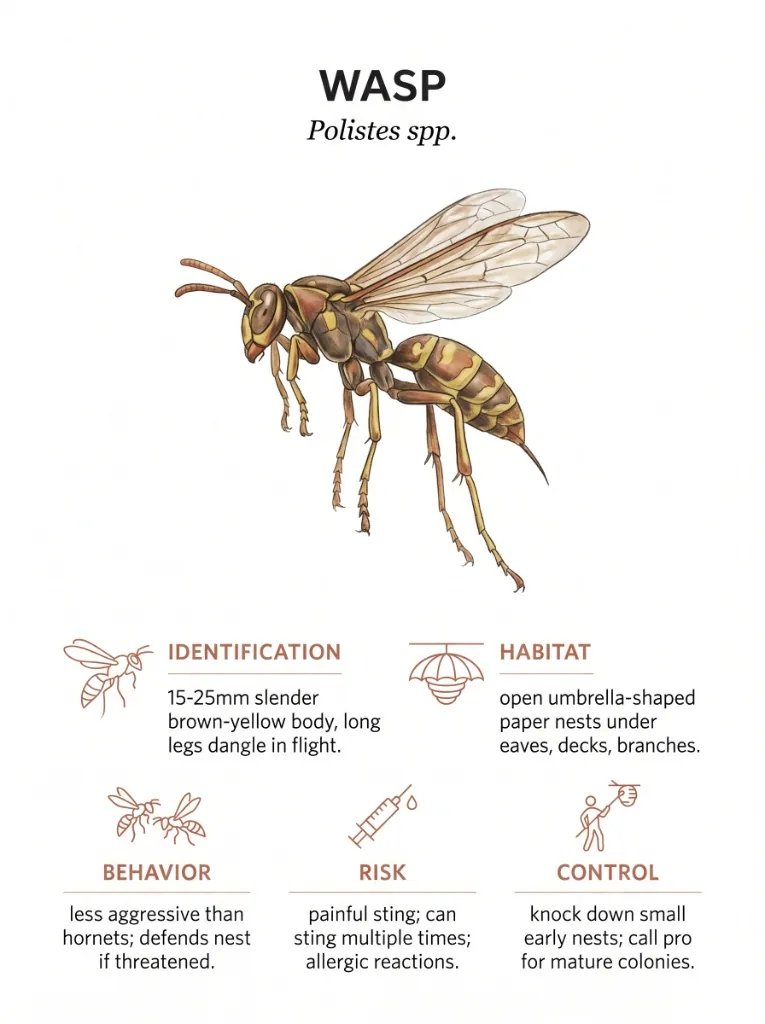
The paper-mache appearance and enclosed shape distinguish bald-faced hornet nests from paper-wasp open combs and from mud-dauber tubes.

Nest Life Cycle

The colony starts in spring when a single overwintered mated queen builds the first small nest structure and lays initial eggs. As those workers emerge, they take over construction and hunting, and the queen focuses on egg-laying. Nest size doubles roughly every few weeks through summer, peaking in size and worker count in August and September.

Like other social wasps in NC, the entire colony dies at first hard frost — only newly mated queens overwinter, tucked into leaf litter or under bark, to start next year's colonies. Old nests are not reused; new queens build fresh nests in new locations. This is why prevention is essentially year-to-year rather than site-permanent.

Aggression & Sting Risk

Bald-faced hornets are among the most defensive stinging insects in the Triangle. They will attack anything they perceive as a threat within a substantial radius of the nest — often three meters or more. Unlike honey bees, they can and will sting repeatedly, and coordinated colony defense can inflict many stings in seconds. They can also spray venom from the stinger at eyes, causing temporary blindness or long-term eye damage.

Sting risk categories mirror other stinging insects but the numbers are worse:

  • Multiple stings — realistic outcome of any disturbance of a mature nest.
  • Known allergy — anaphylaxis risk on a single sting; EpiPen mandatory.
  • Children, seniors, pets — smaller mass, harder reactions.
  • Eye stings — from venom spray; wash immediately and see an ophthalmologist.

Any disturbance of a bald-faced hornet nest without professional protective equipment is not a reasonable homeowner activity.

Common Nesting Sites in the Triangle

Bald-faced hornets prefer sheltered, exposed elevated locations. Common sites in Triangle properties:

  • Large mature tree branches — oaks, maples, pines — often 3-6 meters up.
  • Under the eaves of two-story homes.
  • Attached garage soffits and gable ends.
  • Outbuilding and detached shed exteriors.
  • Under deck overhangs and second-story balconies.
  • Occasionally in dense shrubs at head height — the most dangerous location for accidental encounters.

Wooded lots — Duke Forest, Hope Valley, older Chapel Hill, Umstead-adjacent Raleigh — see the highest bald-faced hornet pressure, but no Triangle neighborhood is immune.

Our Nest Removal Approach

Bald-faced hornet removal is one of the most safety-critical services we provide. The process:

  • On-site assessment — nest location, size, height, and approach path. Trees over neighboring properties, near power lines, or over structures need adjusted approach.
  • Timing — dusk or after dark when workers are inside the nest, dramatically reducing sting risk.
  • Extended-reach application — professional aerosol or dust delivered from a safe distance, in appropriate protective equipment.
  • Nest removal after the colony is confirmed dead, if the nest is accessible. Removing the physical nest prevents residual attraction and prevents nest debris from falling on people or property later.
  • Follow-up inspection to confirm activity has stopped.

Every removal is scoped with a personalized quote based on nest size, height, and accessibility. Ground-level or low-eave nests are typically simpler; high-branch nests over structures require more equipment.

Safety & Prevention Tips

  • Do not throw objects at, spray with a garden hose, or shoot at a bald-faced hornet nest. All of these have caused ER visits.
  • Keep children and pets away from any grey enclosed nest until it is confirmed dead.
  • Do a spring/early summer walkaround to spot new small nests when they are easier to treat.
  • Trim dense shrubs regularly — head-height nests in shrubs are the highest-injury scenario.
  • If working outdoors (mowing, tree trimming, gutter cleaning), scan for wasp traffic before starting.
  • Anyone with a known wasp allergy should carry an EpiPen year-round.
  • If stung once and symptoms are systemic (swelling beyond sting site, breathing difficulty, dizziness), call 911.

Frequently asked

Hornet (Bald-Faced) questions homeowners ask

Is a bald-faced hornet a true hornet?
Technically no — it is a large aerial-nesting yellow jacket in the same family. The name is traditional. From a homeowner-safety perspective the distinction does not matter: they are treated as one of the most defensive stinging insects in the Triangle.
How big can a bald-faced hornet nest get?
By August-September a mature nest in the Triangle can be the size of a basketball or larger, containing 200-700 workers or more. Late-season nests are both larger and more defensive than early-summer nests, which is why we recommend addressing nests as soon as they are noticed.
Can I knock the nest down myself once frost hits?
Once you have confirmed no activity for several days after a hard frost, an old empty nest can be removed by a homeowner — but a hornet nest is not always fully inactive on the timeline you might expect, and misjudging can be dangerous. When in doubt, we can inspect and remove for you.
Should I try to spray the nest myself?
Not recommended. Store-bought sprays don't have enough range to safely reach most bald-faced hornet nests, workers will attack in coordinated defense, and eye stings from venom spray are a real risk. Professional removal at dusk with appropriate equipment and PPE is far safer.
Will bald-faced hornets return next year to the same nest?
No — the entire colony dies at first hard frost, and next year's queens build entirely new nests in new locations. Old nests are not reused. However, sites that were attractive once often attract new nests in future years, which is why chronic-pressure properties benefit from preventive perimeter service.

Related pests

More in stinging insects

Browse all pests