Roaches · Durham homeowner guide
German Roach vs American Roach in Durham — What Triangle Homeowners Need to Know
By Castle Exterminators · · 5 min read
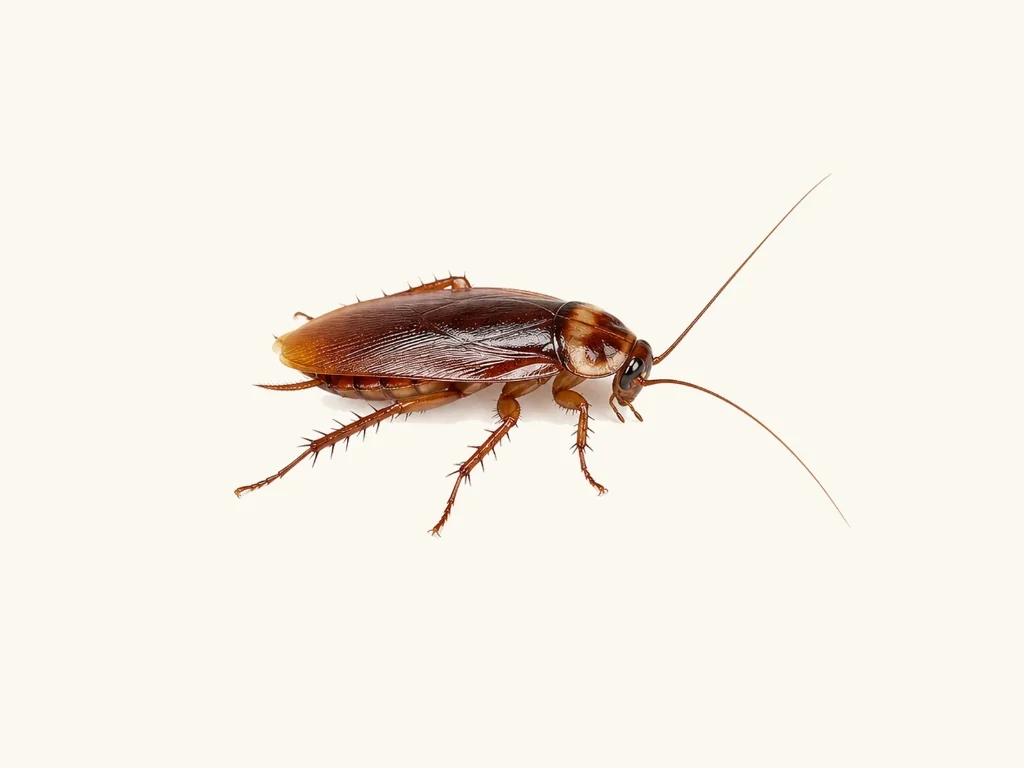
A small tan roach beside the dishwasher and a large reddish-brown roach near the back door may point to very different problems. For Triangle homeowners, identifying the species is more useful than choosing the strongest-looking spray. German cockroaches commonly establish populations inside occupied buildings. American cockroaches often favor damp, sheltered spaces and may enter from outside, although they can also infest buildings.
If you are researching a German roach sighting in Durham, record the insect's size, markings, and location before drawing conclusions. A single observation cannot tell you how many roaches are present. It can, however, help determine whether the next step should focus on indoor harborages, moisture and entry routes, or both.
German roach vs American roach: the visible differences
German cockroaches: smaller, with two dark stripes
Adult German cockroaches are usually around half an inch long, light brown to tan, with two dark parallel stripes on the shield behind the head. Younger stages are smaller, darker, and wingless. Finding several sizes together can suggest ongoing reproduction, but accurate identification is still important. Other small roaches can look similar, especially in a blurry photograph.
American cockroaches: larger and reddish-brown
Adult American cockroaches are much larger, often around one and a half inches long or more. They are reddish-brown with a pale border on the shield behind the head. Immature American roaches are smaller and lack fully developed wings, which is why size by itself is not enough. A young large-species roach can be mistaken for an adult of a smaller species.
The nickname “water bug” does not identify a species reliably. People use it for several large roaches and sometimes for insects that are not cockroaches at all. Photograph the top of the insect with a safe size reference nearby. Our German cockroach guide and American cockroach guide can help you compare features.
Where you find them changes the investigation
German cockroaches are closely associated with indoor food, water, warmth, and shelter. Kitchens are common starting points: the spaces behind refrigerators, beneath dishwashers, around cabinets, and near plumbing penetrations deserve attention. Bathrooms, laundry areas, and connected rooms may also be involved. They can travel with belongings or between units, so an infestation is not proof that a household is dirty.
American cockroaches often use moist crawl spaces, basements, utility areas, and other protected locations. Outdoor populations may live around organic debris and sheltered structures. A large roach entering after heavy rain is a different clue from repeated sightings of young roaches in the same indoor room. In Durham's humid conditions, drainage and plumbing deserve as much attention as the insect itself.
What signs suggest an established problem?
Repeated sightings, droppings, shed skins, egg cases, and insects of multiple sizes justify a closer inspection. German roaches can hide in very narrow gaps, so what you see on an open counter may represent only part of the activity. Seeing roaches during the day can be concerning, but timing alone does not measure population size. Disturbance or changes in food and water access can also affect behavior.
Sticky monitors can help show where activity is concentrated when positioned carefully and kept away from children and pets. Record the location and date rather than moving every monitor daily. Monitoring is useful for assessing progress; it is not a stand-alone treatment for a substantial infestation. NC State Extension's German cockroach surveillance and management guide explains this inspection-based approach.
Why treatment should match the species
For German roaches, focus on indoor harborages
Management often combines targeted baits, monitoring, sanitation, exclusion of hiding places, and follow-up visits. Product selection and placement matter. Spraying over or near bait can interfere with the treatment strategy, depending on the products used. Avoid mixing a professional plan with unreported do-it-yourself applications; tell your technician exactly what has already been used and where.
For American roaches, investigate water and access
Look for plumbing leaks, damp debris, gaps around pipes, damaged door sweeps, and crawl-space access problems. Exclusion and moisture correction can reduce repeat entry, while treatment may be needed where activity persists. Do not pour pesticides into drains or improvise plumbing modifications. A persistent drainage or sewer concern should also be evaluated by an appropriate plumbing professional.
Helpful steps you can take now
- Store food securely and clean crumbs and grease from accessible surfaces.
- Fix dripping fixtures and dry unnecessary standing water.
- Reduce cardboard and clutter near appliances and utility spaces.
- Check incoming boxes and used appliances before bringing them inside.
- Repair accessible entry gaps after the inspection identifies likely routes.
- Keep a record of sightings and share it with your technician.
Do not move infested belongings between rooms or into another home without a plan. In apartments or attached housing, tell the property manager promptly: neighboring units and shared service penetrations may need coordinated attention. Follow treatment preparation instructions closely, and ask before moving appliances or opening electrical equipment. Hidden spaces are not worth an injury.
Avoid the “more spray must be better” trap
Whole-room foggers and repeated aerosol use are not substitutes for finding harborages and choosing a coordinated treatment. They add pesticide exposure and may leave the source unresolved. Never mix products or use an outdoor pesticide indoors. Keep people and pets away from applications for the time specified on the label and by the professional; there is no universal re-entry interval for every roach product.
Get the species right, then choose the next step
Our roach extermination service in Durham starts with identification and inspection so the response fits the actual activity. Tell us whether you saw one insect or several, where they appeared, and whether you have photographs. Request a roach inspection through our contact form for a practical plan for your Triangle home.