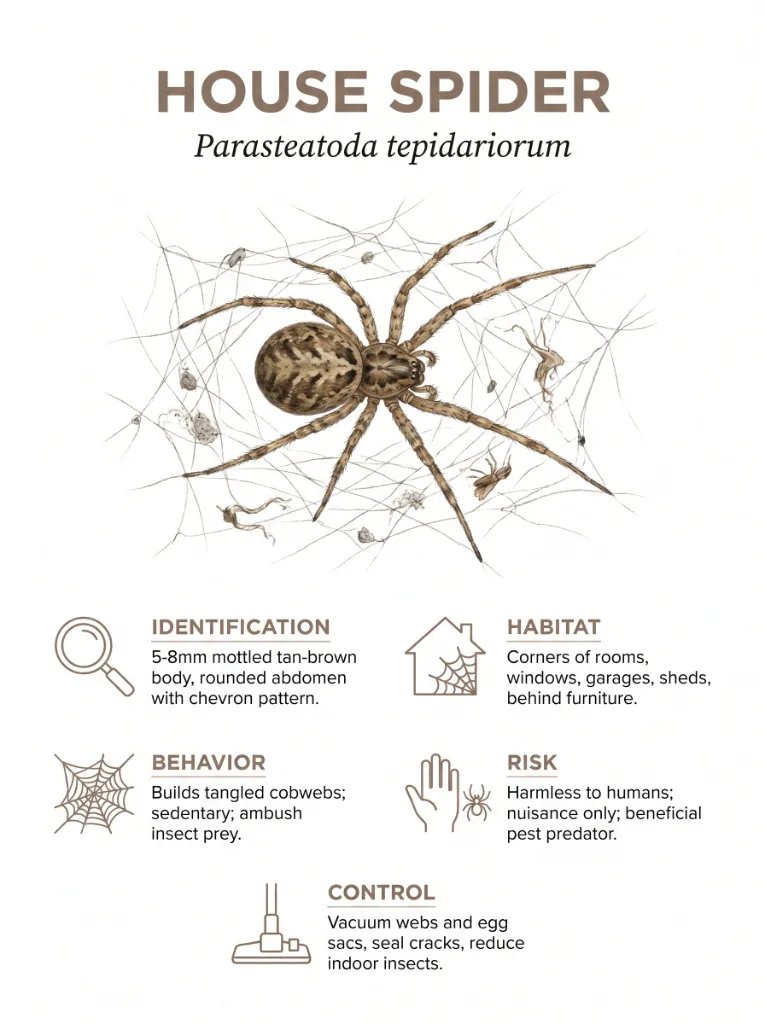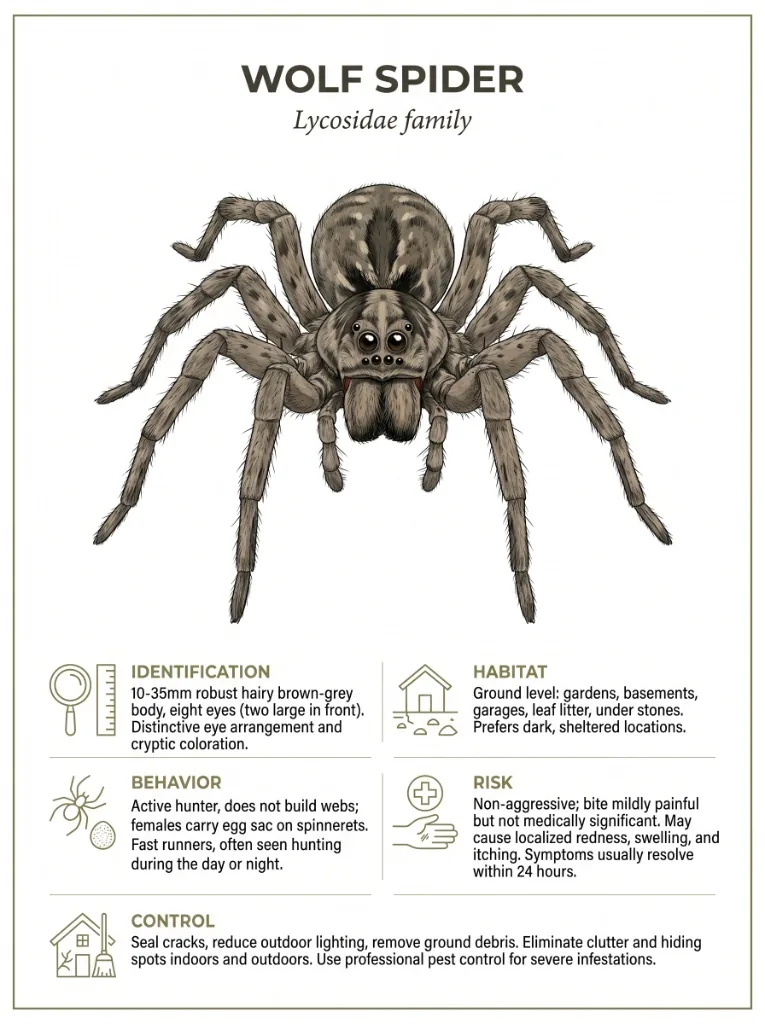
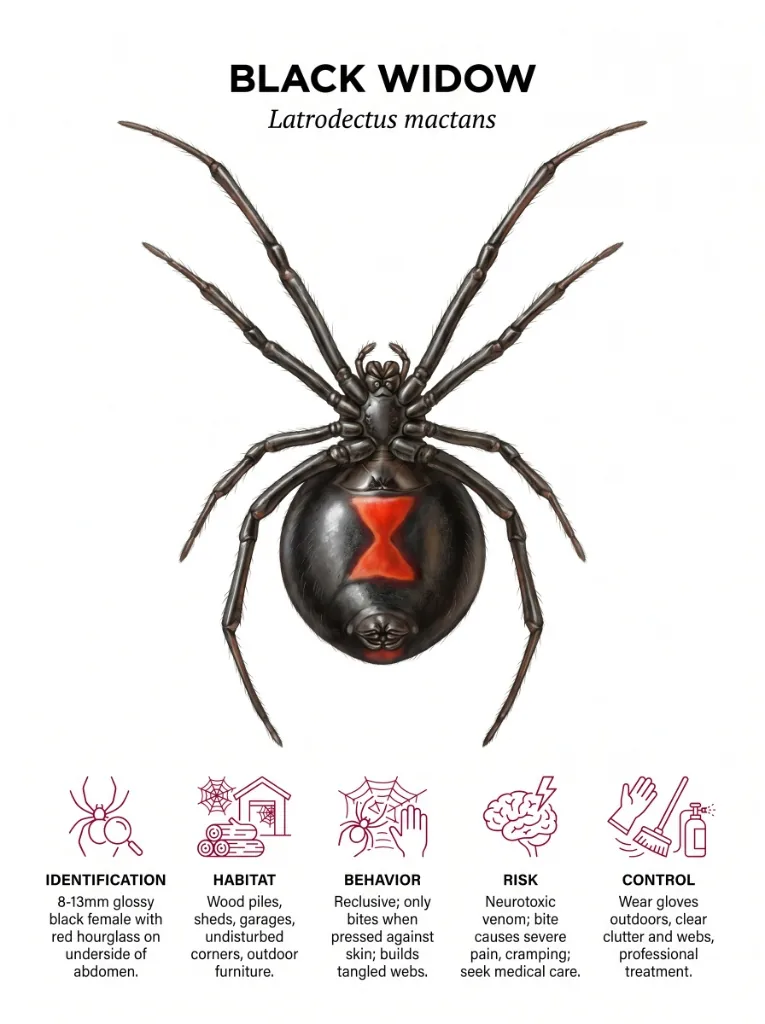
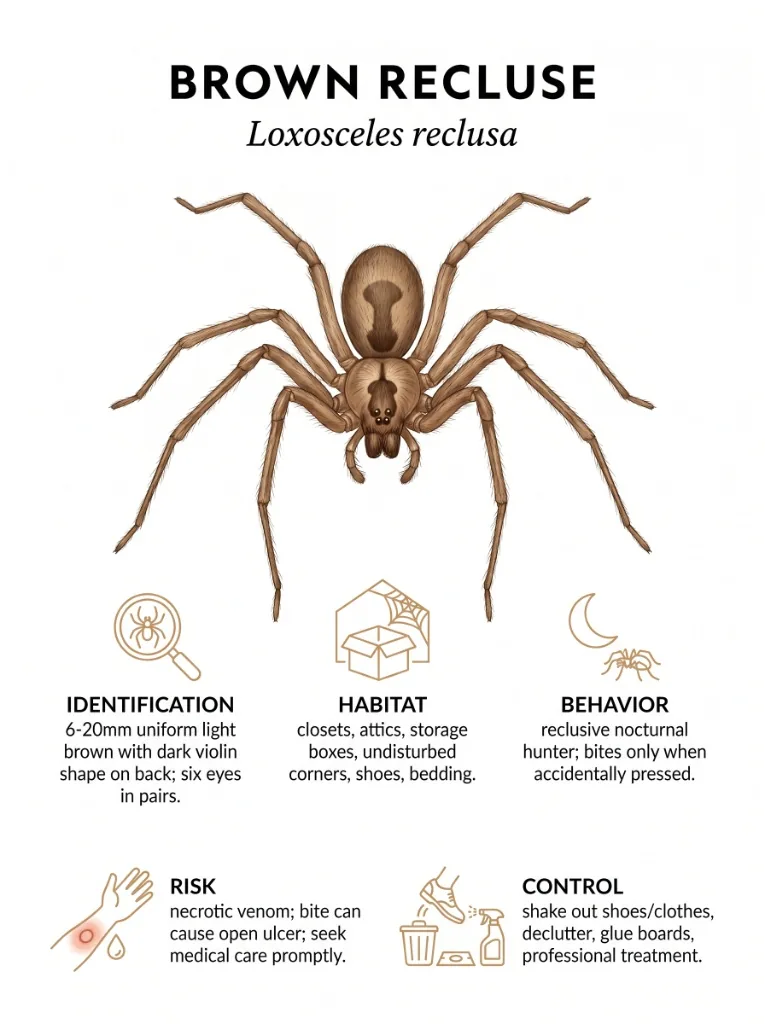
Black Widow (Latrodectus mactans) identification infographic showing size, habitat, behavior, risk, and control
High concern

Black Widow Spider — Identification & Control

Latrodectus mactans

Size
8–13 mm
Category
Spiders

About the black widow

The black widow (Latrodectus mactans) is the most medically significant spider actually established across North Carolina, and unlike the brown recluse, it is genuinely present in the Triangle — usually outdoors and around structures rather than deep inside living spaces. Adult females are unmistakable: shiny jet-black body about 8-13 mm long with a distinctive red or red-orange hourglass marking on the underside of the abdomen.

Female black widow venom is neurotoxic and roughly fifteen times more potent by volume than rattlesnake venom — a fact that gets quoted often, but needs context: they inject a very small amount, bites are rare, and modern medical care makes fatalities extremely uncommon in the US. Still, a bite is a genuine medical event, and around Triangle homes with garages, sheds, woodpiles, and crawl spaces, respectful control matters.

Quick ID

8–13 mm glossy black female with red hourglass marking on underside of abdomen.

In the Triangle

Black widow located sightings are common across the Triangle, especially in older wood piles, garden sheds, and rarely-used garages.

Think you have black widows?

Free inspection from a licensed Castle Exterminators technician — Durham, Chapel Hill, Raleigh, Cary & the Triangle. We'll confirm the species and recommend a treatment plan.

Request Free Inspection (919) 606-8686
Identifying a Black Widow

Only the adult female is medically significant, and she is the most identifiable spider in North America once you know what to look for:

  • Shiny jet-black body with a round, bulbous abdomen — often described as looking almost lacquered.
  • Red or red-orange hourglass marking on the underside of the abdomen. In some specimens the hourglass is split into two triangles or is a pair of red spots — variation is normal.
  • Size — female body 8-13 mm, with leg span up to 40 mm.
  • Web — irregular, tangled, three-dimensional (not the flat orb webs of garden spiders); often built low, in corners, and with a strong sticky pull when disturbed.

Males are smaller (about half the size), lighter brown-to-grey, and not medically significant. Juveniles are lighter with white and yellow markings that darken with age.

Behavior & Preferred Habitat

Black widows are shy and reclusive. They do not defend territory, do not chase, and almost always retreat if disturbed. Bites happen when the spider is pressed against skin — a hand reaching into a stored box, a foot slid into a boot that has been sitting in the garage, an arm brushing along a shelf in a shed.

Preferred habitat around Triangle homes:

  • Garage corners, under workbenches, and in stored boxes.
  • Woodpiles, especially undisturbed woodpiles.
  • Sheds and outbuildings.
  • Crawl spaces, especially under and around plumbing.
  • Meter boxes, water valve boxes, and utility enclosures.
  • Under outdoor furniture, patio storage benches, and grill covers.
  • Retaining walls, rock piles, and dense ground-level plantings.

Bite Symptoms & Medical Response

A black widow bite may feel like a pinprick or barely be felt at all. Symptoms develop over the following 20-60 minutes and can include:

  • Severe muscle cramping, often starting in the abdomen and moving outward.
  • Muscle rigidity and pain.
  • Sweating, nausea, tremors, and elevated blood pressure.
  • Difficulty breathing in severe cases.

The correct response is immediate medical evaluation. Modern emergency care — muscle relaxants, pain control, and in severe cases antivenom — makes the outcome overwhelmingly good. Children, seniors, pregnant women, and anyone with heart or blood-pressure conditions should be evaluated urgently. Do not attempt to self-treat.

Where They Live Around Triangle Homes

Black widows are present across North Carolina, and calls in the Triangle are typical of the region. They are most commonly found in South Durham, Cary, Apex, and Raleigh properties with:

  • Detached garages or workshops.
  • Wood-frame sheds or storage buildings.
  • Well-established landscaping with stone retaining walls, ivy, or ground cover.
  • Crawl spaces used for storage.
  • Outdoor recreation storage — grill covers, kayak racks, patio benches.

Newer subdivisions with tightly sealed garages and less clutter see fewer black widow calls, but no Triangle property is immune.

Our Treatment & Prevention Approach

Effective black widow control combines habitat modification, targeted residual treatments, and monitoring:

  • Site inspection — garage, shed, crawl space, and perimeter high-risk zones. We locate active webs and any egg sacs.
  • Physical removal of visible females and egg sacs — the fastest single risk reduction.
  • Residual treatments in cracks, crevices, corners, and voids where widows harbor. Perimeter treatments significantly reduce reintroduction.
  • Habitat modification recommendations — declutter garages and sheds, elevate stored items, seal gaps in crawl spaces and outbuildings.
  • Follow-up service where property conditions keep pressure high (established landscaping, storage-heavy garages).

Every plan is scoped with a personalized quote based on the property and the level of black widow activity found.

Safety & Prevention Tips

  • Wear gloves when moving stored boxes, working in the garage, or handling firewood.
  • Shake out shoes, gloves, and gardening tools that have been sitting undisturbed.
  • Keep garages and sheds decluttered — clutter is the #1 driver of widow harborage.
  • Store items in sealed plastic totes, not open cardboard boxes.
  • Keep woodpiles away from the house and off the ground.
  • Teach children to identify the shiny black body and red hourglass, and never to reach into dark corners of the garage or shed without an adult.
  • If bitten, seek medical attention immediately — do not wait for symptoms to develop.

Frequently asked

Black Widow questions homeowners ask

Are black widows dangerous?
Female black widow venom is medically significant and can cause severe muscle cramping, sweating, elevated blood pressure, and in rare cases more serious systemic effects. With modern medical care, fatalities in the US are extremely rare — but any suspected bite warrants immediate medical evaluation, especially in children, seniors, and anyone pregnant or with heart conditions.
How do I tell a black widow from a similar-looking spider?
The adult female is unmistakable: shiny jet-black round body with a red or red-orange hourglass on the underside of the abdomen. If a spider is not shiny black, does not have that ventral marking, or is smaller and lighter-colored, it is not a female widow. Males and juveniles are lighter and not medically significant.
What should I do if I find a black widow at home?
Do not attempt to grab or squash it barehanded. Move children and pets away from the area, and call for professional inspection. We can safely remove the spider, locate any egg sacs, and treat the harborage — DIY removal often misses eggs, and a single egg sac can produce hundreds of hatchlings.
Where are they most likely to be in my home?
Garages, sheds, crawl spaces, meter boxes, and stored outdoor items are the top locations in the Triangle. Living areas are unlikely unless boxes or belongings have been moved in from storage. If you're seeing widows repeatedly in the same area, the site probably needs both cleanup and professional treatment.
Will general pest control keep black widows away?
A regular perimeter service significantly reduces black widow presence, and adding shed/garage/crawl-space treatments to the plan is highly effective for high-risk properties. We build every plan around the actual conditions found on inspection.

Related pests

More in spiders

Browse all pests