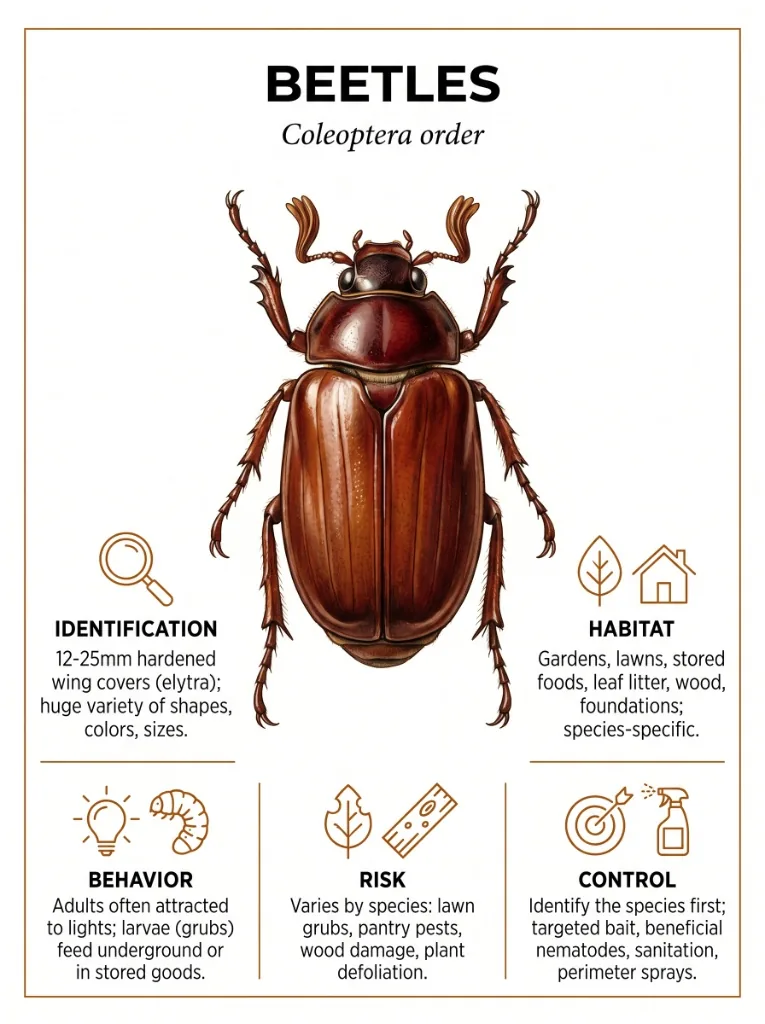
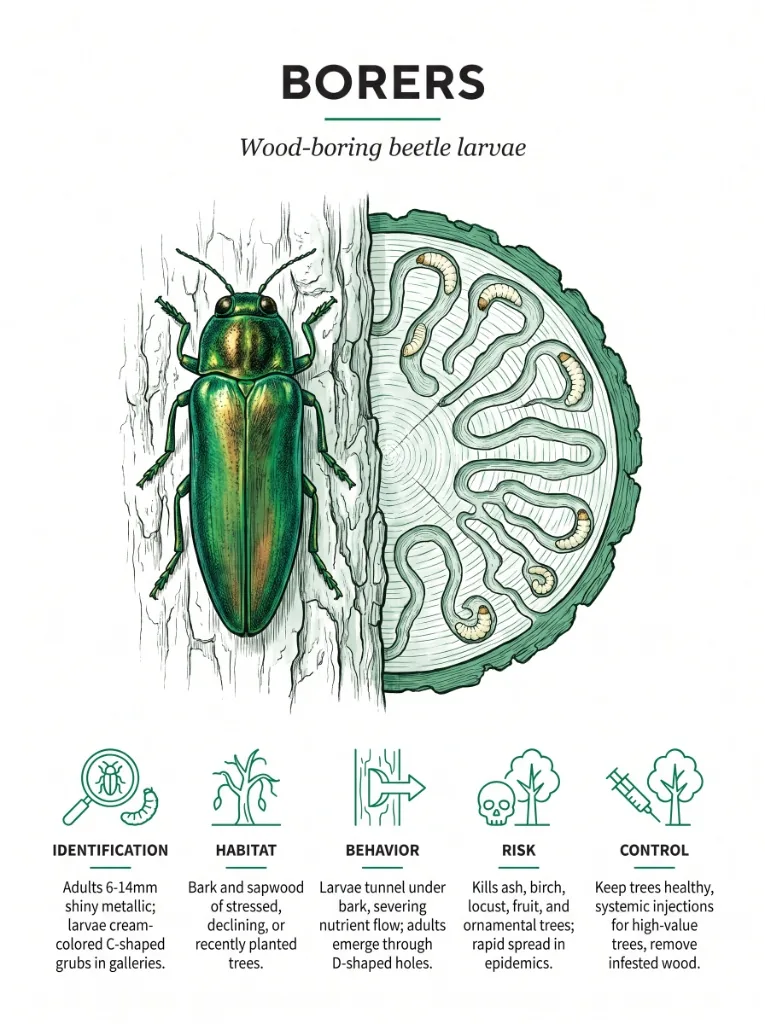
Wood Borers (Tree) (Wood-boring beetle larvae) identification infographic showing size, habitat, behavior, risk, and control
High concern

Wood Borers — Identification & Control

Wood-boring beetle larvae

Size
6–14 mm adults
Category
Garden & Outdoor

About the wood borers (tree)

Wood borers are the larvae of metallic-colored beetles — most notably the emerald ash borer, but also native flatheaded and roundheaded borers — that tunnel beneath tree bark and feed on the cambium layer, the thin band of living tissue that carries nutrients up and down the trunk. Because that damage happens invisibly under the bark, borer infestations are often well established by the time visible symptoms appear: thinning canopy, D-shaped or round exit holes, bark splitting, and woodpecker activity as birds chase the larvae underneath.

The emerald ash borer in particular has devastated ash tree populations across North Carolina since its arrival, and it is now firmly established across the Triangle. Borers overwhelmingly target trees that are already stressed — recently transplanted, drought-stressed, storm-damaged, or growing in compacted soil — which is why tree health and borer risk are so closely linked. Fruit trees, oaks, birches, and many ornamentals are also vulnerable to their own borer species.

Quick ID

Adults 6–14 mm shiny metallic beetles; D-shaped exit holes in bark; serpentine galleries under bark.

In the Triangle

Emerald ash borer is established in NC and killing ash trees across the Triangle; oak-boring beetles also attack stressed oaks.

Think you have wood borers (tree)s?

Free inspection from a licensed Castle Exterminators technician — Durham, Chapel Hill, Raleigh, Cary & the Triangle. We'll confirm the species and recommend a treatment plan.

Request Free Inspection (919) 606-8686
Warning Signs of an Active Wood Borer Infestation

  • D-shaped exit holes (emerald ash borer) or round exit holes (other borer species) in the bark.
  • Serpentine tunneling patterns visible if bark splits or peels away.
  • Canopy dieback starting at the top of the tree and progressing downward.
  • Increased woodpecker activity, since birds strip bark chasing larvae underneath.
  • Epicormic sprouting — thin new shoots growing low on the trunk as the tree tries to compensate.

Protecting Trees From Borers

Prevention is far more effective than treatment after a heavy infestation is established. Keeping trees healthy — adequate water during drought, mulching correctly, avoiding trunk damage from lawn equipment — reduces the stress signals that attract egg-laying females in the first place. For high-value ash, oak, or ornamental trees in areas with confirmed borer activity, systemic insecticide injections timed to the local beetle's flight season can protect a tree for one to two years. Once a tree shows more than 30-50% canopy loss, removal is usually the safer and more cost-effective option, since heavily infested trees can become hazardous as structural wood weakens.

Frequently asked

Wood Borers (Tree) questions homeowners ask

Is the emerald ash borer actually in the Triangle area?
Yes — the emerald ash borer is established across North Carolina, including Durham, Wake, and Orange counties, and has killed a significant number of untreated ash trees region-wide.
Can a borer-infested tree be saved?
Trees caught early, with less than about a third of the canopy affected, often respond well to systemic treatment. Trees with heavy dieback are usually past the point where treatment is cost-effective and should be evaluated for removal.

Related pests

More in garden & outdoor

Browse all pests