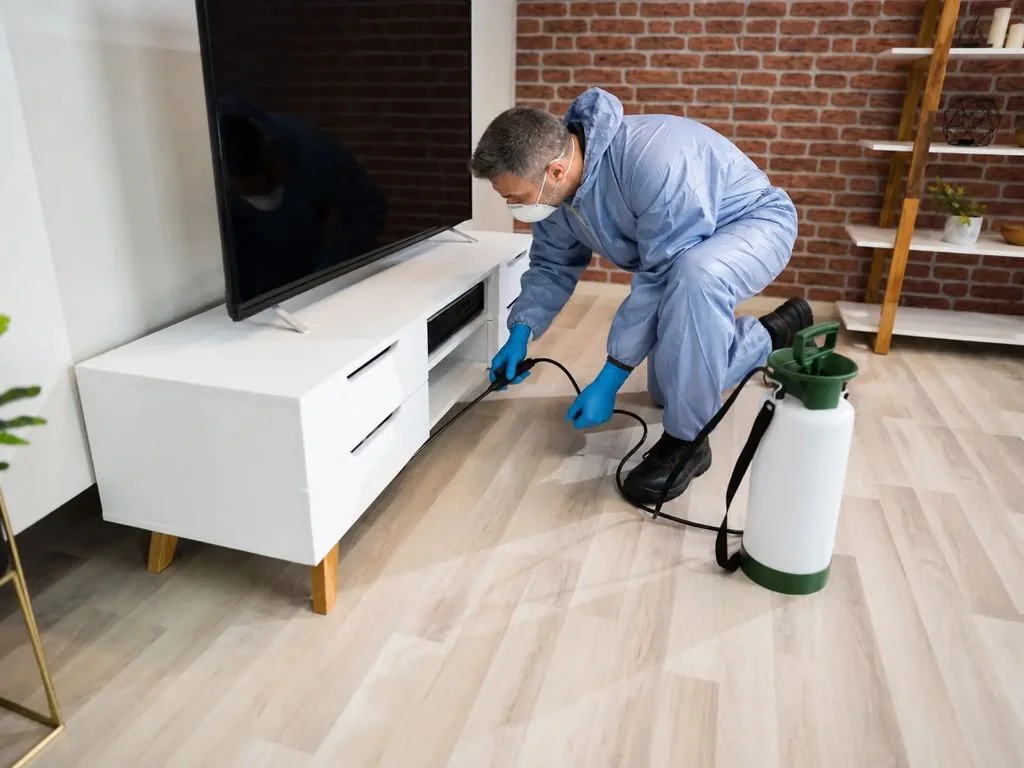
Before your inspection
- What we look at
- The pest species, and where infested food or fabric is stored.
- How to prepare
- Keep suspect packages or damaged items aside so we can look at them.
- Cost & next steps
- Free inspection, followed by a written estimate. We explain the scope before you approve any work.
Scheduling: Monday–Friday, 8am–5pm Eastern. Same-day service may be available, depending on the schedule and your location.
Pantry pests live in stored dry food; fabric pests feed on wool, fur, feathers and other natural fibers. With both, the most important step is finding and removing the infested item. Treatment then deals with what is left in shelves, cracks and closets.
Pantry and fabric pests we treat
- Indian meal moths
- Grain beetles
- Flour beetles
- Weevils
- Carpet beetles
- Clothes moths
Exact coverage, visit frequency and any guarantee depend on your written service agreement.
Pantry pests: food is the source
Indian meal moths, grain and flour beetles, and weevils can arrive in packaged goods and spread to other dry foods: flour, cereal, rice, pasta, nuts, dried fruit, spices, birdseed and pet food. We help you check the pantry, identify the pest and find the source. Infested food should be thrown away, and shelves vacuumed and wiped, before any treatment of cracks and shelving.
Fabric pests: look where it is dark and undisturbed
Carpet beetle larvae and clothes moth larvae damage wool, silk, fur and feathers, especially in closets, under furniture and in stored clothing. Cleaning, laundering or dry-cleaning affected items is essential. We inspect, identify the pest and treat the areas where it is living, following label directions.
Signs you may need this service
- Small moths flying in the kitchen or pantry, especially at night
- Webbing or clumped food in flour, cereal or grain packages
- Tiny beetles in dry food, on shelves or on window sills
- Holes in wool clothing, rugs or blankets
- Small, hairy larvae or shed skins in closets or under furniture
How Castle Exterminators handles it
-
Identify
We confirm whether it is a pantry pest or a fabric pest, and which one.
-
Find the source
We help you locate infested food or fabric, which must be removed or cleaned.
-
Treat
Targeted treatment of cracks, shelving or closet areas, applied according to label directions.
-
Prevent
Advice on sealed storage and regular cleaning to stop a return.
We use EPA-registered products applied according to label directions. Your technician gives product-specific preparation and re-entry instructions when a treatment calls for them.
Frequently asked questions
Do I have to throw food away?
Infested food should be discarded. Treatment cannot make infested food safe to eat and will not solve the problem while the source remains.
Are pantry and fabric pests covered by general pest control?
Yes, pantry pests and fabric pests are covered pests on our general pest control plans.
How did they get in?
Pantry pests usually arrive in packaged food. Fabric pests can come in on used furniture, rugs or clothing, or fly in from outdoors.
Related services
Homeowner guides
Practical reading before you book pantry & fabric pest control.